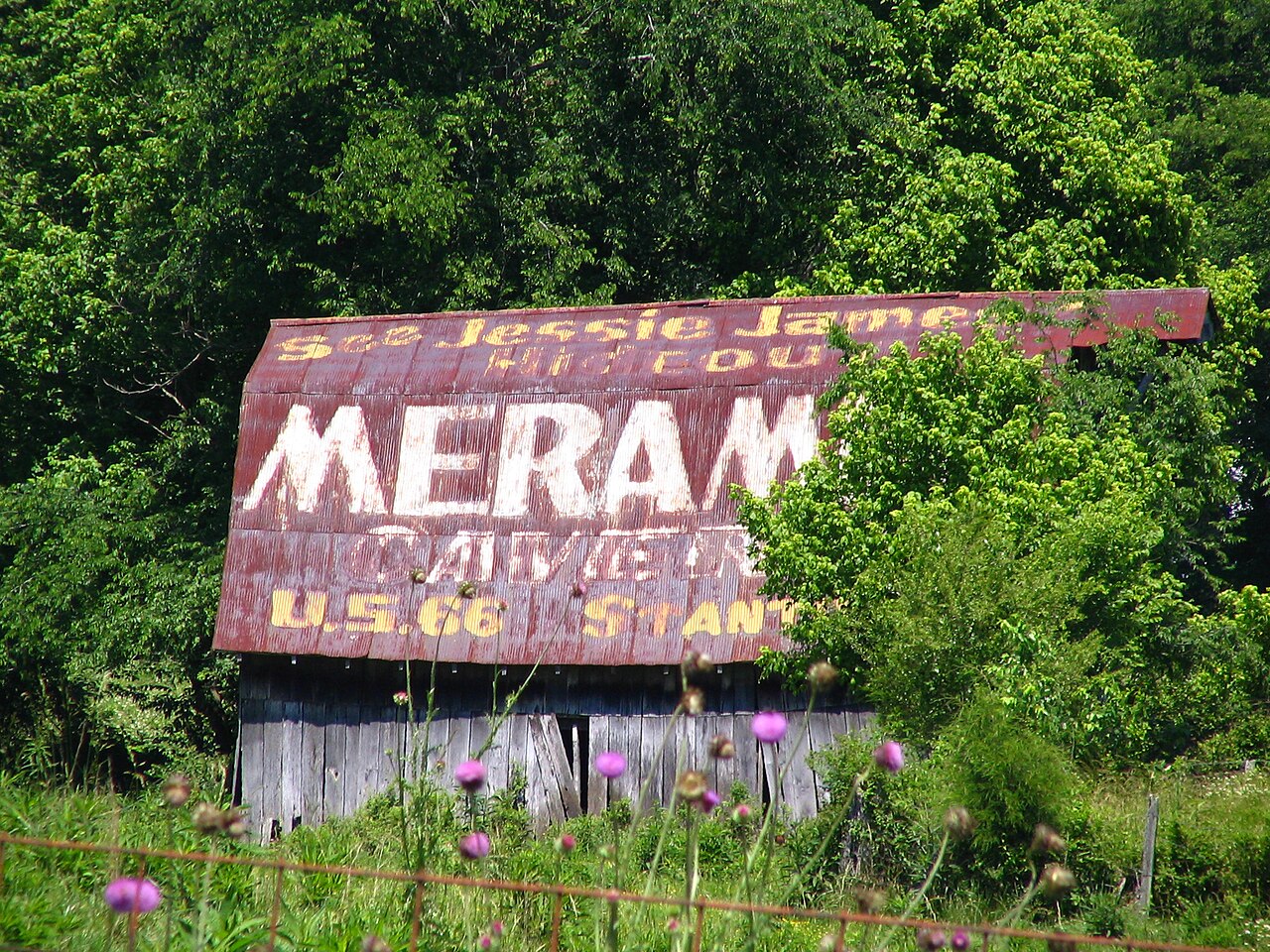
Meramec Caverns is where cave showmanship and Route 66 myth-making fused: Lester Dill bought the Missouri cavern in 1933, invented modern attraction promotion from it — the painted barn roofs across a dozen states, the bumper sticker itself (his crews wired them to parked cars), the Jesse James hideout legend he marketed with a straight face — and built the Midwest's definitive show cave around what the hucksterism almost obscures: genuinely superb passages. The eighty-minute guided tour walks lit, paved galleries along the Meramec River's ancient routes — the Wine Table's rare onyx tripod, ceilings of draperies, the seven-story Twin Dome spectacle — ending at the Stage Curtain: among the largest single cave formations on earth, seventy feet of banded onyx drapery, finale-staged with a light show and a patriotic flourish the operation has run for generations and would be wrong to retire. Add-on layers run riverboat rides, zip lines, and gold panning in season; St. Louis sits an hour east on I-44, the old 66 corridor. Kitsch outside, cathedral inside — the full American formula.
Dill's promotional legacy deserves its paragraph before the geology gets its due: the Depression-era showman turned a regional cave into a national brand with stunts that became the industry's vocabulary — MERAMEC CAVERNS barn roofs from Missouri to Texas (a handful survive, lovingly repainted), the invention of the bumper sticker as a self-spreading billboard, honeymoon suites and TV stunts inside the cave, and the Jesse James story (the outlaw allegedly used the cavern as a hideout; a disputed later "confession" by a man claiming to be an aged James let Dill stage reunions) promoted with carnival confidence. The park still wears it all proudly — the gift-shop Americana, the James gang lore in the tour patter — and the self-aware wink is part of the ticket's charm.
The cave itself needs no help
The Meramec River carved a system whose show route stacks genuine superlatives — the Wine Table, a rare cave-onyx table formation balanced in its grotto; Mirror River's still-water reflection trick; the Twin Domes' seven-story double vault behind their rimstone "wading pool"; and the Stage Curtain, the finale chamber's seventy-foot drapery mass, among the largest single formations known, banded like agate and staged with the light-and-anthem show that closes every tour (the formation lit section by section as the music builds — corny by design, effective by craft). Passages run paved and lit at family grade, 58 degrees, eighty minutes at tour pace.
The park layer and fit
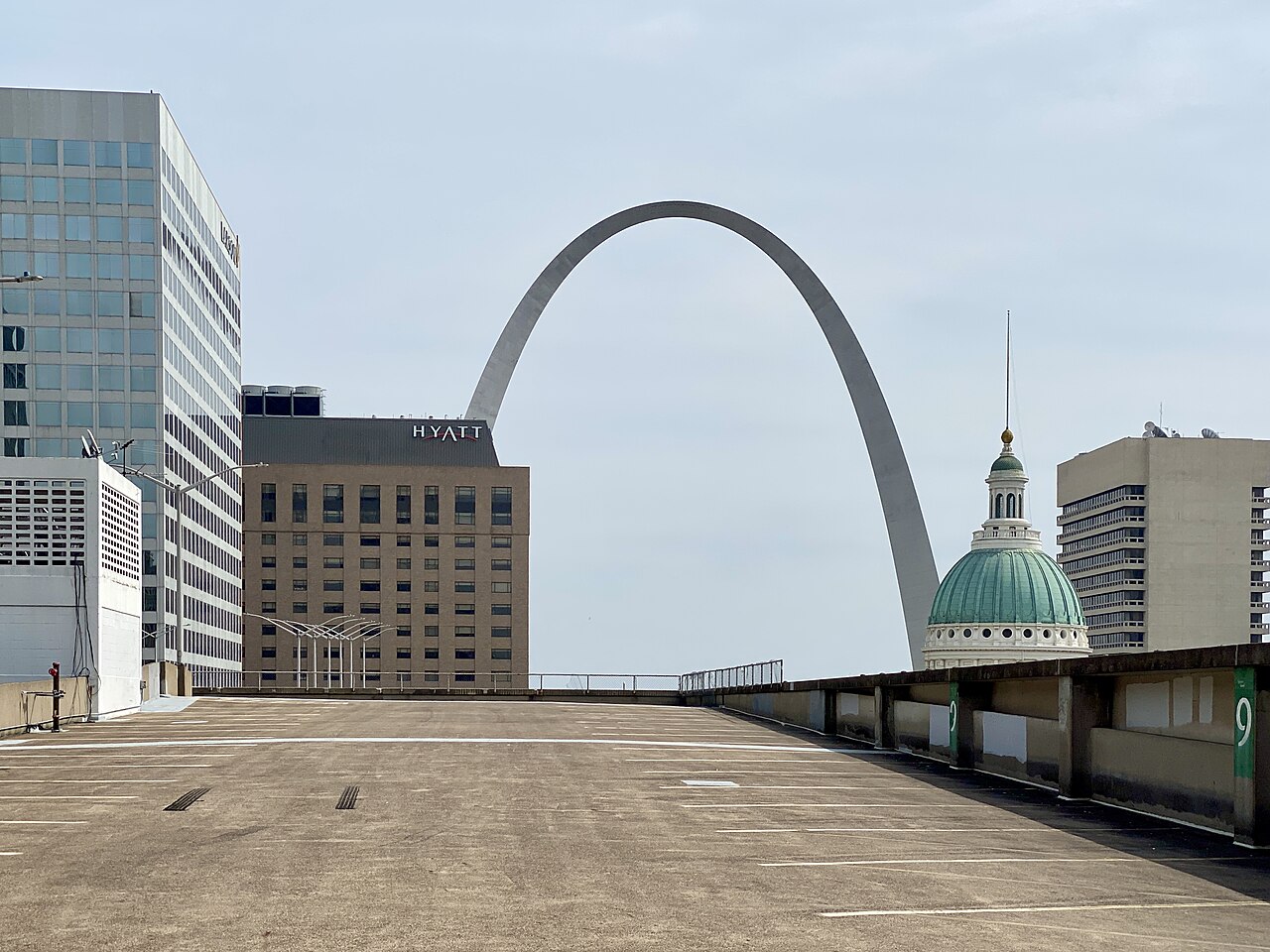
Dill's descendants-in-spirit keep the attraction stack running — seasonal riverboat cruises on the Meramec, the zip course over the valley, panning troughs, camping and motel cabins on the grounds — making it the I-44 family stop it has been for ninety years. St. Louis runs an hour east (the Gateway Arch day pairs naturally), the Ozarks corridor west, and Route 66 nostalgia threads the whole drive (Cuba's murals, the surviving barns).
Among the thirteen, Meramec is the Americana pick: the cave where the category's promotional history and its genuine wonders share one ticket, and the Stage Curtain finale sends everyone out humming.
What to expect
The experience
The Route 66 showplace — eighty guided minutes past the Wine Table, Mirror River, and Twin Domes to the Stage Curtain's light-show finale, wrapped in barn-roof Americana, riverboat rides, and Jesse James lore. An hour from St. Louis.
Best time
Mornings on summer weekends; the river add-ons run seasonally. The 58-degree interior never checks the calendar.
How long
The tour runs eighty minutes; the park stretches it to a half day.
Tips
Embrace the kitsch — it invented the genre's promotion and knows it. The Stage Curtain finale is genuinely great; sit with it. Surviving barn roofs on I-44 are the drive's scavenger hunt. Jacket for the 58 degrees.
Quick picks
- Best for
- Road-trip romantics — Route 66's cave, where the hucksterism and the wonders are both authentic.
- Families
- Lit, paved, story-stuffed, with gold panning and a riverboat after — the I-44 classic for a reason.
- Couples
- The finale chamber's light show is sincerely moving under the corn — and the Ozark drive out is golden-hour country.
- Pair with
- St. Louis's Arch an hour east, or the Route 66 relics threading the corridor west.
- Time needed
- Half a day with the park.
Good questions
Did Jesse James really hide here?+
The legend says so, a disputed old-timer's confession agreed, and Lester Dill marketed it with carnival confidence — the tour tells it with the wink it deserves. The cave doesn't need it; the lore is seasoning.
What's the Stage Curtain?+
The finale chamber's seventy-foot banded-onyx drapery — among the largest single cave formations on earth — staged with the generations-old light-and-music show. Corny by design, effective by craft.
Is the tour difficult?+
Paved, lit, and family-grade for eighty minutes at 58 degrees — among the easiest great caves in the category.
What's this about bumper stickers?+
Dill's crews invented them here — wiring MERAMEC CAVERNS tags to visitors' bumpers in the 1930s so every car became a billboard. The barn roofs across a dozen states were the same genius.
What else is at the park?+
Seasonal Meramec riverboat cruises, a zip course, panning troughs, cabins and camping — the full I-44 family-stop stack, running since the Route 66 era it helped define.