The Hague is the seat of Dutch government, but not the capital, which surprises many visitors. A political walking tour untangles that puzzle. The guide takes you through the area around the Binnenhof and the Hofvijver, explaining how parliament, the prime minister, the courts and the royal family fit together, and how a small country with a long tradition of coalition politics runs itself. It is the sort of tour that makes the city's buildings legible, and it is aimed at visitors who like current affairs and history. Tour details depend on the operator, so check whether the tour is private or for a group, the starting point and what is included. The Binnenhof courtyard is closed to walkers during a long renovation, so the tour concentrates on the exteriors and the surrounding streets, with the guide using what you can see to illustrate what you cannot. The experience is on foot, with an emphasis on conversation and questions.
A good political guide makes the abstract concrete. You will learn how the Dutch parliament is arranged, why coalition governments take so long to form and how the city became home to the International Court of Justice and other legal bodies. Expect stories about historic figures, famous protests and the quirks of Dutch political culture, such as the tradition of ministers cycling to work. The guide can adapt the discussion to your interests, which is a real advantage if you follow politics closely or are curious about how a consensus-driven country works.
Practical points are important. The area around the Binnenhof can be affected by construction and security arrangements, so the guide may adjust the route on the day. Wear comfortable shoes and a waterproof layer, as the tour runs in all weather. If you want to enter any building, check access rules in advance, as these change with events and renovation work. The tour is conversational, so a smaller group or a private format is useful if you want to ask lots of questions.
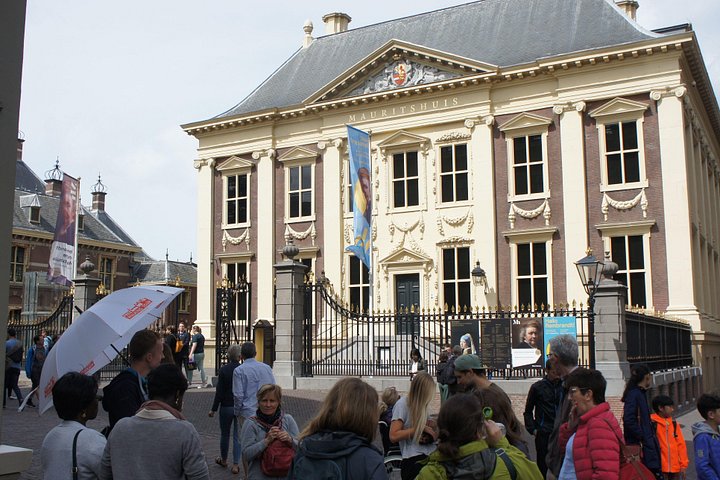
The tour suits political and history enthusiasts, students and travellers with a professional interest in law and diplomacy. It is less suited to young children or to anyone who prefers museums to talking. Pair it with a visit to the Peace Palace Visitors Centre and the Mauritshuis, which sit within a short walk and add the story of international law and the Golden Age to the political picture. A private tour is a premium option, so compare it with the group walking tour if you are watching your budget.
Come with questions. The best political tours are conversations, and a guide who knows the system well can explain subjects that confuse visitors, such as the difference between the head of state and the head of government, the role of the provinces and the way budgets are negotiated. If you have a specific interest, such as water management, international law or the history of the monarchy, tell the guide in advance so that the route and stories can lean that way.
A little background reading beforehand also helps, though it is not essential, and you will leave with a clearer picture of why this small city matters far beyond its size.
What to expect
The experience
A guided walk through the political quarter of The Hague, led by a local guide who explains how the Netherlands is governed.
Best time
Morning or early afternoon, early in your stay, so the context helps with the rest of your visit.
How long
About two to three hours.
Tips
Wear comfortable shoes and a waterproof layer, and ask the guide about the Binnenhof renovation and any route changes.
Quick picks
- Best for
- Politics, history and law enthusiasts who want context for what they see.
- Families
- Better suited to teenagers and adults than young children.
- Couples
- A thoughtful, conversation-led walk with a view on how the Dutch system works.
- Pair with
- The Peace Palace Visitors Centre and the Mauritshuis.
- Time needed
- Two to three hours.
Good questions
Do we go inside the Binnenhof?+
The courtyard is closed to walkers during the renovation, so the tour concentrates on exteriors and the surrounding streets.
Why is The Hague not the capital?+
Amsterdam is the capital, but government, the royal working palace and many courts are in The Hague. The guide explains the history behind this.
Is it a private tour?+
Check the details for your date, as some operators run private tours and others take small groups.
Is it suitable for children?+
It is aimed at teenagers and adults who enjoy history and current affairs.
Which other sights fit with it?+
The Peace Palace Visitors Centre, the Mauritshuis and a stroll round the Hofvijver all sit within walking distance.