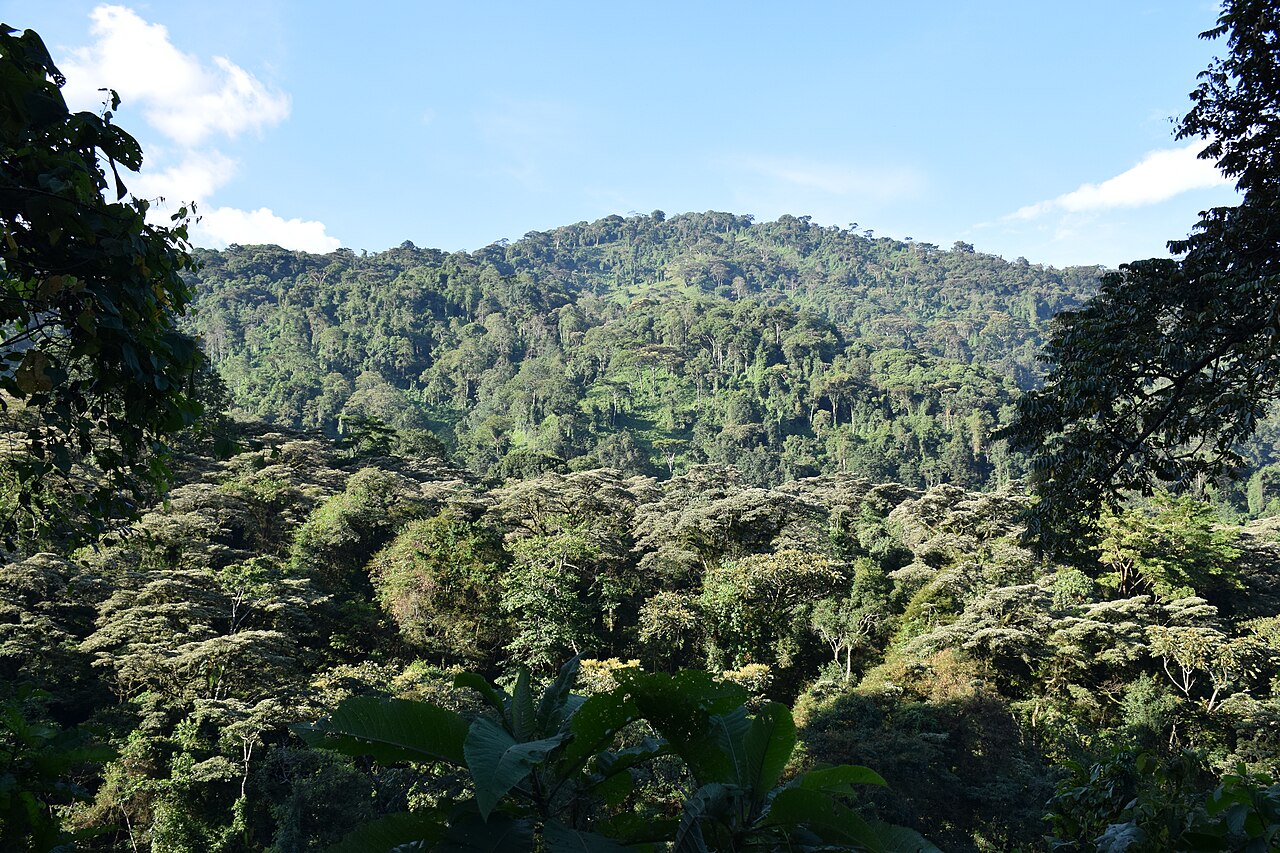
The Rwenzori Mountains rise on the border with the Democratic Republic of the Congo, and they are among the most spectacular and least visited ranges in Africa. Ancient Greek writers may have known them as the Mountains of the Moon, and today they are a national park and UNESCO World Heritage site. The highest summit, Margherita Peak on Mount Stanley, rises to more than five thousand metres, and it is capped by glaciers even though it sits close to the Equator. Hiking here is a very different experience from most of Uganda. Trails climb through terraced farmland and montane forest into a surreal alpine world of giant heather, lobelia and groundsel, with mossy trees, boggy valleys, clear streams and views of snow-covered peaks. Weather is changeable and wet, trails are muddy, and the going is steady rather than technical on the lower sections. Higher up, the glacier climbs require equipment and experienced guides. Most visitors choose between a short day hike, a few-day trek on a section of the Central Circuit or the Kilembe route, or a full ascent of the peaks over about seven to ten days. Treks are run through local guiding organisations and licensed operators, with guides, porters, huts and meals arranged along the way. The base for most visits is the Kasese area, with the town of Fort Portal and Kibale National Park nearby.
Which trek to choose
The product linked here is a five-day Rwenzori hiking trip in Uganda, a practical length for a mountain experience that stops short of the glacier summits. A day or overnight walk in the lower valleys suits those with less time or fitness, while a full Margherita Peak climb takes a week or more and calls for good preparation. Check the route, hut standards, porter ratios and what is included before you book.
Preparation
This is demanding walking at altitude, with cold, rain and mud even in the drier seasons. The best months are generally December to February and June to August. Bring waterproof layers, warm clothing, sturdy waterproof boots, gloves, a hat, trekking poles and a good sleeping bag if your operator does not provide one. Be aware of the signs of altitude sickness, and tell your guide if you feel unwell. A medical check-up before the trip is sensible for anyone with health concerns.
Responsible trekking
Use local guides and porters, and make sure that the porters are properly equipped and paid. Pack out all rubbish, stay on the trail and do not disturb wildlife. The mountains are home to rare birds and unusual plants, and some species live nowhere else. A trek here is more physically demanding than gorilla or chimpanzee trekking but it rewards you with solitude, landscapes that look like another planet and a real sense of remoteness.
Alternatives for shorter stays
If you do not have time for a multi-day trek, ask about a one-day walk in the Nyakalengija area, where guides lead walks through forest and farmland with views of the peaks and a chance to see the cultural landscape of the Bakonzo people. These walks are a good way to taste the mountains, and they bring income to the local community. Whichever option you choose, book with a licensed operator and expect to hand over your passport details for the park permit.
What to expect
The experience
A guided hike with porters and mountain huts through forest and alpine zones of the Rwenzori Mountains, from day walks to multi-day treks.
Best time
December to February and June to August are generally the driest months, though rain and mud are possible year-round.
How long
Anything from a day walk to a ten-day summit trek; five days is a popular middle option.
Tips
Pack waterproofs, warm layers and sturdy boots, and be honest about your fitness when choosing a route.
Quick picks
- Best for
- Fit hikers who want solitude and dramatic mountain scenery.
- Families
- Day walks suit teenagers; multi-day treks are for experienced adults.
- Couples
- A challenging shared adventure in a remote setting.
- Pair with
- Queen Elizabeth National Park, Kibale chimpanzees and Fort Portal.
- Time needed
- Five days for a trek; two to three days with Fort Portal.
Good questions
What are the Mountains of the Moon?+
A name for the Rwenzori range, thought to be the mountains described by ancient writers as the source of the Nile.
Do I need mountaineering experience?+
Not for the lower trails, which are steady hikes. The glacier summits need technical equipment and experienced guides.
When is the best time to hike?+
December to February and June to August are generally the driest.
How cold does it get?+
Cold enough to need warm, waterproof layers, especially at higher huts, with frost possible near the glaciers.
How do I arrange a trek?+
Through licensed operators or local guiding organisations around Kasese and Fort Portal, which arrange guides, porters and huts.