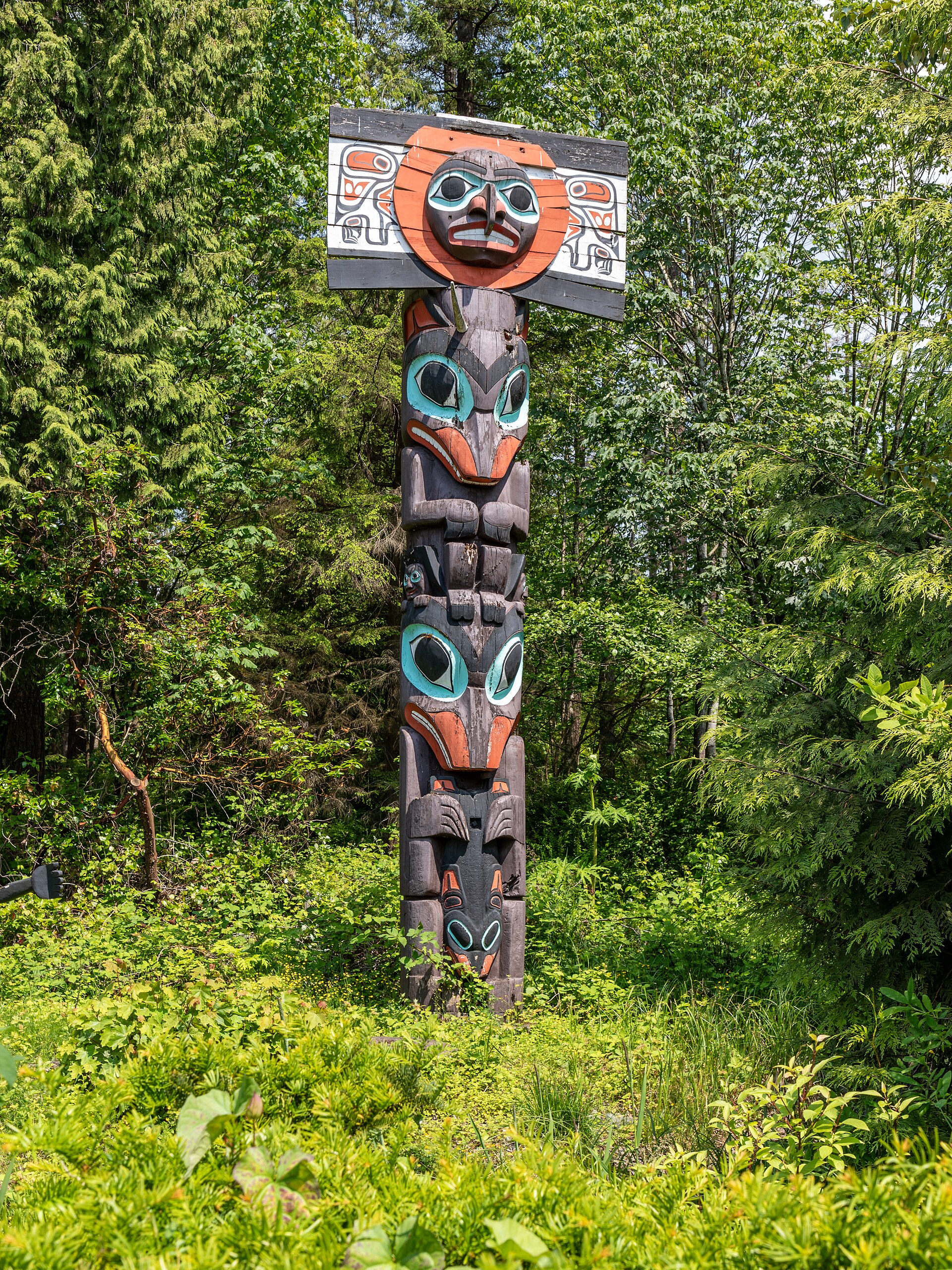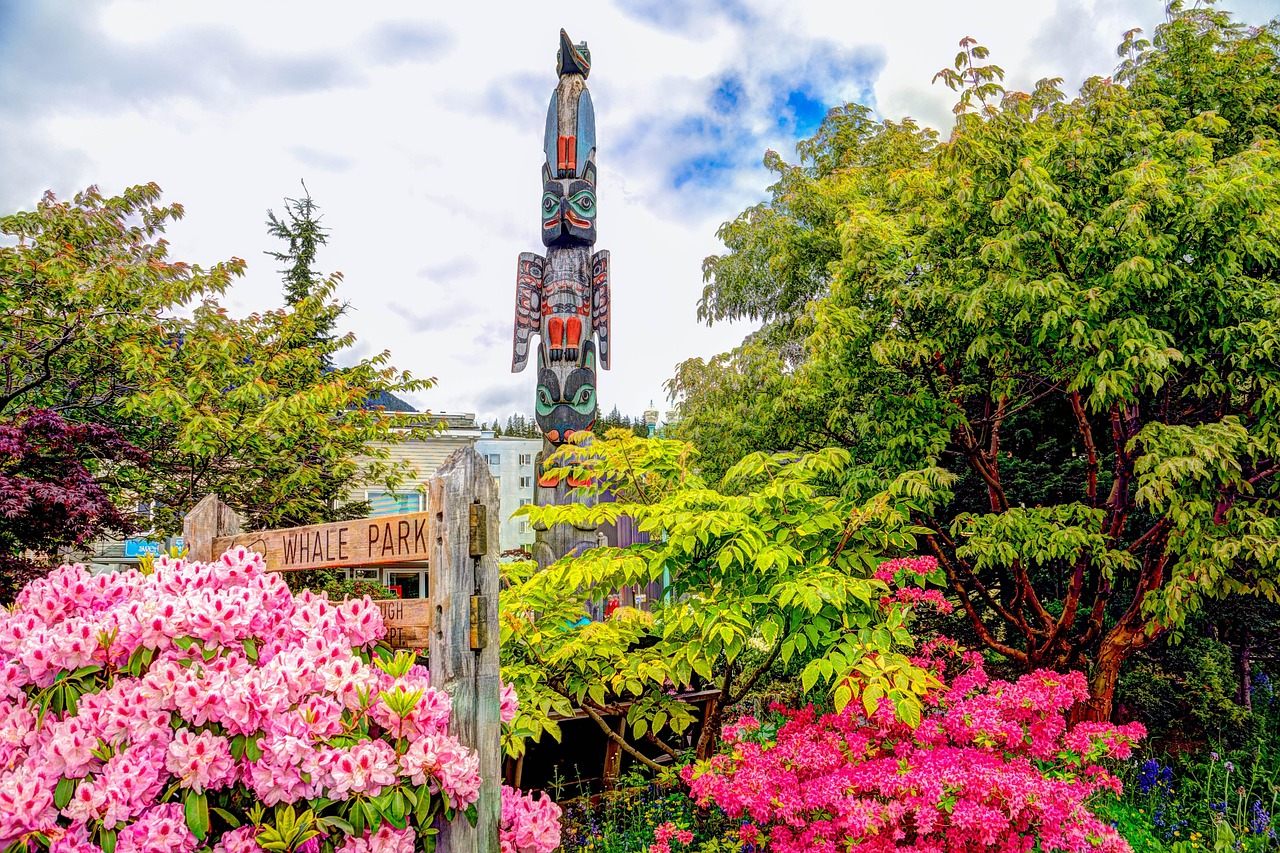
The Museum of Anthropology is Vancouver's world-class cultural hour and the building every architecture lover crosses the city for: Arthur Erickson's 1976 masterpiece on the Point Grey cliffs at UBC — the concrete post-and-beam frame quoting Northwest Coast house structure, walled in glass so the Great Hall's totem poles stand against forest, sea and mountains as they were meant to — holding the world's finest collections of Northwest Coast First Nations art: the Great Hall's monumental carvings (Haida, Kwakwaka'wakw, Nuu-chah-nulth and Coast Salish poles, house posts and feast dishes at full ceremonial scale, re-presented through the museum's landmark collaboration with the communities whose treasures these are — the labels carry the carvers' names and the nations' own tellings, and the living-culture framing is the museum's modern core), Bill Reid's Raven and the First Men in its skylit rotunda (the massive yellow-cedar carving of Haida creation — the Raven coaxing the first humans from a clamshell — the single most famous artwork in western Canada, carved 1980 and still the room everyone circles), the Multiversity Galleries' open-storage honesty (16,000-plus works from world cultures in visible cases — the anthropology of the title running global), the European ceramics wing's odd-couple charm, and the outdoor grounds: memorial poles and two Haida houses on the cliff lawn with the Salish Sea beyond — the museum continues outside, and the grounds are the golden-hour photograph. The practical story: the museum reopened in 2024 from its seismic rebuild (the Great Hall was dismantled and rebuilt pole by pole — the engineering saga is told inside; verify current hours as programming normalizes), sits 20-30 minutes from downtown on the UBC peninsula (the 4/14/44 buses run direct; the drive pairs with Wreck Beach's stairs and Pacific Spirit Park's forest), and earns a half day with the grounds. Fit: first trips at the must-see tier (this is Vancouver's one world-class museum), couples (Erickson's building at golden hour), and every itinerary that wants the coast's deep culture under the mountains' postcard.
The museum's modern meaning is the collaboration: MOA led the museum world's turn toward co-curation with originating communities — repatriation negotiated openly (the museum has returned ancestral remains and treasures, and says so), ceremonies held in the Great Hall by the nations whose poles stand there, contemporary Indigenous artists programmed as continuity rather than contrast (the James Hart and Susan Point commissions, the contemporary galleries' rotation) — making it the rare anthropology museum the anthropologized helped rebuild. The collection's peaks reward slow walking: the Haida poles' crest cycles (the guides' clan readings animate them), the Kwakwaka'wakw transformation masks (hinged theater of raven-into-human), the feast bowls' sculptural wit, Reid's gold-and-argillite case near his Raven, and the Koerner ceramics wing's 600-piece European detour (the juxtaposition is the point — all making is culture).
Erickson's building earns its own circuit
The entrance's compression into the Great Hall's release (the architectural trick every visit feels), the glass wall's 15-meter panes framing the poles against Howe Sound weather, the reflecting pool's restoration (the pond returns the building to its intended composition — the poles doubled in water), and the cliff grounds' Haida mortuary and memorial poles weathering as tradition intends. The practical craft: afternoon light flatters the Great Hall (the glass faces north-west), Thursday-style late evenings run quieter when offered, the grounds are free-roam with the museum ticket, and the UBC pairing — the Rose Garden's mountain frame, Pacific Spirit's cedar trails, Wreck Beach's 400 stairs for the committed — makes the peninsula the day. Transit honesty: the bus is direct but 40-ish minutes from downtown; rideshare halves it; the museum rewards whatever it costs to arrive.
Practicals and fit
6393 NW Marine Drive at UBC (buses 4/14/44/R4 corridors; parking easy), reopened 2024 post-seismic-rebuild (check current hours), 2-3 hours plus grounds, modest ticket. Fit: first trips categorically (the city's world-class museum), couples at golden hour, culture-deep travelers — and the rainy-day answer with the most beautiful room in Canada attached.
What to expect
The experience
Erickson's glass cathedral of Northwest Coast masterworks — the Great Hall's poles against sea and mountains, Bill Reid's Raven in its rotunda, open-storage world galleries and Haida houses on the cliff lawn.
Best time
Afternoon light flatters the Great Hall's glass; the grounds at golden hour are the photograph; reopened 2024 from the seismic rebuild — verify current hours.
How long
Two to three hours, plus the cliff grounds.
Tips
Circle Raven and the First Men slowly — the clamshell's figures reveal in rounds. Read the carvers' names on the labels; the living-culture framing is the museum's point. Pair the UBC peninsula: Pacific Spirit trails or the Rose Garden frame.
Quick picks
- Best for
- The must-see tier — Vancouver's one world-class museum, in Canada's most beautiful room.
- Families
- Transformation masks, visible-storage drawers to open, and lawns with real Haida houses.
- Couples
- The Great Hall at golden hour and the cliff grounds after — architecture as romance.
- Pair with
- Pacific Spirit Park's cedar trails and the UBC Rose Garden; Wreck Beach stairs for the bold.
- Time needed
- One peninsula half day.
Good questions
What is the Raven sculpture?+
Bill Reid's Raven and the First Men — the massive yellow-cedar carving of the Haida creation story, the Raven coaxing the first humans from a clamshell — carved in 1980 and the most famous artwork in western Canada, displayed in its own skylit rotunda.
Why does the building matter?+
Arthur Erickson's 1976 masterpiece quotes Northwest Coast post-and-beam house structure in concrete and glass — the Great Hall's 15-meter windows stand the totem poles against forest, sea and mountains as intended.
Is the museum fully reopened?+
It reopened in 2024 after a seismic rebuild that dismantled and re-raised the Great Hall pole by pole — the engineering story is told inside; verify current hours as programming settles.
How do we get there?+
The UBC peninsula runs 20-30 minutes from downtown — direct buses on the 4th Avenue and Broadway corridors, easy parking by car — and pairs with Pacific Spirit Park's forest trails.
How does MOA handle whose art this is?+
As the field's leader — co-curation with the originating nations, open repatriation, carvers named on labels and ceremonies held in the hall: the museum the anthropologized helped rebuild.