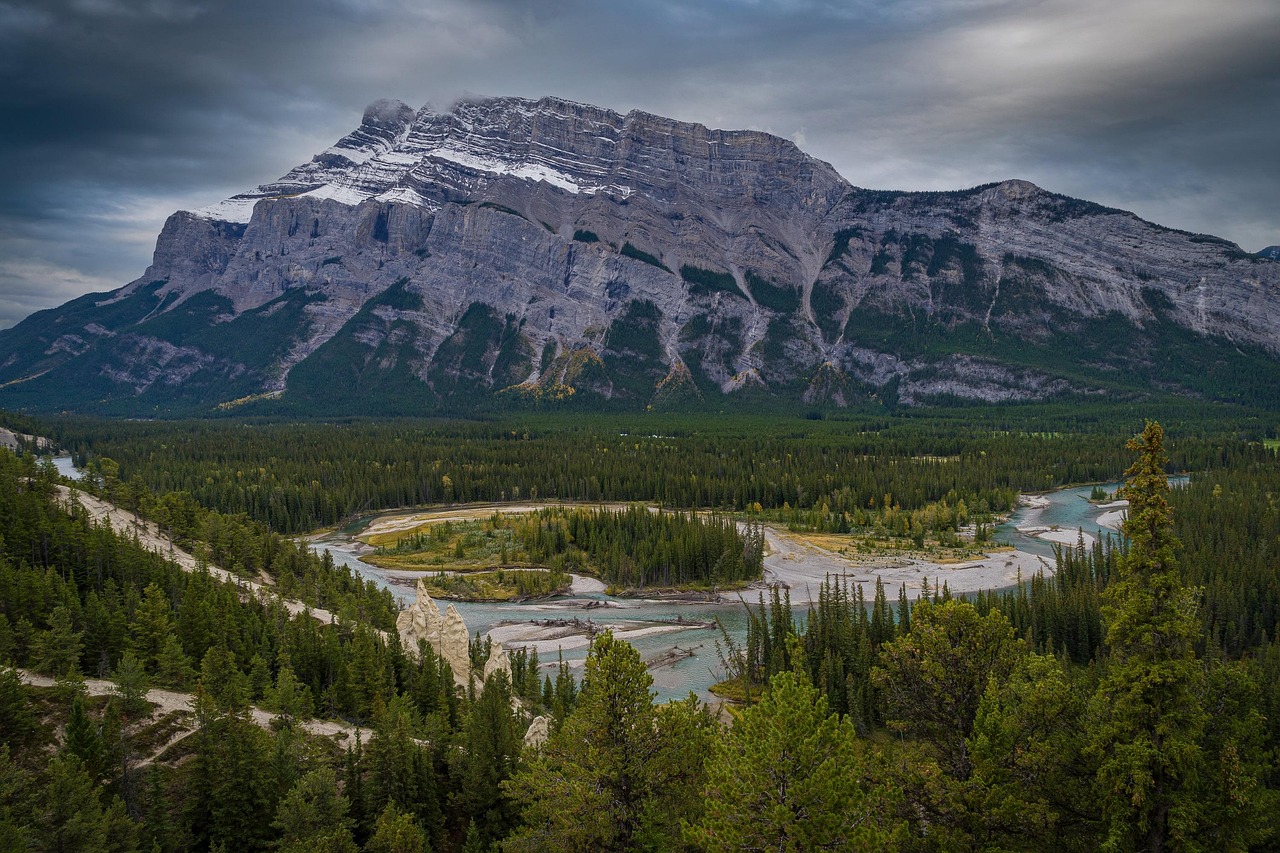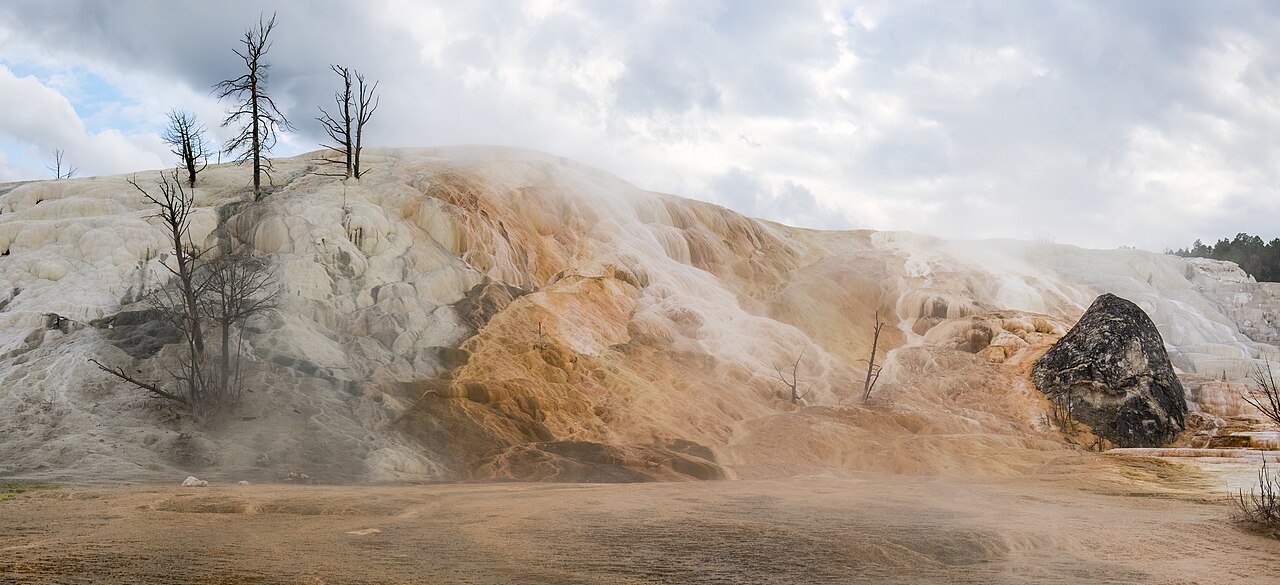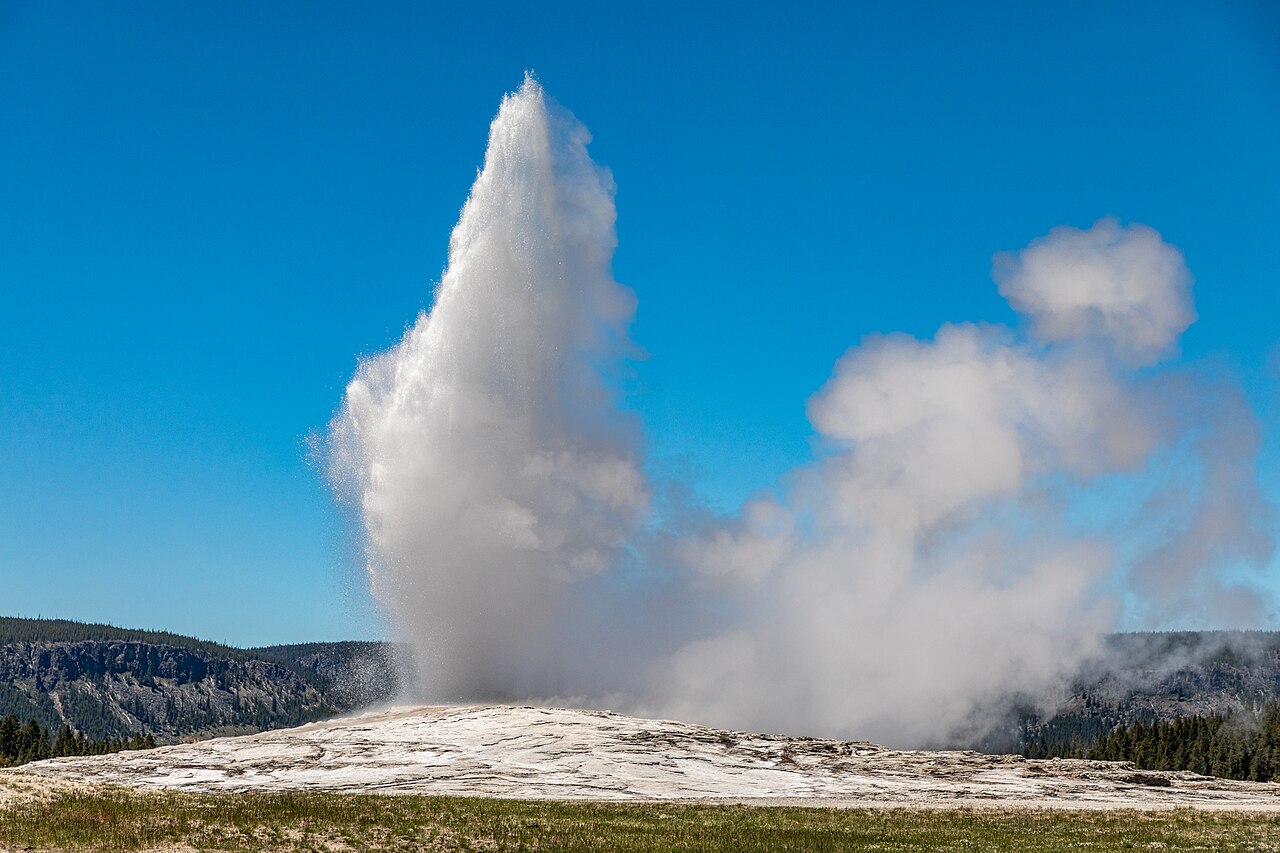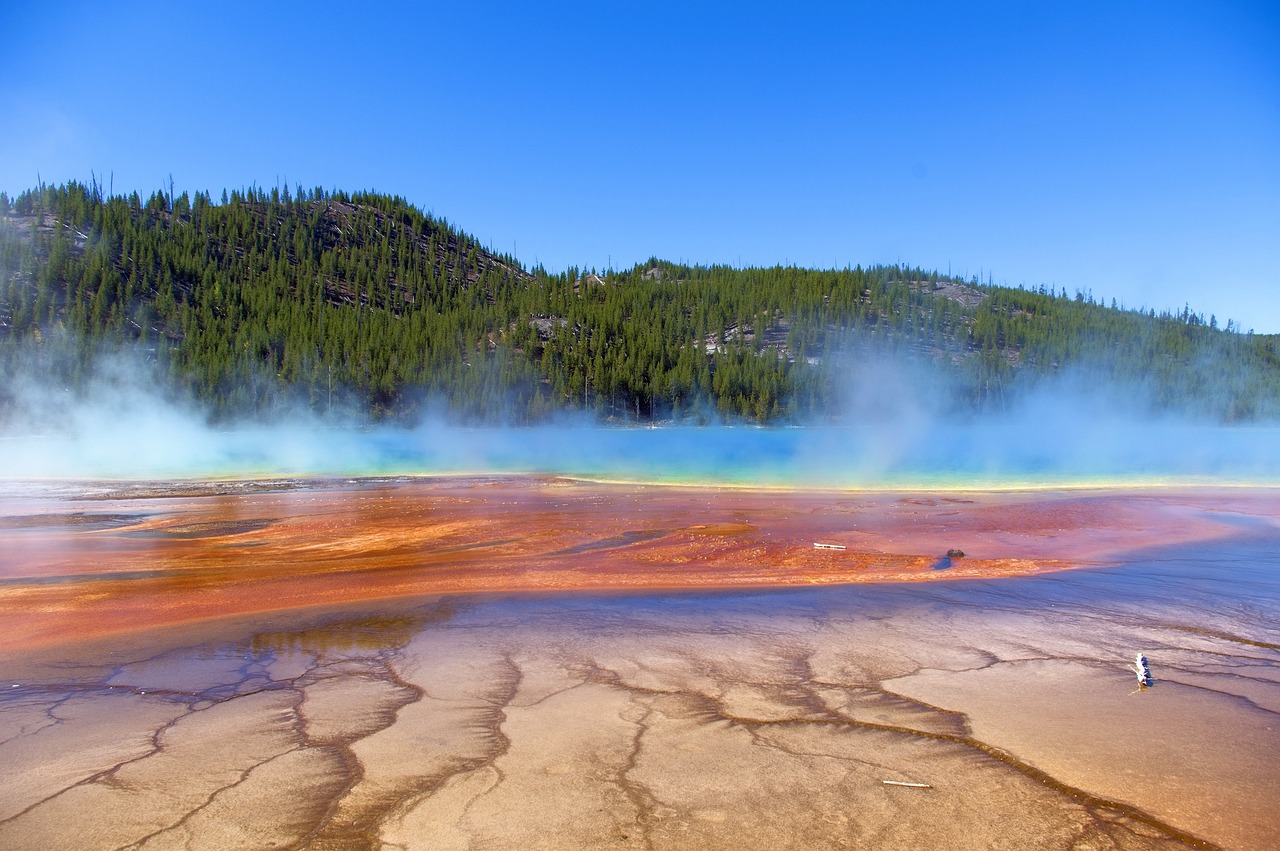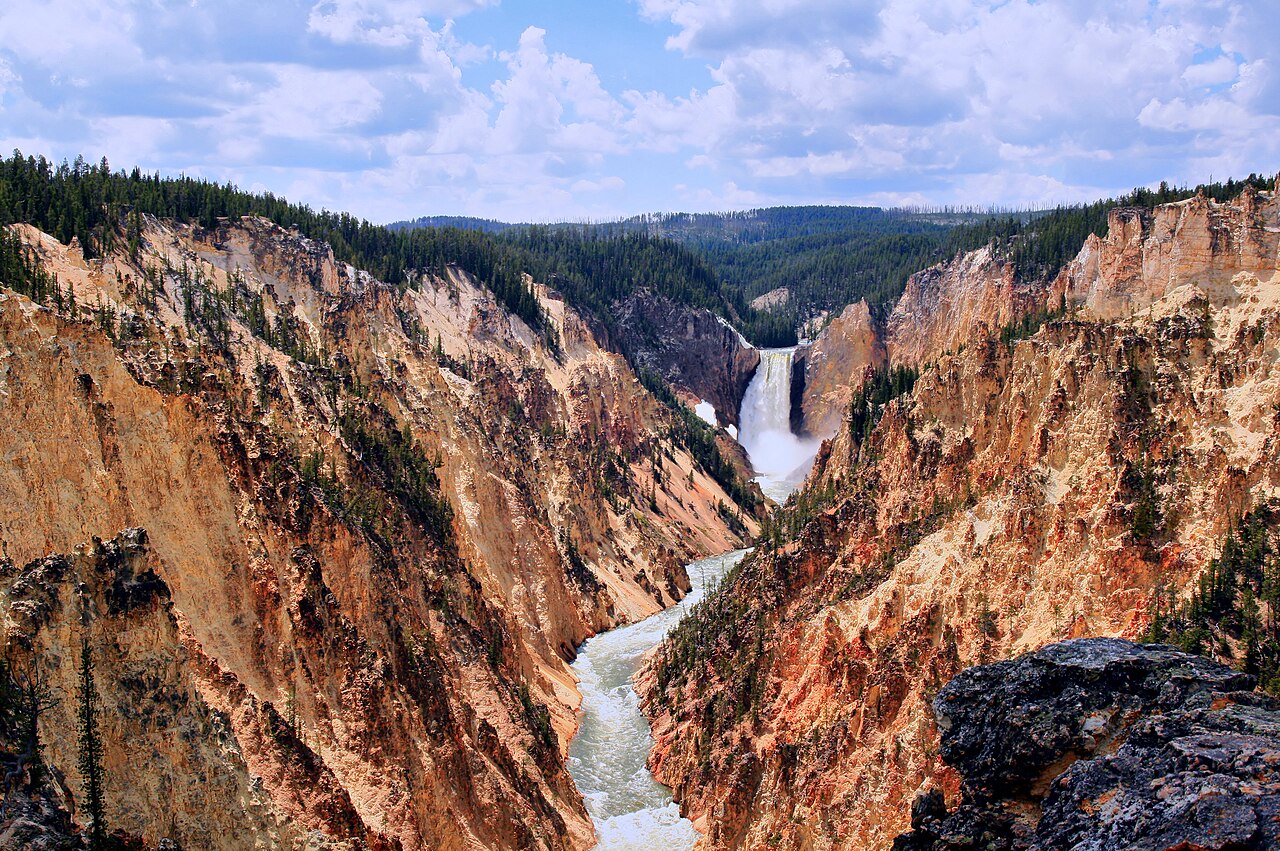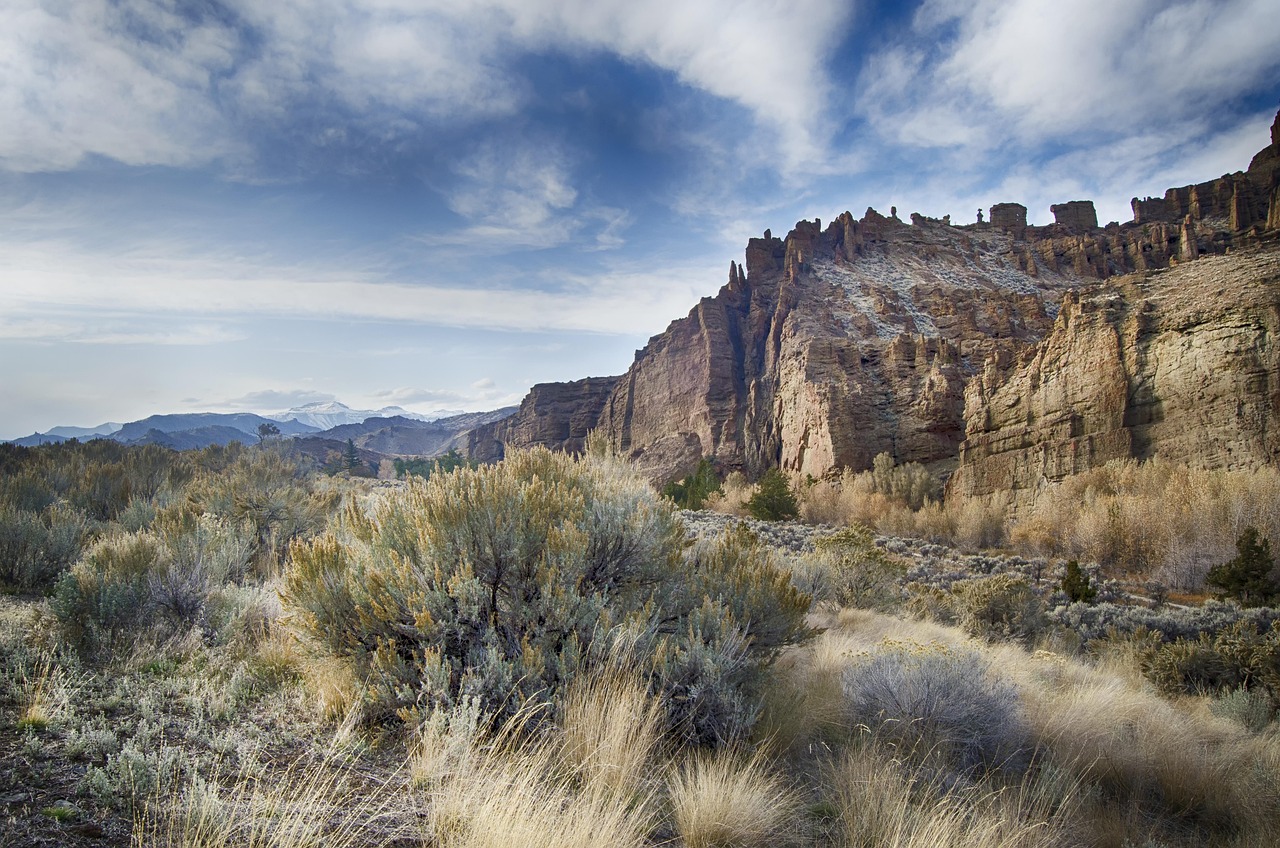
Lamar Valley is the reason wildlife photographers set alarms for 4:30am: a wide glacial valley in the park's quieter northeast corner where the lower 48's richest megafauna concentration performs daily — bison in the thousands (rut in August; traffic-stopping always), elk and pronghorn on the flats, grizzlies and black bears along the treelines, coyotes and badgers mid-stage, and the headliners: the wolf packs restored in 1995, best spotted at dawn and dusk from the valley's roadside pullouts, where the scope-toting "wolf watcher" regulars will usually share a view and the day's intel. No boardwalks, no villages — just the road, the pullouts, and the show. The Gardiner-to-Cooke City road through it stays open all year, making Lamar the park's winter wildlife theater too.
The 1995 wolf reintroduction turned Lamar into the world's premier wild-wolf observatory — the valley's packs are the most-watched wolves on earth, and the restoration's cascading effects (elk behavior, willow recovery, beaver return) became ecology's most famous case study. For the visitor the mechanics are wonderfully simple: a two-lane road runs the valley floor between Tower Junction and the Northeast Entrance, pullouts string the length of it, and the protocol is dawn — arrive in the gray light, drive slowly, and stop where the scopes cluster. The wolf-watcher community (regulars with radios, researchers, guides) tracks the packs daily and shares generously; a "wolf jam" of parked scopes is the signal worth more than any app.
The supporting cast carries any hour
Yellowstone's largest bison herds blanket the flats (the August rut — bellowing, dust, head-slamming bulls — is the hemisphere's best free rodeo), pronghorn run the benches, elk graze the margins, grizzlies dig the slopes in spring and fall (100-yard rule, no exceptions), river otters work the Lamar River, and bald eagles decorate the cottonwoods. Bring or borrow optics — binoculars minimum, a spotting scope transforms it — and layers for valley dawns that run 20 degrees below town. Guided options multiply success: Gardiner and Cooke City outfitters (and institute programs) run dawn safaris with scopes, radios, and the day's pack locations.
Logistics make Lamar the connoisseur's corner: it's far from the geyser circuit (90 minutes from Canyon, more from Old Faithful), so base nights in Gardiner, Cooke City, or Mammoth serve it best; the northern road stays plowed all winter — wolf watching peaks December-March when packs hunt in daylight against snow — and the valley holds the park's darkest skies for the star layer. Rules are survival-grade: 25 yards from bison and elk, 100 from bears and wolves, never between a bison and anywhere it might want to be. The valley doesn't do fences; that's the entire point.
What to expect
The experience
A broad roadside wildlife valley — wolf packs at dawn/dusk from scope pullouts, massive bison herds, grizzlies on the edges, pronghorn and eagles throughout. Open year-round via the park's all-season northern road.
Best time
Dawn, non-negotiably — first light is the wolf window. August for the bison rut; winter (Dec-Mar) for wolves hunting in daylight against snow.
How long
A dawn half-day with drive time from Gardiner or Cooke City; repeat visits compound luck.
Tips
Arrive in gray light and stop where the spotting scopes cluster — the regulars share views and intel. Binoculars minimum, scope ideal, layers mandatory. 100 yards from wolves and bears, 25 from bison — and never between a bison and its herd. Fuel up; there's nothing in the valley, which is the point.
Quick picks
- Best for
- Wildlife-first travelers — this is the best free safari in the Americas.
- Families
- Kids with patience and binoculars get bison guaranteed and wolves possible; the car is the blind.
- Couples
- A thermos dawn among the scopes, then breakfast in Cooke City — the park's quietest romance.
- Pair with
- Mammoth Hot Springs on the same northern loop, or a guided dawn safari from Gardiner.
- Time needed
- One dawn minimum; two doubles the wolf odds.
Good questions
Will we actually see wolves?+
Odds are real but not promised — dawn visits in winter and spring run strongest, and parking where the scope crowd gathers borrows their tracking. Guided dawn tours with scopes and radios roughly double success.
What's guaranteed?+
Bison — Lamar holds the park's great herds year-round — plus pronghorn, elk, and raptors. Grizzlies are regular spring-fall; badgers, otters, and coyotes freelance.
How far is it from the geysers?+
Far — about 90 minutes from Canyon, more from Old Faithful. Treat it as its own half-day from a northern base (Gardiner, Mammoth, Cooke City) rather than a drive-by.
Is it really open in winter?+
Yes — the Gardiner-to-Cooke City road is the park's one all-season drive, and winter is prime wolf watching: packs hunt in daylight and read like ink on the snow.
What are the distance rules?+
25 yards from bison, elk, and everything else; 100 yards from wolves and bears — federal law and survival advice in one. Lamar's animals are genuinely wild; the valley has no fences anywhere.