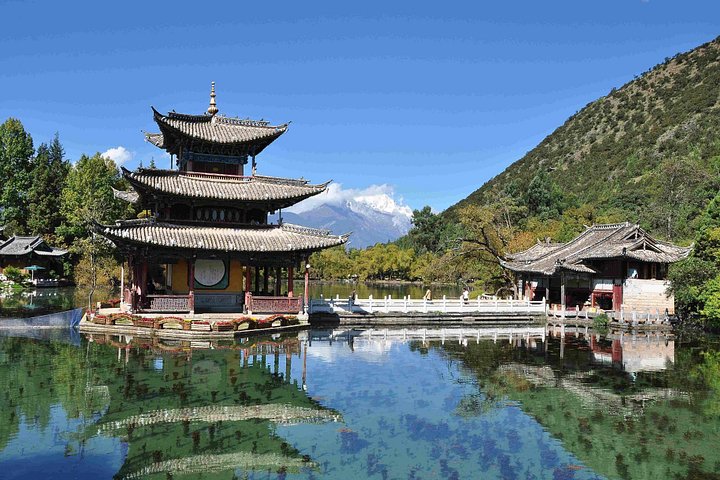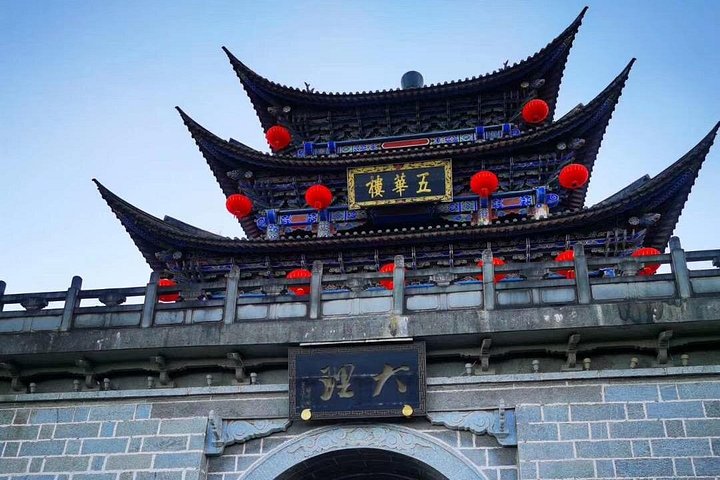
Dali was once the capital of the Nanzhao and Dali kingdoms, which ruled much of Yunnan from the eighth to the thirteenth centuries, and it remains the cultural centre of the Bai people. The old town sits on a plain between the Cangshan mountain range and the ear-shaped Erhai Lake, with restored city walls and gates, stone-paved lanes and low houses in the Bai style, with white walls, painted eaves and carved wooden doors. Restaurants, cafes, craft shops and guesthouses fill the streets, including the lively Foreigner Street and quieter back lanes. Just outside the town stand the Three Pagodas of Chongsheng Temple, a trio of slender brick and stone towers that have survived centuries of earthquakes and became the symbol of Dali. The tallest rises to roughly seventy metres. Behind them the Cangshan peaks catch the afternoon light, and in front a reflecting pool doubles the view. The linked private day tour uses the round-trip high-speed train from Kunming, so you can reach Dali in around two hours each way and spend most of the day in town.
How to visit
The bullet train from Kunming to Dali takes roughly two hours, depending on the service, and a private day tour arranges train tickets, station transfers and a guide. Check the tour details for the departure time, the return train and how long you will have in Dali, since a day trip is busy. For a relaxed visit, consider staying at least one night.
What to expect
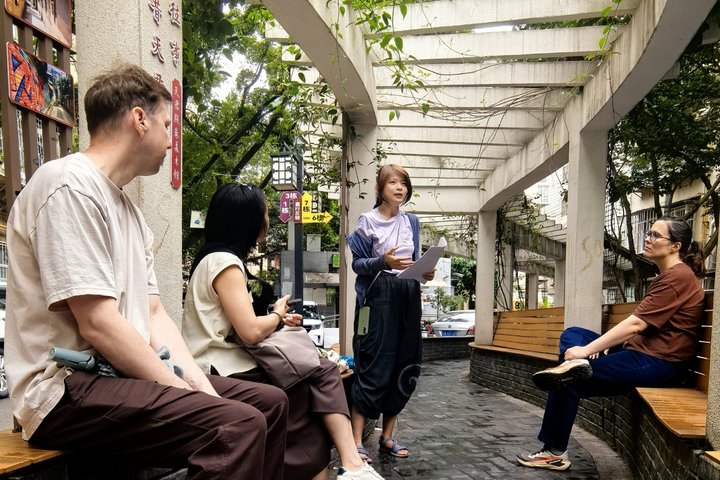
You walk through the old town gates, along Huguo Road and the cobbled lanes, with time for shops, snack stops and a walk to the Three Pagodas, which are a short ride outside the walls. A guide explains Bai history, architecture and customs, and may take you to a tie-dye workshop or a tea house.
Making the most of it
Try Bai food such as rubing, a fried or grilled cheese, as well as baba flatbreads, fresh lake fish and stir-fried local mushrooms. Wear comfortable walking shoes and carry a hat, because the sun is strong at altitude. Tie-dye cloth, silver jewellery and local tea are popular souvenirs, but compare prices before buying.
Seasons and festivals
The climate is mild all year, with spring and autumn the most pleasant seasons. The Third Month Fair, held in spring, brings horse racing, trading and folk performances. Winter is cooler but sunny, and the Cangshan range may be dusted with snow, while summer brings afternoon showers.
Good to know
The old town can be crowded and commercial in the peak holiday weeks, and quieter back streets give a more local feel. Keep time for the Three Pagodas, which are best seen in the late afternoon light. If you can stay longer, a bike ride around Erhai Lake or a walk to the foot of Cangshan makes a perfect second day.
Beyond the old town
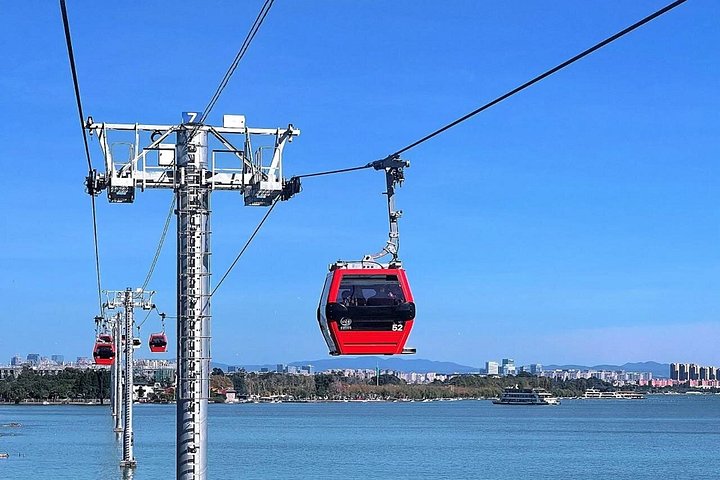
If you have extra time, the Cangshan cable car and the Gantong trail offer cool, forested walks above the town, and the Butterfly Spring area north of the lake is a gentle outing. Evening in Dali is relaxed, with live music in a few bars and food stalls on the main streets. A longer stay also lets you try a tie-dye class in a village workshop, which makes a fun and useful souvenir.
What to expect
The experience
A guided day trip by high-speed train from Kunming, with time in the old town, at the Three Pagodas and in craft and food stops.
Best time
Spring and autumn for mild weather; late afternoon for the best light on the pagodas.
How long
A full day, with around four hours on the train in total.
Tips
Book an early train, wear comfortable shoes and keep time for the Three Pagodas in late afternoon light.
Quick picks
- Best for
- First-time visitors who want a classic Yunnan old town without a long drive.
- Families
- Children enjoy the lanes and snacks, and the train ride is easy.
- Couples
- Stay overnight if you can, for an evening stroll and a lakeside sunset.
- Pair with
- Erhai Lake and Xizhou on a second day.
- Time needed
- A busy day, or ideally two.
Good questions
How long is the train from Kunming to Dali?+
Around two hours, depending on the service, so a day trip is possible but busy.
What are the Three Pagodas?+
A trio of tall towers at Chongsheng Temple, the symbol of Dali, with the tallest about seventy metres high.
Who are the Bai people?+
A major ethnic group in the Dali area, known for white-walled houses, tie-dye cloth and their own cuisine.
Is Dali better as a day trip or an overnight?+
An overnight is more relaxing and gives time for the lake and the mountains, but a day trip covers the main sights.
What should I eat?+
Try rubing cheese, baba flatbreads, fresh lake fish and local mushrooms.