Zanzibar’s cooking is the island’s history on a plate. For more than a thousand years the Indian Ocean monsoon winds carried traders from Arabia, Persia, India and the African mainland to its shores, and each group left its mark on the kitchen. Cloves, cinnamon, cardamom, nutmeg and black pepper grow on the island itself, coconut palms shade nearly every village, and the sea provides fish, octopus, squid and prawns. The result is a cuisine that is fragrant rather than fiery, built on coconut milk, fresh herbs, tamarind, lime and warm spices, and it is one of the best reasons to eat well on a trip. A cooking class is the most rewarding way to understand it. Instead of ordering from a menu, you work alongside a local cook, handle the ingredients and learn why the dishes taste the way they do. Typical Swahili staples you may meet include spiced pilau rice, coconut-based fish or vegetable curries, chapati and mandazi, fresh cassava, plantain and leafy greens, and sauces enriched with tamarind or freshly squeezed coconut cream. Many classes begin with a short walk or a market stop, where you learn to recognise the produce and the spices before you cook with them.
How it works
The class takes place in a home, a garden kitchen or a spice-farm setting, depending on the operator, and runs for several hours. A host welcomes you, explains the menu and then divides the tasks, so everyone chops, grinds, stirs and tastes. The meal you cook is eaten together at the end, often in a shaded outdoor space. The booking page sets out the start time, the menu and whether hotel pickup is included, and it is worth checking those details because they vary between hosts.
What you see
Expect to scrape fresh coconut by hand on a traditional grater, grind spices with a stone or mortar, and watch how a pilau gets its colour and aroma from whole spices added at the right moment. You will almost certainly learn the difference between coconut milk and coconut cream, how to balance sour and sweet with tamarind and lime, and why fresh herbs go in at the end. Vegetarian and vegan versions are normally easy to arrange when you ask in advance.
Making the most of it
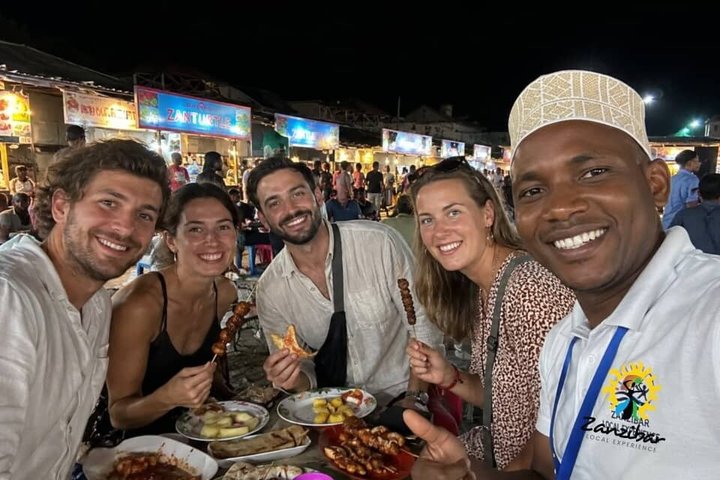
Arrive hungry, because portions are generous, and tell the host about allergies or dietary needs when you book. Wear closed shoes and clothes you do not mind getting splashed, bring a notebook if you like to record recipes, and ask about buying small packets of the spices afterwards, which make light and useful gifts. A class works well on a hotter day in Stone Town as a break from walking, and it pairs naturally with a morning at a spice farm or an evening at the Forodhani night market, where you can compare your own cooking with the street food.
What to expect
The experience
A small hands-on class with a local cook: prepare several Swahili dishes from scratch, then eat the meal together.
Best time
Late morning or midday, when the heat is at its height and a few hours in a shaded kitchen are most welcome.
How long
Roughly three to four hours including the meal.
Tips
Arrive hungry, mention allergies when you book, wear closed shoes and ask about buying spices to take home.
Quick picks
- Best for
- Food lovers who want to take a recipe home as well as a memory.
- Families
- Older children enjoy grating coconut and stirring pots, though a long kitchen session can be tiring for the very young.
- Couples
- A relaxed, shared activity that ends in a proper meal together.
- Pair with
- The spice farm tour earlier in the day, or the Forodhani night food walk in the evening.
- Time needed
- Half a day.
Good questions
Do I need cooking experience?+
No, the classes are designed for beginners. The cook shows each step and you join in at your own pace.
What will I cook?+
Menus vary, but usually include a rice dish such as pilau, a coconut-based curry or fish dish, a bread such as chapati and a side of vegetables. The booking page gives the menu for the version you choose.
Can vegetarians join?+
Yes, vegetarian and vegan menus are normally easy to arrange if you tell the host when you book.
Do I eat what I cook?+
Yes, the class ends with a shared meal made from the dishes you have prepared.
Is hotel pickup included?+
This depends on the version you choose, so check the booking page for the pickup area and any extra charge for hotels outside Stone Town.