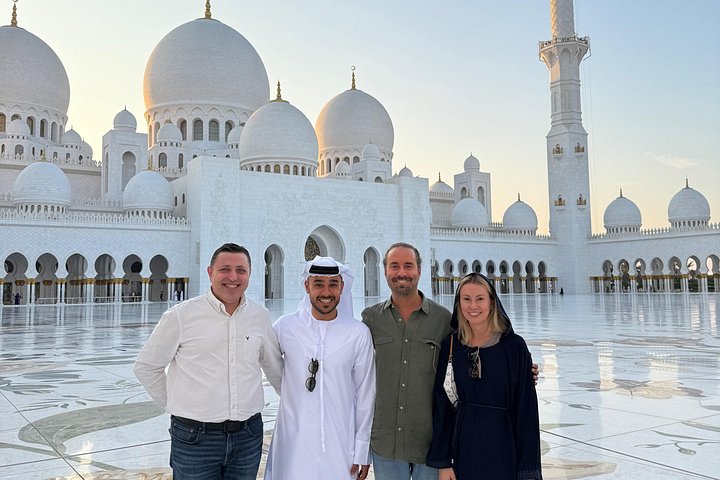
About an hour and a half inland from Abu Dhabi, close to the border with Oman, lies Al Ain, known as the Garden City for its shady avenues and ancient oasis. It is the birthplace of Sheikh Zayed, the founder of the UAE, and one of the oldest continuously inhabited settlements in the region, with traces of human life going back thousands of years. Several of its sites form a UNESCO World Heritage designation, including the Bronze Age tombs of Hafit and Hili, the old oases and a series of historic forts. A day trip usually visits the Al Ain Oasis, where thousands of date palms grow beside an ancient falaj irrigation system, the Al Jahili Fort and its exhibitions, the Al Ain Palace Museum, once the home of Sheikh Zayed, and often a camel market or the National Museum. Many itineraries add the drive up Jebel Hafeet, a limestone mountain with a winding road to a summit viewpoint. The change from the glass towers of the capital to shaded palm groves and mud-brick forts is dramatic, and it makes the trip a favourite with travellers who want heritage as much as headlines.
How it works
Most visitors join a full-day guided tour from Abu Dhabi, which includes air-conditioned transport, a guide, entry to the main sites and often lunch. The drive takes around ninety minutes each way on good motorways, so a day trip means an early start. You can also hire a driver or rent a car, though a guided tour handles tickets and logistics. Check which sites are included, since itineraries vary, and whether the mountain road and the zoo are part of the programme.
What to expect
You will walk through shaded palm groves, climb the ramparts of old forts, and see museums of Emirati life and archaeology. Distances between sites are short, but the sun is strong, so wear a hat and comfortable shoes and carry water. Dress modestly, particularly at religious and royal sites. Jebel Hafeet gives wide views over the city and the desert, and the road itself, with its many bends, is one of the great drives in the Gulf.
In summer the mountain can be cooler than the plain, and in winter it is very pleasant. Most museums close on set days and open at different times of day, so a guide's plan is helpful.
Making the most of it
The cooler months from October to April are best for a day in Al Ain, with comfortable temperatures for walking the oasis. Try dates fresh from the palms, browse the weekly markets if your itinerary allows, and keep a camera for the golden light on the fort walls. If you love heritage, ask for the Hili Archaeological Park, where Bronze Age tombs and a ceremonial site give a sense of how ancient the region's story is.
Families can include the Al Ain Zoo, which is a large, well-regarded wildlife park. Pair the day with a desert safari later in your stay, and you will have seen both the sand and the green, the two faces of the emirate. Many travellers say the quiet, human scale of Al Ain is the surprise highlight of their trip.
Good to know
Hours differ across sites, and some close on Mondays or for midday breaks, so a guide-led itinerary prevents wasted stops. Public holidays and Fridays can change opening times, and the oasis shade is the best place to rest during the hottest part of the day. Bring cash for small purchases at the markets, and a light jacket if you plan to drive up Jebel Hafeet in the evening, when the summit is windy.
What to expect
The experience
A full-day guided trip by air-conditioned vehicle to the oasis, forts and museums of Al Ain, often with a lunch stop and a drive up Jebel Hafeet.
Best time
October to April, when walking the oasis and forts is comfortable.
How long
A full day of eight to ten hours including the drive of about ninety minutes each way.
Tips
Start early, wear a hat and comfortable shoes, carry water, dress modestly and check which sites and meals your tour includes.
Quick picks
- Best for
- Heritage lovers who want to see the UAE beyond the skyline.
- Families
- Shady oases and a large zoo make it workable for children, though the day is long.
- Couples
- The mountain viewpoint and the quiet palm groves are a lovely contrast to city life.
- Pair with
- An evening desert safari later in the trip, or the Qasr Al Hosn heritage fort in the capital.
- Time needed
- A full day.
Good questions
How far is Al Ain from Abu Dhabi?+
About ninety minutes by road, or around 150 kilometres, along good motorways.
What are the highlights of Al Ain?+
The Al Ain Oasis, Al Jahili Fort, the Al Ain Palace Museum, the Hili tombs and Jebel Hafeet, plus the camel market and the zoo on some itineraries.
Is Al Ain a UNESCO World Heritage site?+
Yes, the Cultural Sites of Al Ain, including Hafit, Hili and the oases, are inscribed as a UNESCO World Heritage property.
Can I visit Al Ain independently?+
Yes, by hired car or driver, though a guided tour handles tickets, timing and lunch.
When is the best time to visit?+
October to April, when daytime temperatures are comfortable for walking.