Umm Qais occupies the northwestern tip of Jordan, on a ridge where the land falls away to the Yarmouk gorge and, beyond it, the Sea of Galilee and the Golan Heights. In antiquity this was Gadara, a prosperous Greek and Roman city and a member of the Decapolis, the league of ten cities in the region, famed for its philosophers and poets and mentioned in the Gospels in connection with the miracle of the swine. What survives is built from dark volcanic basalt, so the theatre, the colonnaded street and the Byzantine church look different from the pale limestone of Jerash and Amman. The Ottoman village that grew over the ruins adds old stone houses and a small museum. This full-day trip from Amman visits Jerash as well as Umm Qais, which is the efficient way to see both Roman cities in one go, and the itinerary names a cave stop connected with Jesus, so confirm the exact stops when you book your tickets.
How it works
A driver-guide collects you in Amman and heads north, usually reaching Jerash first, then continuing through the farmland of the Irbid plateau to Umm Qais. The total drive to Umm Qais is around two hours each way from the capital, so this is a long day that rewards an early start. Entry fees to the sites are normally separate from transport, and a Jordan Pass covers many of them, so check what the booking includes before you buy an additional pass.
What to see
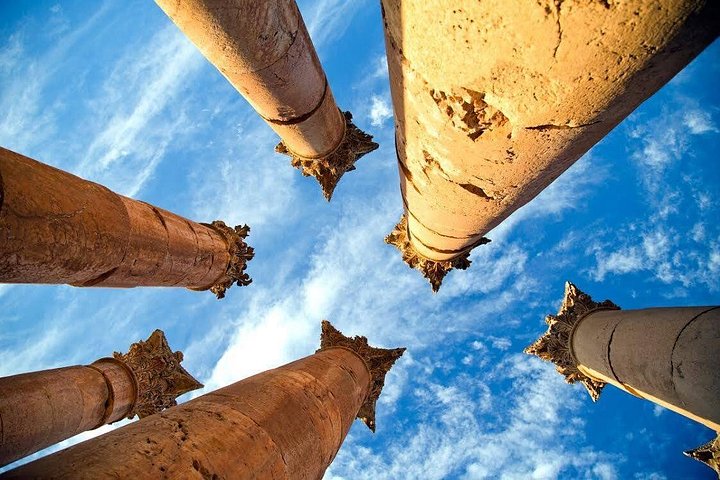
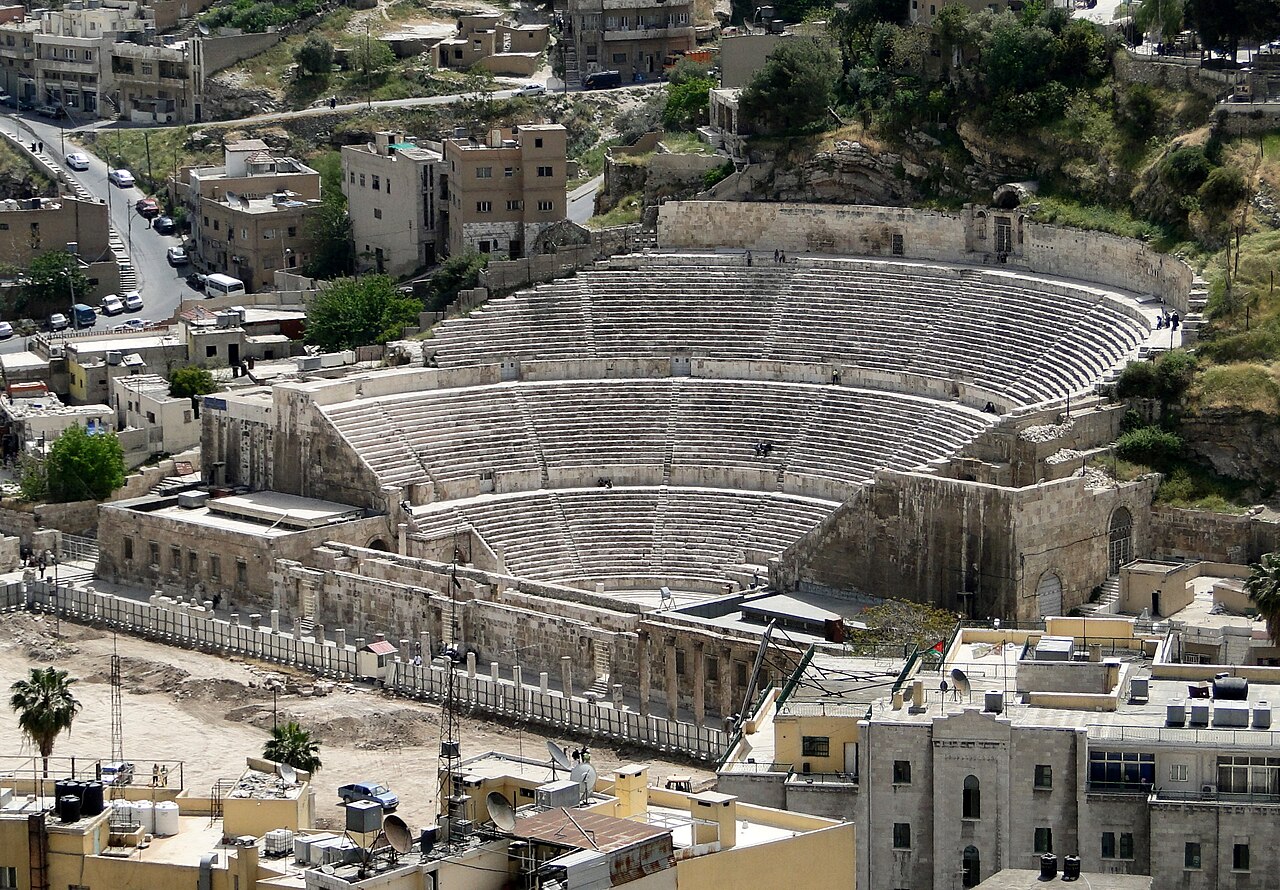
The basalt theatre is the first highlight, its black seats still in good shape and its seating facing the view. Walk the covered passage under the terrace, stroll the paved main street lined with broken columns and look into the Byzantine basilica terrace, whose columns frame the sea in the distance.
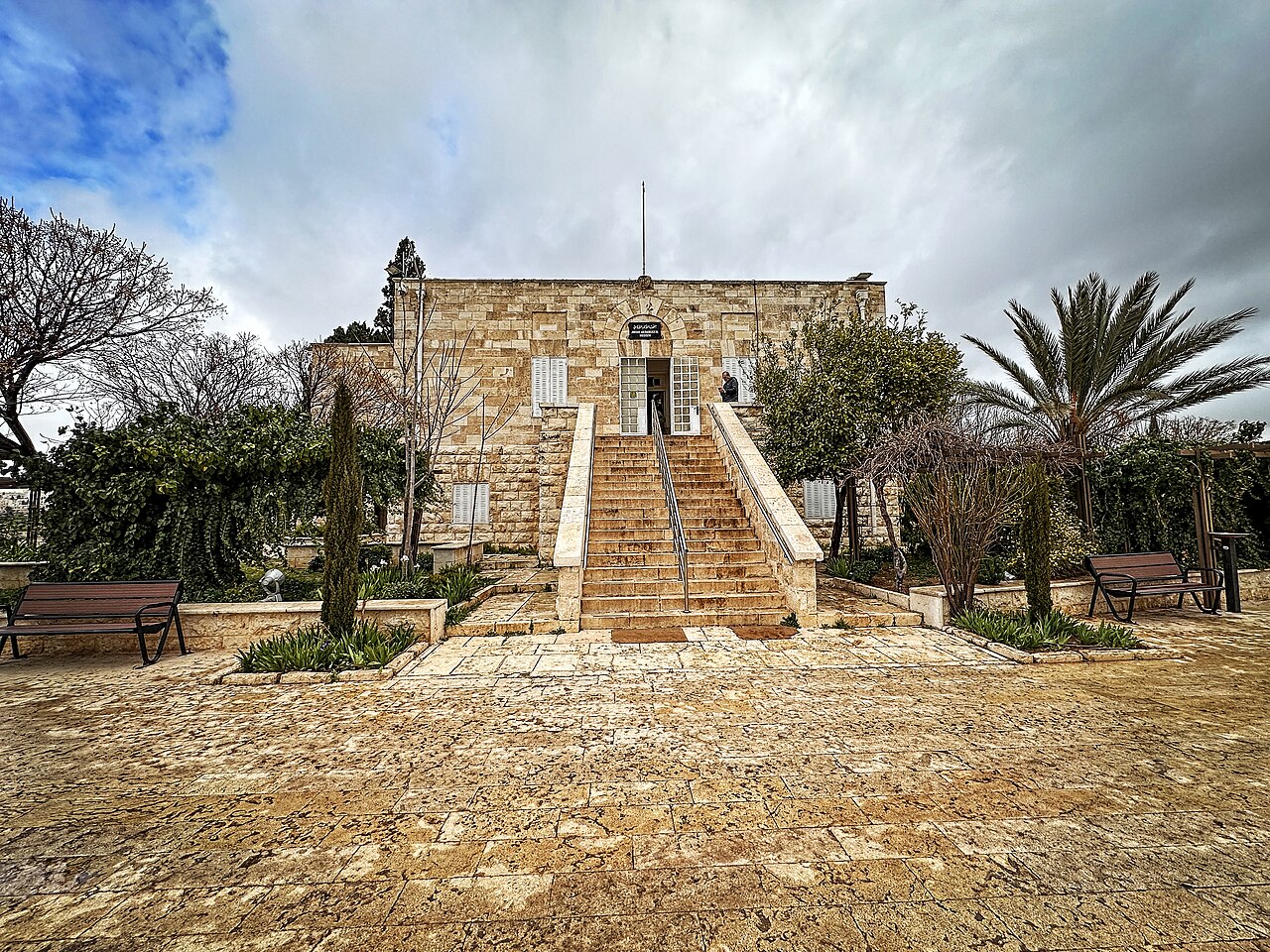
The Ottoman houses at the top of the site hold a small museum and a café with a terrace, which is the best place to take a break with the lake view. The view is the main reason people stay at the ridge in the late afternoon, when the light softens over the water.
Making the most of it
Spring is the best season, when the fields are green, and early autumn is warm and clear. Summer afternoons are hot and exposed, so carry water and a hat, and bring a light jacket for winter when wind sweeps the ridge. The view depends on haze, so a clear day matters.
Because the trip is long, think about whether to combine Umm Qais and Jerash into one day or split them with a night in the north. Dress modestly, since this is a traditional area, and keep the border zone in mind: photographing military installations is not allowed, and your guide will advise where it is fine to use a camera.
Practical notes
Bring a camera with a zoom lens for the lake and valley, a hat and sunscreen, and a refillable water bottle. The café at the top of the site is a good place for a coffee or lunch if your itinerary leaves time, and the small museum in the Ottoman house displays mosaics and sculpture found on the ridge. Guides often add stories about the philosophers and poets who came from Gadara, which gives the stones a human voice.
What to expect
The experience
A guided full-day trip by road from Amman to Jerash and Umm Qais, the Roman city of Gadara, with views over the Sea of Galilee.
Best time
Spring and autumn, ideally on a clear day for the views.
How long
A full day of about ten hours, with roughly two hours of driving each way to Umm Qais.
Tips
Start early, carry water and a hat, confirm what entry fees and stops the booking covers and dress modestly.
Quick picks
- Best for
- History lovers who want a second Roman city with a spectacular setting.
- Families
- Open ground and ruins suit older children, but the day is long and mostly on the road.
- Couples
- Sunset-style light over the water makes the late stop memorable.
- Pair with
- Jerash on the same day, or Ajloun Castle on a separate trip.
- Time needed
- A full day.
Good questions
How far is Umm Qais from Amman?+
About two hours by road each way, so most people combine it with Jerash on a full-day trip.
What is Gadara?+
Gadara was a Greek and Roman city in the Decapolis, and its ruins at Umm Qais include a basalt theatre, a colonnaded street and a Byzantine church.
Are entry fees included?+
Entry is often separate from transport, and a Jordan Pass may cover it. Confirm this before you pay twice.
Why are the ruins black?+
They are built from local volcanic basalt, which is much darker than the limestone used at Jerash and in Amman.
What is the best time of day for the view?+
Late afternoon, when the light is soft and the haze is lower, though the trip order depends on your operator.