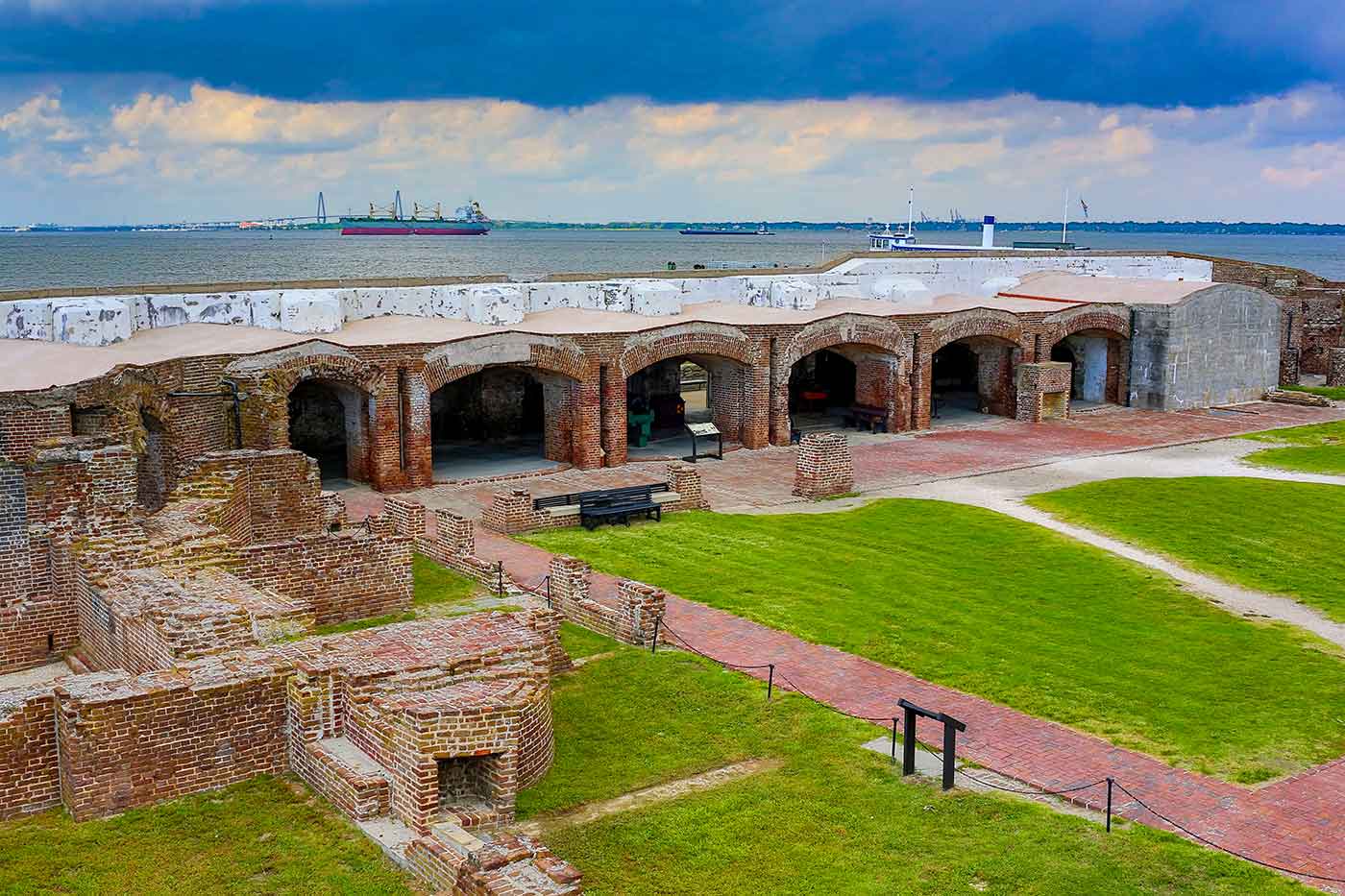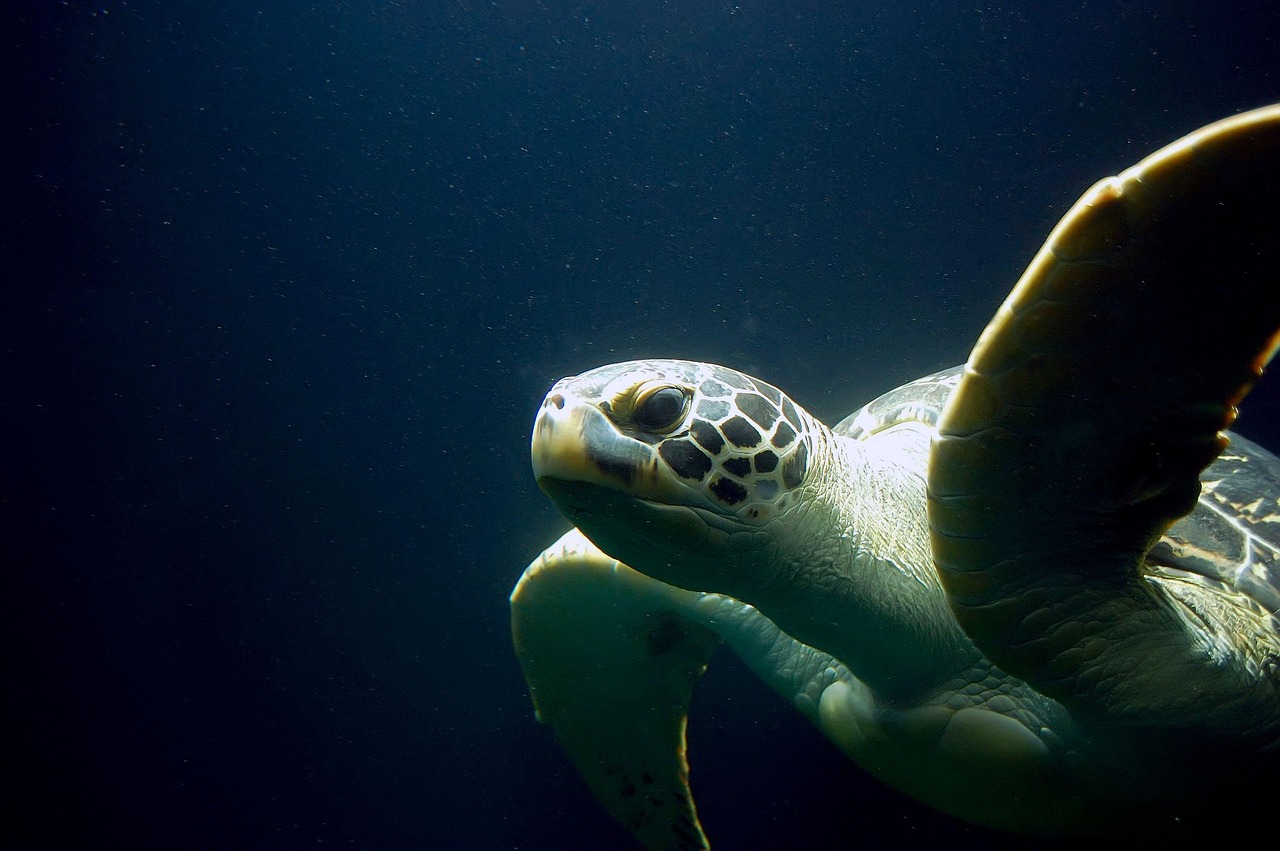
The South Carolina Aquarium tells the state's water story from mountains to Gulf Stream on a downtown harbor wharf: the journey runs Blue Ridge streams (brook trout, the river otters' crowd-owning habitat) through Piedmont and swamp (the beloved albino alligator holding court), salt marsh touch tanks (rays and horseshoe crabs at kid height), and harbor-front galleries whose windows put the real thing behind the exhibits — culminating in the Great Ocean Tank, the 385,000-gallon, two-story centerpiece where sharks, a green sea turtle, and schooling jacks circle divers at feeding talks. The institution's soul is the Sea Turtle Care Center: the working hospital's recovery ward runs on public view — patients from cold-stunned Kemp's ridleys to boat-struck loggerheads in named tanks with charts, treatments narrated, and releases celebrated as Lowcountry civic events — making the aquarium the rare one whose conservation work is the exhibit (Caretta, the resident 220-pound loggerhead in the big tank, is the program's ambassador). Scale expectations correctly: this is a focused two-to-three-hour regional aquarium, not a mega-park — precisely why it fits the itinerary as the family's harbor-morning anchor, the heat-or-rain valve, and the pairing half of a Fort Sumter day (the ferry's downtown dock sits beside it at Liberty Square). Timed tickets smooth summer; the 4D theater and ropes-lite add-ons serve the kid economy; and the turtle ward alone converts the museum-weary.
The aquarium's design thesis — one state's watershed, told downstream — gives the visit its narrative spine: the Mountain gallery's cool-water trout and waterfall (the otters' pool at its base running the all-day show), the Piedmont and blackwater-swamp passages (the albino alligator's pale coil the photographed centerpiece), the Coastal Plain's marsh ecology (the touch tank's rays and whelks staffed for small hands), and the Ocean floor's two-story window wall — the Great Ocean Tank's population (sandbar and nurse sharks, Caretta the loggerhead, moray and barracuda, the schooling silver) circling dive-feeding talks whose schedule should structure the visit. The harbor windows between galleries are the quiet masterstroke: dolphins strafe the wharf pilings often enough that the wild show interrupts the captive one.
The Sea Turtle Care Center earns national notice: South Carolina's strandings — cold-stunned, hooked, shrimp-net and boat-strike patients — arrive here for surgery and rehab, and the ward's public design (recovery tanks with patient charts, treatment windows, the staff's rounds narrated) converts veterinary medicine into the state's best conservation exhibit; release days (patients trucked to the beach amid crowds) are tracked like local holidays, and the program's numbers (hundreds of patients returned) justify the pride. Caretta — the Great Ocean Tank's longtime loggerhead — anchors the species' story at viewing-glass scale.
Practicals and fit
Liberty Square's downtown wharf (shared with the Fort Sumter Visitor Center and ferry dock — the natural same-day pairing), timed entry smoothing summer and rain surges; two-to-three hours covers the floor with a dive talk and ward visit; stroller-friendly throughout; the café and terrace handle the harbor-view lunch. The honest calibration: travelers fresh from Atlanta's or Chattanooga's giants should expect regional scale and conservation depth rather than spectacle acreage — and families, first-timers pairing Sumter, and anyone collecting turtle wards will find it exactly right-sized for the Charleston day it anchors.
What to expect
The experience
A mountains-to-sea journey — otters, albino alligator, marsh touch tanks, the 385,000-gallon Great Ocean Tank's dive talks — with the working sea-turtle hospital's recovery ward on public view.
Best time
Build the loop around a dive-feeding talk; timed tickets smooth summer middays and rain surges.
How long
Two to three right-sized hours.
Tips
The turtle ward is the soul — read the patient charts. Liberty Square shares the Fort Sumter ferry dock: pair the morning fort with the afternoon tank. Watch the harbor windows; wild dolphins photobomb.
Quick picks
- Best for
- Families anchoring the harbor day — and anyone who wants their aquarium with a working hospital attached.
- Families
- Touch tanks at kid height, otters on perpetual shift, and sharks at two-story glass — the stroller-friendly loop.
- Couples
- A pleasant rain-valve hour; the turtle ward and harbor terrace give it unexpected heart.
- Pair with
- Fort Sumter from the same wharf; the Yorktown across the water for the full harbor syllabus.
- Time needed
- A half day with the ferry pairing.
Good questions
What is the turtle hospital?+
The Sea Turtle Care Center — the state's working stranding hospital with its recovery ward on public view: named patients, charts, narrated treatment, and beach releases celebrated as civic events.
How big is the main tank?+
385,000 gallons across two stories — sharks, Caretta the loggerhead, and schooling jacks circling scheduled dive-feeding talks. Check times at entry and build the loop around one.
Is it worth it after bigger aquariums?+
Scale it correctly: regional and focused, with conservation depth (the ward) as the differentiator — right-sized for the Charleston day rather than competing with mega-parks.
How does the Fort Sumter pairing work?+
The ferry's downtown dock shares Liberty Square with the aquarium — morning boat to the fort, afternoon tank, one parking decision.
When should we go?+
Any heat-or-rain window, timed-ticketed in summer; mornings run school-group energy on weekdays and open space on weekends.