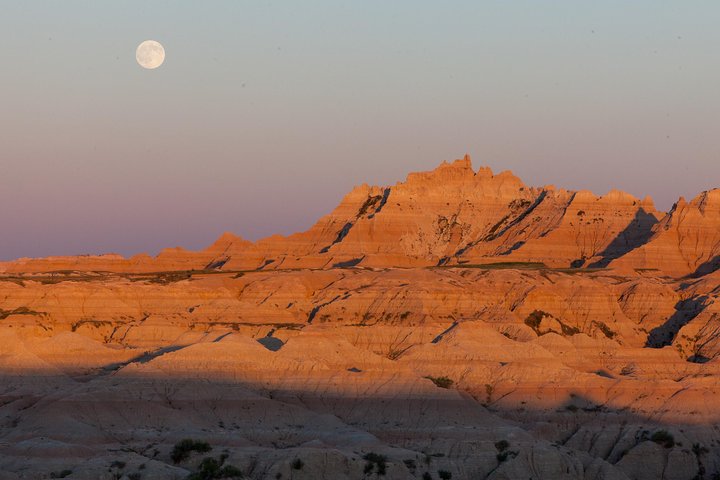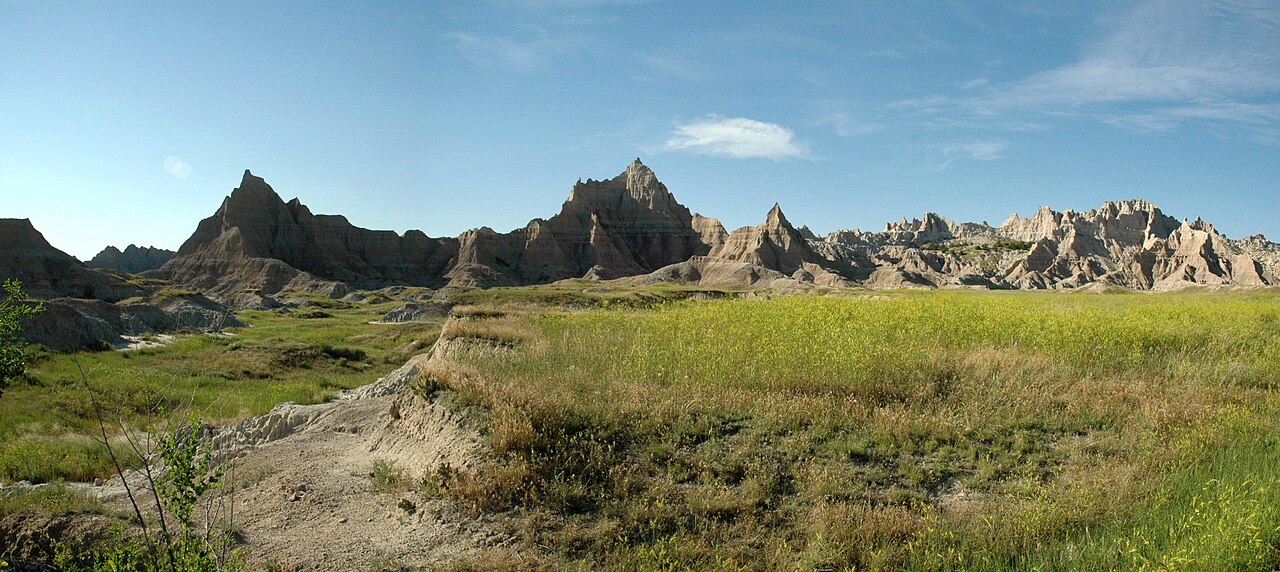
Badlands After Dark is built around the way the park changes through an evening. The tour begins in the late afternoon, when low sun turns the banded spires pink, orange and rust, and carries on past sunset into the blue hour, when the formations fade to silhouettes and the first stars appear. By the time the sky is fully dark, you are well away from any city glow, in one of the darker stretches of the interstate corridor, with a guide who knows where to stand and what you are looking at. It is a premium outing from the Rapid City area, aimed at couples, photographers and anyone who has been told that the Badlands at night is something special. The appeal is the combination: a landscape that photographs well at golden hour and a sky that rewards patience once the light has gone. Because the park lies a long way east of the Black Hills, doing this on your own means a late and tiring drive back, which is the main reason people hand the logistics to a guide.
The park is a good place for this kind of evening for two reasons. First, the clay and sandstone layers hold color, and the hour either side of sunset is when the reds, yellows and purples are at their strongest. Second, the prairie around the park is sparsely populated, so once the sun is down the sky can show the Milky Way in good conditions, along with planets and satellites that a guide can help you identify.
The park itself promotes its night skies, and ranger programs in summer are a popular complement. Check the tour page for the start time, the length of the outing, the group size and what is provided, because these details differ between operators and seasons.
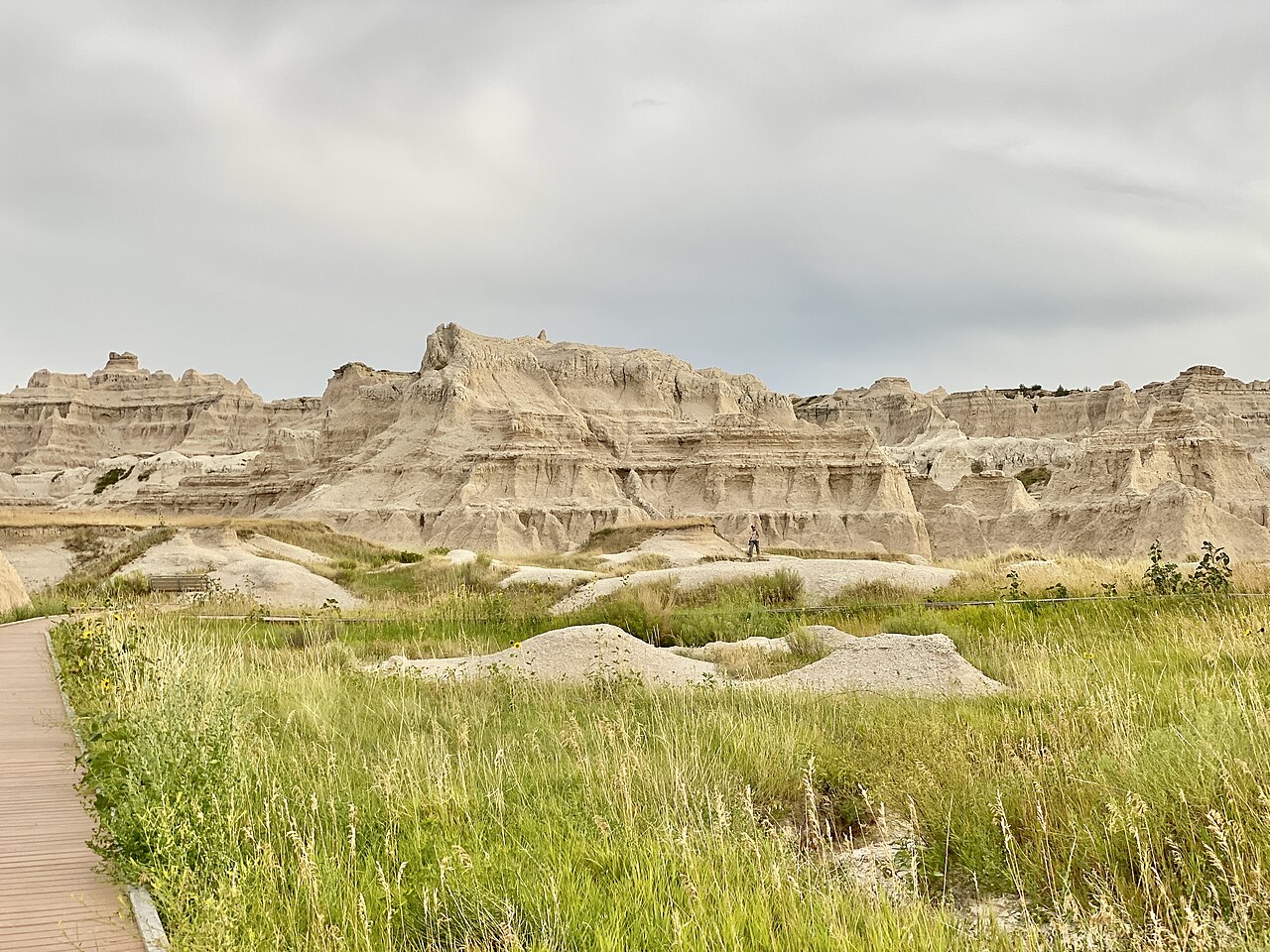
What you do depends on the guide, the weather and the moon. Expect a drive into the park, a few overlook stops for light and photographs, perhaps a short boardwalk walk, and then a pause somewhere open and dark for the sky itself. A moonless night gives the richest star field, while a bright moon lights the formations in a way that is atmospheric in its own right.
Cloud, smoke and summer thunderstorms can interrupt the plan, so ask what the operator does if the sky is poor. Dress warmer than you think you need to, since prairie nights cool quickly even after a hot day, and bring a hat, a light jacket and a charged phone or camera. A tripod helps if you want to try night photography.
This is not the only way to enjoy the Badlands after sunset. Camping or staying at Cedar Pass Lodge puts you inside the park for the evening, and a self-guided visit with a red flashlight and a star chart costs very little. A guided evening makes sense if you are based in Rapid City, want an expert and do not want to drive home in the dark through wildlife country.
Pair it with a daytime visit to the Loop Road on a separate day so you see the park in both moods, and read the stargazing guide before you go.
Allow a little extra margin for the return, since the drive back to Rapid City is long and the roads are quiet after dark. If you are sensitive to cold, pack a blanket or a warm drink, and let your eyes adjust for around twenty minutes without looking at a bright screen, which makes a dramatic difference to how many stars appear.
What to expect
The experience
A guided evening trip from the Rapid City area into Badlands National Park, from late-afternoon light through sunset and into the night sky.
Best time
Clear, dry evenings, ideally around the new moon for the darkest sky. Summer storms and smoke can interfere.
How long
An evening that runs well past sunset. Check the tour page for the start time and length.
Tips
Bring warm layers, a hat, water and a camera. Confirm pickup details and whether park admission is included when you book.
Quick picks
- Best for
- Couples, photographers and anyone who wants the park at its most atmospheric.
- Families
- Best for older children who can stay up late and handle a cool night.
- Couples
- One of the most romantic ways to see the park, with golden light and a dark sky.
- Pair with
- A daytime Loop Road drive on another day, or a sunrise outing.
- Time needed
- An evening, with a late return to Rapid City.
Good questions
When does the tour start?+
It starts in the afternoon or early evening so you reach the park for the best light before sunset. The exact time changes with the season, so check the tour details when you book.
Will I see the Milky Way?+
On a clear night with little moonlight, often yes. Cloud, haze, smoke and a bright moon all reduce what you can see, so no guide can promise it.
Is park admission included?+
It varies by product. Check the inclusions when you book, and carry a payment card in case the entrance fee is charged separately, since the entrance station takes cards only.
What should I wear?+
Layers, including a warm jacket and a hat. The prairie cools quickly after sunset even on hot days, and you will spend time standing still looking up.
Can I do this without a tour?+
Yes. You can drive in yourself, stay at Cedar Pass Lodge or camp, and attend a summer ranger night sky program. A tour mainly removes the long drive back in the dark.