Badlands National Park is a very good place to see the night sky. The National Park Service says visitors can see more than 7,500 stars on any given night, and describes the clarity of the Milky Way as especially phenomenal. From Memorial Day through Labor Day, rangers hold night sky viewing at the Cedar Pass Campground Amphitheater each evening, just after the evening ranger program. They point out constellations, stars and planets, and telescopes are provided through the park's partners. The session usually starts around 9:45 pm in May through July and around 9:15 pm in August and September, depending on sunset, and the park suggests allowing 30 to 90 minutes. No reservation is needed, although entrance fees may apply. The park also hosts an annual three-day Astronomy Festival with family activities and evening presentations. Outside the programs, you can stargaze on your own from overlooks and pull-offs, provided you follow park rules and use caution in the dark.
Why does it work so well? The park sits in a sparsely populated part of South Dakota, far from major cities, and the open terrain gives broad, low horizons. On a clear, moonless night the Milky Way is plainly visible as a band of cloud-like light, and meteors and satellite flyovers add to the show.
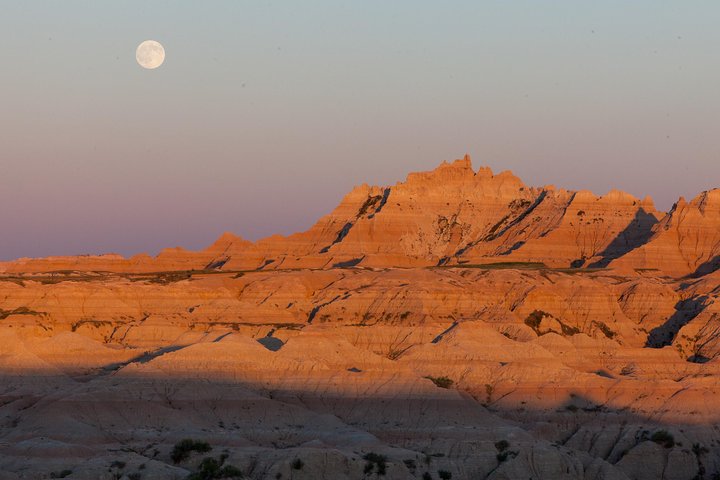
The experience also rewards a little preparation. Check the moon phase, since a full moon washes out faint stars, and check the weather, as cloud and smoke can spoil a night. Allow your eyes to adjust for at least twenty minutes, and use a red light rather than a white one.
To attend the ranger program, arrive early enough to park and walk the accessible paved path to the amphitheater, bring a layer for the evening chill, and call the Ben Reifel Visitor Center to confirm the current schedule. Programs vary with the season, and changes in staffing or weather can affect them. For independent stargazing, choose a safe parking area, keep headlights and flashlights low, and avoid walking off-trail in the dark. The terrain has drop-offs and wildlife, and the clay is unforgiving on an unlit slope.
A night-sky visit pairs naturally with a stay inside or near the park. Camping at the Cedar Pass Campground puts you steps from the amphitheater, and Cedar Pass Lodge cabins and the motels near Interior and Wall shorten the drive back. If you prefer a guided approach, a private sunset and stargazing tour from the Rapid City area adds transport, commentary and equipment, and spares you the late drive on dark roads.
Whichever route you choose, give the sky an hour at least, and leave the camera on a tripod if you want to capture it.
What to expect
The experience
Ranger-led night sky viewing at the Cedar Pass Campground Amphitheater in summer, with telescopes provided, plus independent stargazing from pull-offs. Park entry may apply.
Best time
Clear, moonless nights. Summer programs follow the evening ranger talk.
How long
Plan 30 to 90 minutes for the program, and longer for your own viewing.
Tips
Call the Ben Reifel Visitor Center to confirm the schedule. Dress warmly, use a red light and let your eyes adjust.
Quick picks
- Best for
- Couples, families and anyone who wants a quiet evening under a big sky.
- Families
- Older children usually enjoy the telescopes; bring layers and keep a close watch in the dark.
- Couples
- A romantic, inexpensive evening, especially with a campfire-free night at the campground.
- Pair with
- A sunset on the Loop Road beforehand, and a campground or lodge stay.
- Time needed
- One to two hours.
Good questions
When are the ranger night sky programs held?+
From Memorial Day through Labor Day, each evening after the evening ranger program, at the Cedar Pass Campground Amphitheater. Start times shift with sunset, so confirm the schedule with the visitor center.
Do I need a reservation?+
No. The park says reservations are not required for the night sky viewing. Entrance fees may apply, and the path to the amphitheater is a paved accessible ramp.
Are telescopes provided?+
Yes. The park says telescopes are provided through its partners during the summer program. Bring binoculars if you have them.
What is the Astronomy Festival?+
It is an annual three-day event with family activities and evening presentations, and it needs no advance registration or tickets. Dates change, so check the park before you plan around it.
Can I stargaze without joining a program?+
Yes. Use a safe pull-off or overlook, keep lights low and avoid walking off-trail in the dark. The terrain has drop-offs and the weather can change quickly.