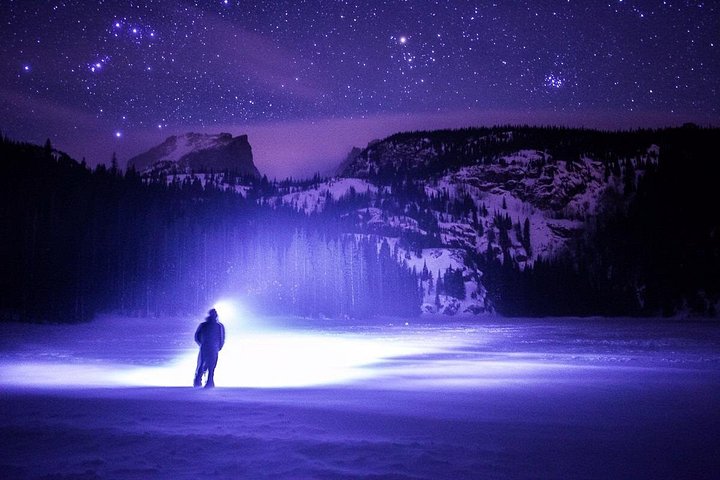
Banff sits in a mountain valley with relatively little light pollution once you leave the townsite, and the stargazing walk is built around that. The tour lasts two hours and combines a walk at sunset with a guided look at the night sky, with a guide and headlamps supplied for the route. The booking page highlights dark-sky viewing and the Milky Way, and it carries a best-seller label and a high rating from hundreds of travellers, which makes it one of the most popular evening outings in town. The guide explains how to read the sky, points out constellations and planets and helps you spot features that are easy to miss alone, and the format suits people who want a gentle, educational evening rather than a technical astronomy session. Dates, start times and meeting points are set per departure, so check the schedule when you book. Because the experience depends on clear skies, it is weather dependent, and cloud can limit or cancel the viewing, so choose a flexible evening if you can and read the cancellation terms. Long winter nights give the most generous viewing window, and with darkness arriving early from late autumn the outing fits easily into a day of skiing or sightseeing.
What sets a guided stargazing walk apart from stepping outside is context. A guide knows where the light is darkest, how to protect your night vision and what to look for on a given night, and can answer the questions that come up when the sky is suddenly full of stars.
The walk also gives a sense of the park after dark, when the sounds change and the mountains become silhouettes. Do not expect a telescope session unless the booking says so; the focus is on naked-eye viewing and the guide's commentary, with photography tips where conditions allow.
Dress warmly, much more warmly than you think you need. Standing still in the cold for an hour can feel colder than a ski day, so wear insulated boots, a hat, gloves and a thick jacket, and bring a thermos if the booking allows. Red or dimmed light helps preserve night vision, and the headlamps supplied are for the route. Keep phones on night mode, and understand that a phone camera will capture only a fraction of what you see. If you want serious astrophotography, look for a dedicated photography tour instead.
Pair the outing with an early dinner in Banff, since the start time is set by sunset, and with a soak at the Upper Hot Springs on another day to warm up. If you are hoping for the northern lights, treat them as a bonus rather than a promise, as they depend on solar activity and cloud. For another evening experience, the Johnston Canyon evening icewalk offers a different kind of night outing in winter, and the ghost walk covers the town streets. Check the departure details and the weather forecast before you go.
Think about the sky as well as the tour. Check the cloud forecast and the moon phase before you choose a night, because a bright full moon washes out faint stars while a new moon gives the darkest sky. Avoid looking at your phone screen once your eyes have adapted, and give yourself about twenty minutes to see the sky open up. A cloudy evening may still be worth the walk for the guide's stories, but ask about the policy first.
What to expect
The experience
A two-hour guided sunset and stargazing walk in Banff National Park with a guide and headlamps, focused on the dark sky and the Milky Way.
Best time
Clear nights; long winter evenings give the most viewing time. Dates and start times vary by departure, so check when you book.
How long
About two hours.
Tips
Dress much warmer than you expect and wear insulated boots. Clear skies are needed, so keep a flexible evening. Check the meeting point and cancellation terms when you book.
Quick picks
- Best for
- Couples and families who want a gentle, educational evening under the stars.
- Families
- Good for curious older children; the cold and the late hour can be hard on very young ones.
- Couples
- A quiet walk at sunset followed by an hour under the Milky Way.
- Pair with
- An early dinner in Banff or a soak at the Upper Hot Springs another day.
- Time needed
- An evening, about two hours plus dinner.
Good questions
What will I see?+
The dark sky, constellations and, on clear nights, the Milky Way, with a guide explaining what you are looking at. Visibility depends on cloud.
What is provided?+
A guide and headlamps for the route. Check the booking for any other inclusions.
When does it run?+
Dates and start times vary by departure and the start depends on sunset. Check the schedule when you book.
What if it is cloudy?+
The experience is weather dependent, and cloud can limit or cancel the viewing. Read the cancellation terms when you book.
Can I see the northern lights?+
They are possible on active nights but never guaranteed, so treat them as a bonus.