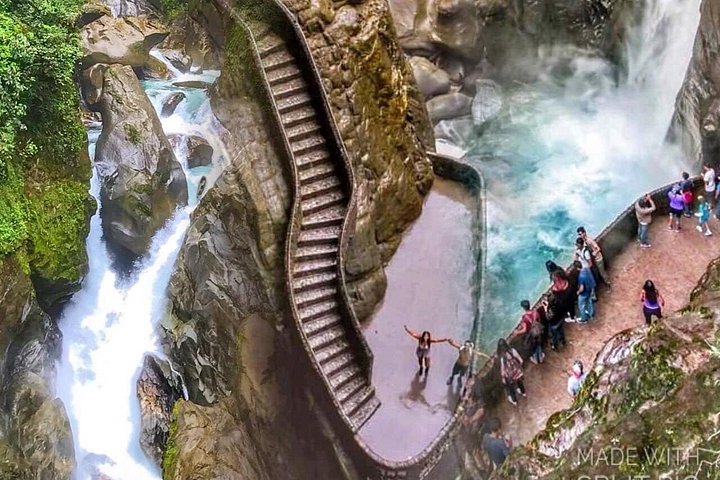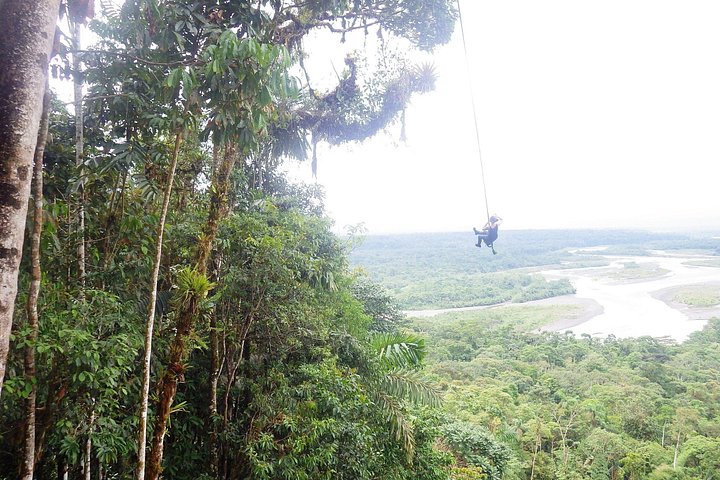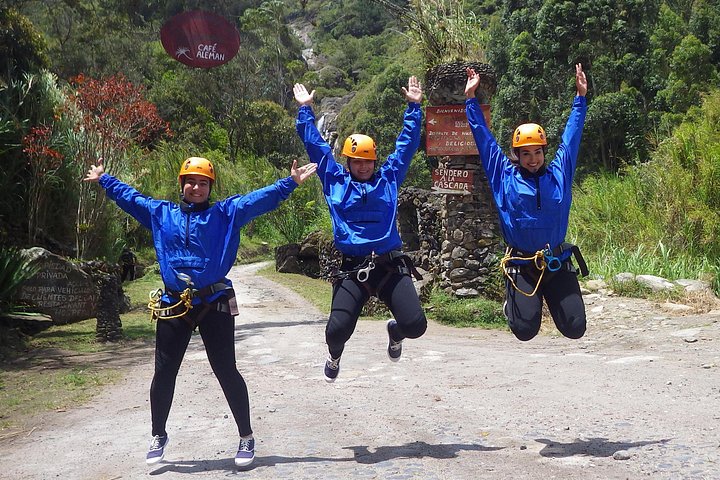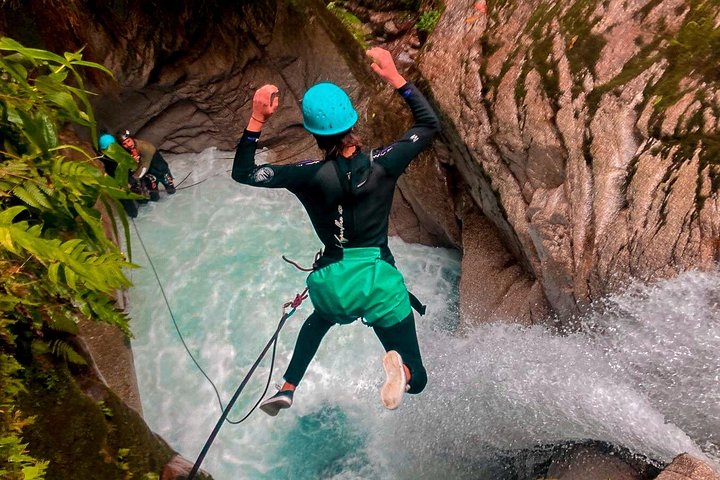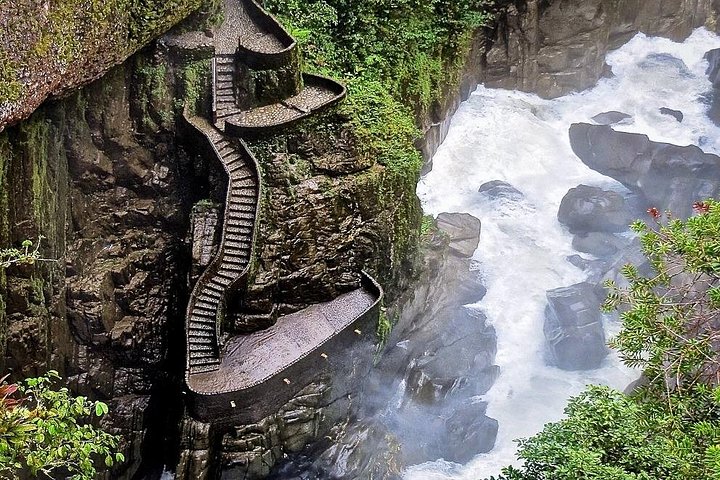
The Ruta de las Cascadas is the signature outing from Banos. A paved road runs east from town along the Pastaza river, dropping from the cool highlands toward the warm, humid edge of the Amazon basin, and along the way a series of waterfalls tumble from the green walls of the gorge. Names you will hear include Manto de la Novia, the Bridal Veil, a lacy cascade reached by a cable car over the canyon; Ojos de Agua; Machay, in a tight ravine that can be reached by a short walk; and the great finale at Pailon del Diablo, the Devil's Cauldron, where the river drops into a gap that sprays visitors on a viewing path. The route runs around 18 kilometres and a half-day tour covers its highlights, though keen walkers and cyclists can spend a full day. A guided tour such as the one linked here handles transport, usually in a small vehicle or an open-sided chiva bus, and links the stops in a sensible order. A guide explains the geography and can help with entry fees to the individual sights, which are normally paid at the gate or may be included depending on the product. Tour length varies by operator, so check the details when you book.
What makes the route work is variety. Some falls are seen from a roadside lookout in a few minutes; others reward a walk, a staircase of wet stone steps, or a crossing on a suspension bridge. The mixture of cloud forest, farmland and steep rock walls changes quickly as you descend, and the temperature rises noticeably, so the first hour in a fleece becomes a second hour in a t-shirt. Banos itself sits near 1,800 metres, while the lower end of the route is far warmer and more humid.
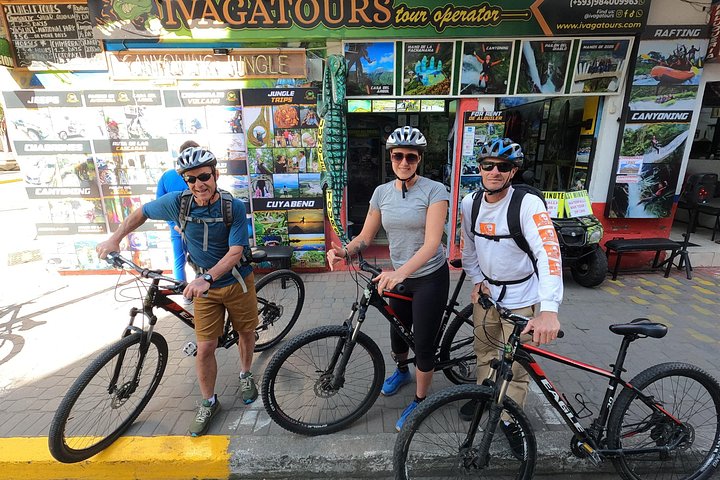
Choose your style before you choose your tour. Group tours are inexpensive and sociable, with a fixed itinerary and a driver who knows where to park. Private vehicles allow flexibility, which suits photographers and families. Cyclists often rent bicycles in town, ride the downhill route and return by truck, and ATV and buggy tours turn the same road into an adventure drive. Whichever you pick, set off early, because afternoon cloud and rain are common and the light on the falls is best in the morning.
Practical details matter. Bring a rain jacket, a swimsuit if you plan to enter the pools, and shoes you do not mind getting wet. Many of the best viewpoints involve steps, so those with limited mobility should ask the operator which stops are easiest. Carry small cash for entry fees, cable cars and snacks. Standards for safety on the cable car and rope bridges vary, and your guide will advise on conditions after heavy rain.
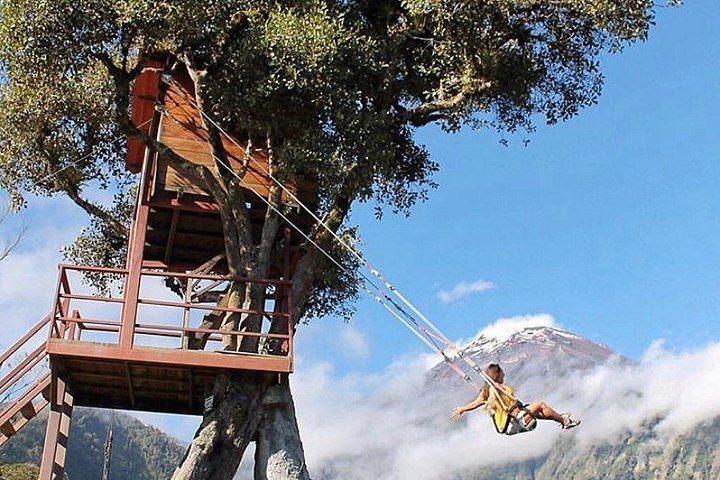
Pair the route with the Swing at the End of the World and the Tree House for a classic full day, or with a hot-spring soak in the evening to ease tired legs. Many travellers book this tour on arrival in Banos, since agencies on the main streets sell it daily, but booking ahead guarantees a seat in high season.
What to expect
The experience
A guided circuit by vehicle along the Pastaza gorge, stopping at a series of waterfalls, viewpoints and bridges.
Best time
Morning, before afternoon cloud and rain, and the dry months for more reliable weather.
How long
Half a day for the main stops, a full day for walks and extra falls.
Tips
Bring a rain jacket, a swimsuit and small cash for entry fees. Ask which stops involve many steps.
Quick picks
- Best for
- First-timers who want the headline waterfalls in one efficient outing.
- Families
- Good for families with older children; some stops involve steps and wet paths.
- Couples
- Pair with a sunset soak in the hot springs.
- Pair with
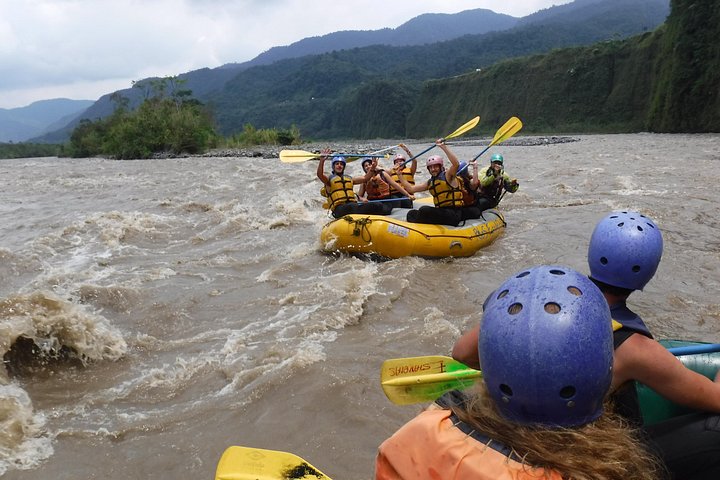
- The Tree House swing, Pailon del Diablo and the ATV or bike options.
- Time needed
- Four hours to a full day.
Good questions
How long is the Route of the Waterfalls?+
The road runs roughly 18 kilometres from Banos toward Rio Verde, and tours cover it in a half day or a full day.
Which waterfall is the best?+
Pailon del Diablo is the most powerful and most visited, while Manto de la Novia and the smaller falls offer quieter, scenic stops.
Can I do it independently?+
Yes. You can rent a bicycle, take a bus or hire a taxi. A tour simplifies transport and the order of stops.
What should I wear?+
Layers, a rain jacket and shoes with grip. The lower end of the route is warmer and wetter than Banos.
Is it suitable for children?+
Generally yes, but some viewpoints require many steps and wet paths, so check with the operator.