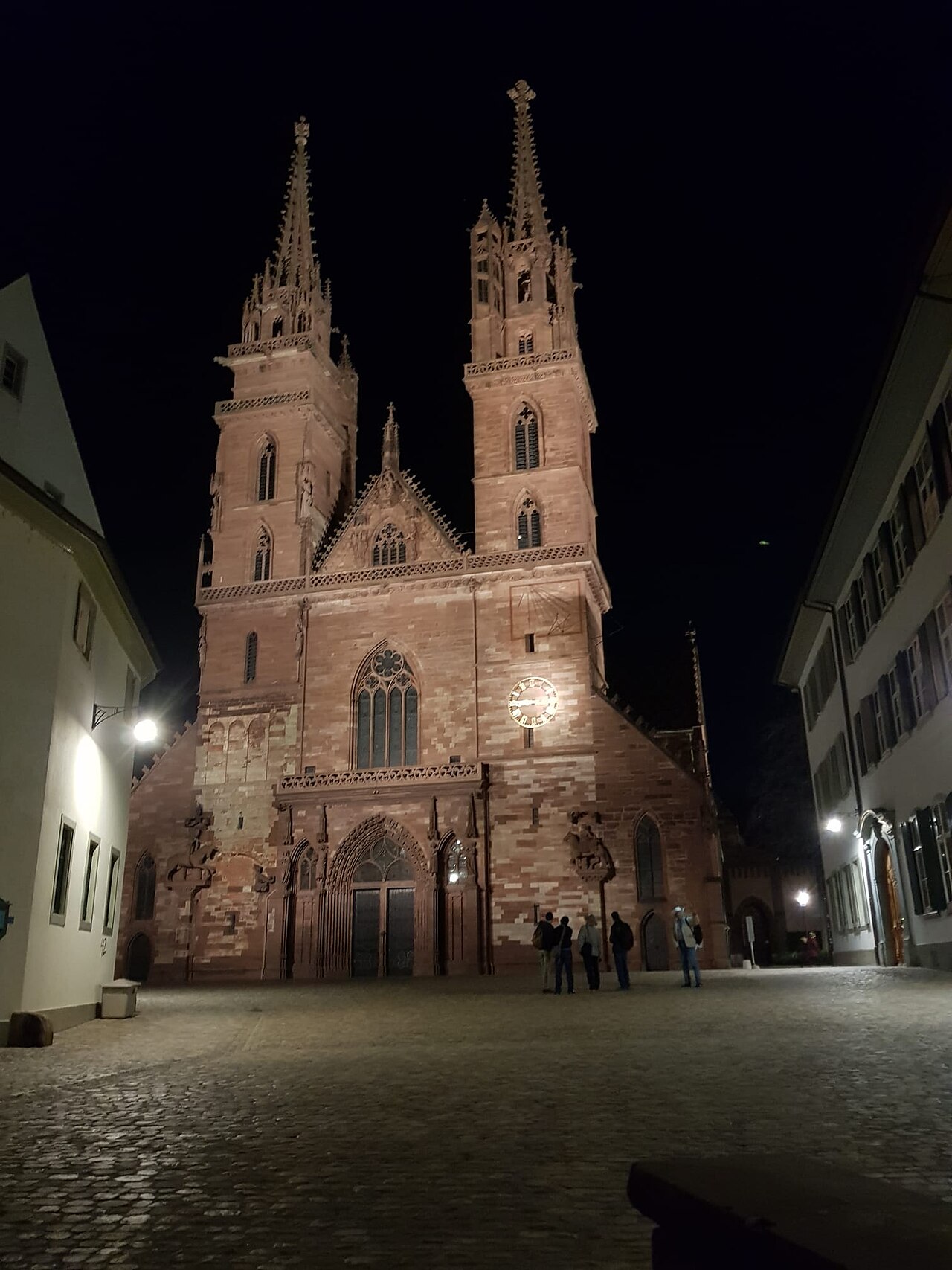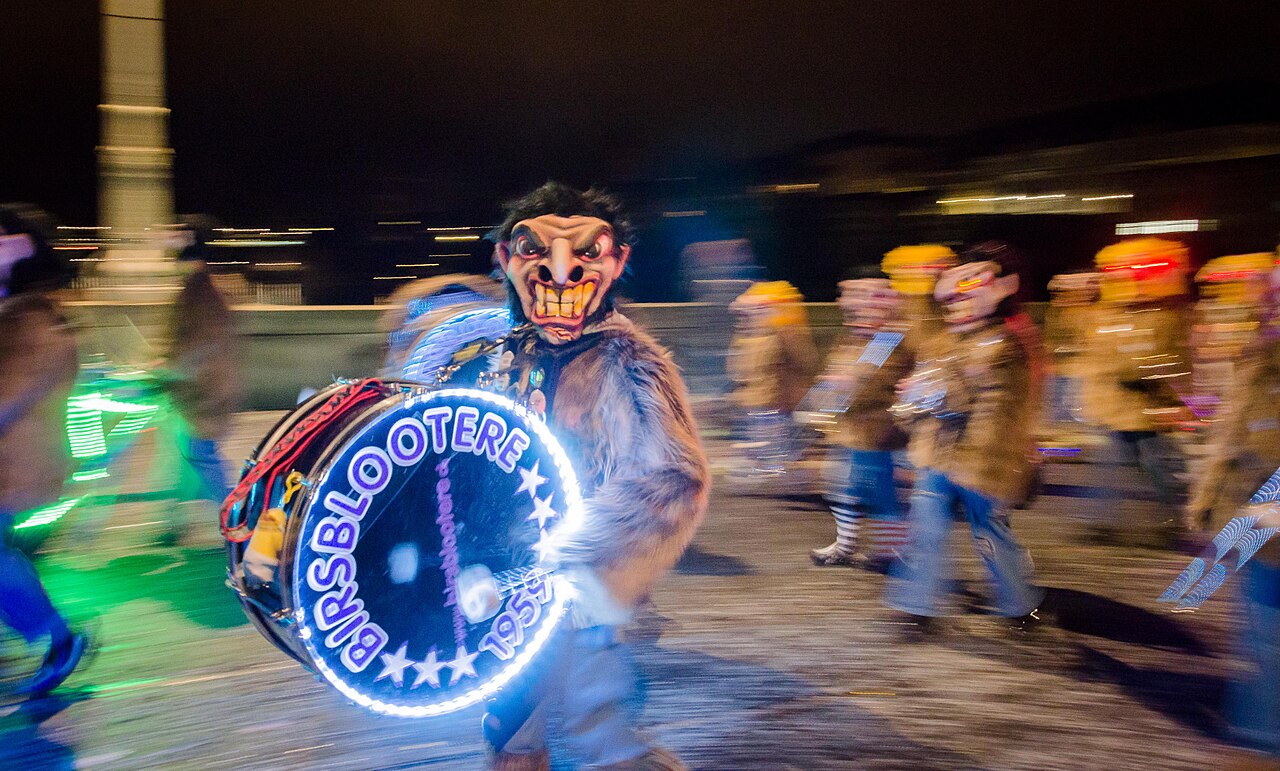
The Basler Fasnacht is the biggest and most distinctive festival in the city, and one of the most remarkable carnivals in Europe. It begins in the dark at four in the morning on the Monday after Ash Wednesday, when the street lights are switched off across the old town and thousands of costumed musicians and bearers of huge painted lanterns step off in silence in a ceremony called the Morgestraich. As the clock strikes, the drums and piccolos begin, and the town is filled with music and glowing lanterns. It has been recognised by UNESCO as an intangible cultural heritage, and it is a must see for anyone who loves living traditions. Fasnacht lasts exactly seventy two hours, from that Monday morning to Thursday morning, and each day has its own rhythm. Cliques, the neighbourhood groups that organise the parades, march through the streets in costume and mask, playing a unique music, with satire and wit a key element. Sujets, the themes of each clique, poke fun at politics and local life, and are announced on the lanterns, in rhymed verses and on flyers called Zeedel.
The three main parts are the Morgestraich, the afternoon parades known as the Cortege on Monday and Wednesday and the evenings, when groups wander the lanes. Tuesday is known for children and families, with a lighter mood. Away from the main parades, the atmosphere in the old town is intoxicating, with pipers and drummers on every corner and lanterns glowing in the dark.
Traditional food and drink is part of the experience. At dawn, people eat Mehlsuppe, a flour soup, and Zwiebelwaehe, an onion tart, in tiny restaurants and pubs, and later, you will find Fasnachtswaehe, a caraway flatbread, and cheese tart, in bakeries. Confetti, known as Raeppli, fills the air, and visitors are welcome to join in the fun. Buy a Plakette, the small Fasnacht badge, which funds the event and shows support. Many places expect you to wear it.
Plan ahead. The festival draws huge crowds, hotels in Basel fill up quickly and rooms near the old town need to be booked well in advance. Trains and trams run with special schedules at the start, and many visitors choose to stay overnight to see the Morgestraich. The cold, early start requires warm clothes and a flask, and you should expect to stand for a long time in a dense crowd.
Respect for local traditions is important. Do not wear costume parts that mimic Basel cliques unless you are part of one, avoid blocking the paths of marching groups and listen to the instructions of stewards. Photography is welcome, but be careful with flash and do not touch the lanterns. If you would like to learn more first, the Fasnachts museum and several workshops in the weeks beforehand display the lanterns and costumes in detail.
If you cannot visit in the carnival season, you can still get a feel for it through the Fasnachtsbrunnen, the Fasnacht museum and the lanterns exhibited at the Lantern Exhibition on the Munsterplatz before the event. For most visitors, however, there is nothing like the experience of standing in the dark at four in the morning as the lights go out.
What to expect
The experience
A three day street festival of drums, piccolos, costumed cliques, parades and painted lanterns, starting with the dark Morgestraich at 4 a.m.
Best time
Late winter, from the Monday after Ash Wednesday for seventy two hours. Check the dates each year.
How long
From a few hours to the full three days.
Tips
Book hotels well ahead, wear warm layers and buy a Plakette to support the festival.
Quick picks
- Best for
- Culture lovers and travellers who like big, local events.
- Families
- Tuesday is the child friendly day, but the festival is loud and crowded.
- Couples
- The Morgestraich at dawn is unforgettable, followed by onion tart and flour soup.
- Pair with
- The Fasnachtsbrunnen, the Fasnacht museum and a tavern breakfast.
- Time needed
- Anything from one night to the full festival.
Good questions
When is Basler Fasnacht?+
It starts at 4 a.m. on the Monday after Ash Wednesday and lasts exactly seventy two hours. The dates vary each year, so check before booking.
What is the Morgestraich?+
The opening ceremony, when the street lights go out and cliques march through the old town with lanterns and drums and piccolos.
Do I need a Plakette?+
The Plakette is the festival badge that funds the event. Buying and wearing one is expected and shows support.
Is it suitable for children?+
Yes, especially on Tuesday, but the festival is loud and crowded, so plan with care.
What do people eat during Fasnacht?+
Mehlsuppe, flour soup, and Zwiebelwaehe, onion tart, are the classics, along with cheese tart and caraway flatbread.