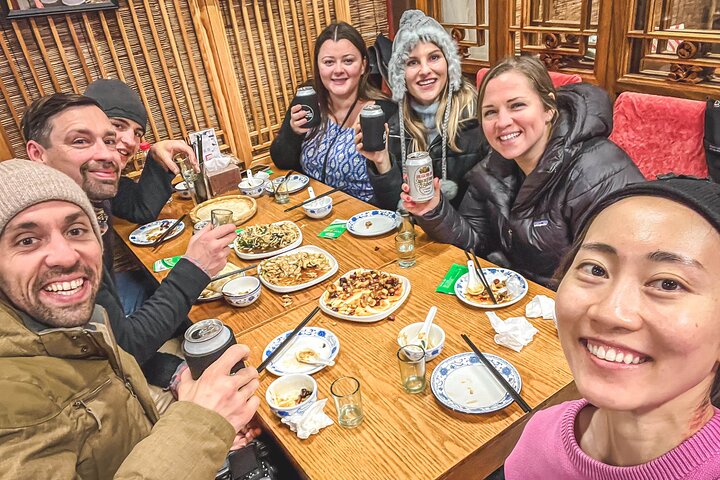
A cooking class is one of the most rewarding ways to understand Beijing's food. This experience starts with a visit to a local market, where you see the vegetables, noodles, spices and sauces that go into northern Chinese cooking, and then moves to a kitchen where you cook three dishes under the guidance of a teacher. The market visit gives context, since you will learn why certain ingredients matter and how to choose them, and the cooking session teaches basic techniques such as wok handling, seasoning and knife work. At the end you sit down and eat what you have made. It is a particularly good choice for travellers who like to cook and want to take something home, and it works well as a quiet half day for those who have had enough of queues and ticket gates. Group sizes are usually small, which helps with hands-on practice.
How to visit
Book the date you want and confirm the meeting point, which is usually a market or the cooking studio. Classes normally run in the morning or evening. Tell the organiser about dietary needs, allergies or vegetarian preferences when you book, and ask which dishes will be on the menu.
What to expect
You meet your host, walk through the market and pick up the ingredients, then head to the kitchen. Dishes vary by class but often include familiar favourites. You will be shown how to prepare, cook and season them, and encouraged to taste as you go. The atmosphere is relaxed, and there is usually time for questions about Chinese cooking at home. Recipes are often shared so you can try the dishes again after your trip.
Making the most of it
Wear closed shoes and clothes that can handle splashes. Come hungry, since you will eat everything you cook. Ask your teacher about regional differences, for example how Beijing food differs from Sichuan or Cantonese cooking. A class is a good rainy-day option and a lovely way to meet other travellers. Pair it with a hutong walk the same day to see where such food is eaten in daily life.
Planning notes
Northern Chinese cooking centres on wheat, with noodles, dumplings and steamed buns playing the role that rice plays in the south, and a class is a good chance to see how dough, fillings and sauces come together. Markets show the seasons: in spring you see tender greens, in summer cucumbers and tomatoes, in autumn pumpkins and chestnuts, and in winter cabbage and root vegetables. Ask your teacher about the role of black vinegar, sesame paste, soy sauce and fermented bean paste, which give Beijing food its character.
Cooking in a wok is also about heat control and timing, and many students are surprised how fast the process is. Take photos of the ingredients so you can look for substitutes at home. A class booked early in your trip also gives you ideas for what to order in restaurants later. Ask whether the class can be adapted for children or for a group, and bring a small container if you want to take leftovers away, as many hosts are happy to let you.
What to expect
The experience
A guided market visit followed by a small-group class in which you cook and eat three Chinese dishes.
Best time
Morning or evening, on a day with no early sightseeing.
How long
About three to four hours.
Tips
Mention dietary needs when booking, wear closed shoes and ask for the recipes.
Quick picks
- Best for
- Food lovers who want a hands-on experience they can repeat at home.
- Families
- Good for older children who like to cook.
- Couples
- A fun shared activity that ends with dinner.
- Pair with
- A hutong walk or a food tour.
- Time needed
- Three to four hours.
Good questions
Do I need cooking experience?+
No, classes are designed for beginners as well as keen cooks.
Will I eat what I cook?+
Yes, the class normally finishes with a meal of the dishes you have prepared.
Can vegetarians join?+
Usually yes, but tell the organiser when you book so the menu can be adjusted.
Is the market visit included?+
Yes, the class starts with a visit to a local market for ingredients.
Are recipes provided?+
Often, but ask when you book if you want to take them home.