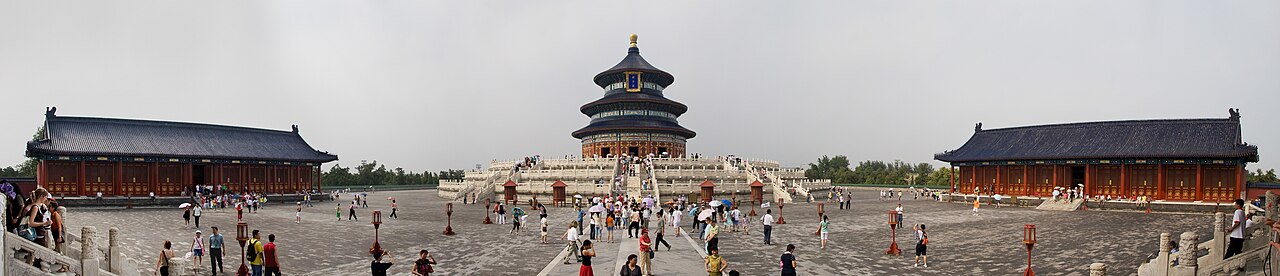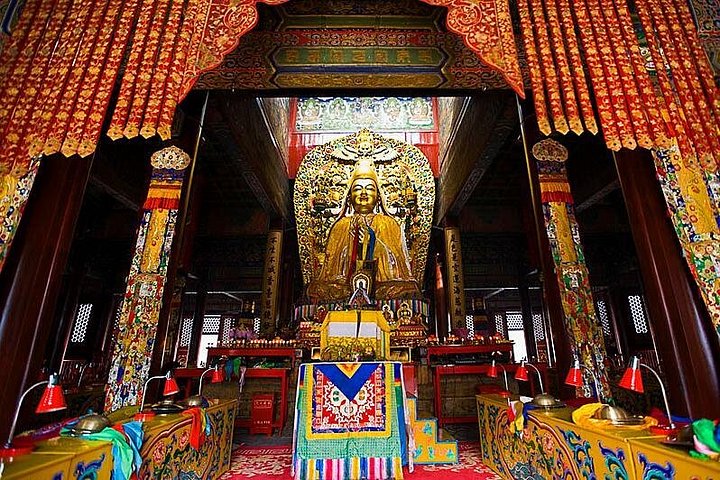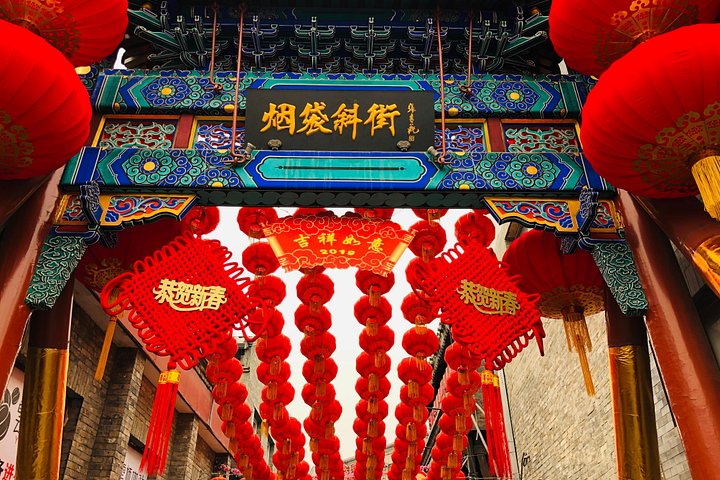
The Confucius Temple and the Imperial College next door form one of the calmest cultural sites in central Beijing. The temple was first built in the Yuan dynasty and is the city's main place of honour for the philosopher whose teachings shaped Chinese education and government for two thousand years. Its courtyards are shaded by old cypress trees, and rows of stone stelae record the names of successful candidates in the imperial examinations. Beside it, the Imperial College was the highest institution of learning in imperial China, where scholars studied and where the emperor came to lecture on the classics. The glazed-tile archway and the circular hall surrounded by a moat are the architectural highlights. The site is a short walk from the Lama Temple along Guozijian Street, one of the few lanes in the city that still has a traditional archway across it, so the two are easily combined in a single half day.
How to visit
The temple and college sit on Guozijian Street in the northeast of the old city, close to the Lama Temple and Yonghegong metro station. A single entry ticket covers the temple and the college museum, and buying it ahead saves time. The site is normally closed on Mondays, so plan your temple morning for another day. Opening times change by season, so check before you go.
What to expect
A quiet walk through successive courtyards, past the Hall of Great Perfection, the stone tablets and the bronze figures, with far fewer visitors than at the Forbidden City. Exhibits explain the examination system that selected officials, and a guide helps bring the stelae to life. In the Imperial College the Biyong Hall, a square-roofed pavilion in a circular pool, is the focal point. Allow an hour or ninety minutes to take it in at an easy pace.
Making the most of it
Start at the Lama Temple, walk down the lane lined with shops selling incense and prayer wheels, and finish at the Confucius Temple for contrast between Tibetan Buddhism and Confucian ritual. Stop for tea in a nearby courtyard cafe. This is also a good rainy-day visit, since many of the interesting parts are under covered corridors.
Planning notes
The Confucius Temple rewards those who read a little about the examination system first. For centuries, young men studied for years to sit exams that decided who would serve the empire, and the stone tablets here name the successful candidates in the highest degree. The Imperial College beside it was where the emperor delivered a lecture at the start of a reign, a ritual of Confucian legitimacy. Notice the ancient cypress known as the Touch-Evil cypress, which local tradition says once knocked a corrupt official's hat off.
Visit on a weekday if possible, when the courtyards are almost silent. There is a small tea house in the grounds, and the lane outside is lined with shops selling calligraphy supplies, which makes it an easy place to buy a thoughtful souvenir. Dress modestly and keep your voice low in the halls. Many visitors skip this site in favour of bigger names, which is exactly why it feels so peaceful, so allow time to sit on a bench under the cypresses and let the city noise fade.
What to expect
The experience
A self-guided visit to the Confucius Temple and the Imperial College Museum on a single ticket.
Best time
Tuesday to Sunday mornings, ideally paired with the Lama Temple.
How long
One to two hours.
Tips
Avoid Mondays when the site is closed, walk the stelae rows and combine with the Lama Temple on foot.
Quick picks
- Best for
- History lovers and anyone who wants a quiet counterpoint to the big sights.
- Families
- A calm visit best suited to older children interested in history.
- Couples
- A peaceful, atmospheric stop in a hutong lane.
- Pair with
- The Lama Temple across the lane and the hutongs around the Drum Tower.
- Time needed
- One to two hours.
Good questions
What is the Imperial College?+
It was the highest educational institution of imperial China, next door to the Confucius Temple.
Is it open on Mondays?+
No, the site is normally closed on Mondays.
Is it close to the Lama Temple?+
Yes, they are a short walk apart along Guozijian Street, so most visitors see both in one outing.
What are the stone tablets?+
They are stelae recording the names of those who passed the imperial examinations.
How long should I allow?+
One to two hours is enough for the temple and the college museum.