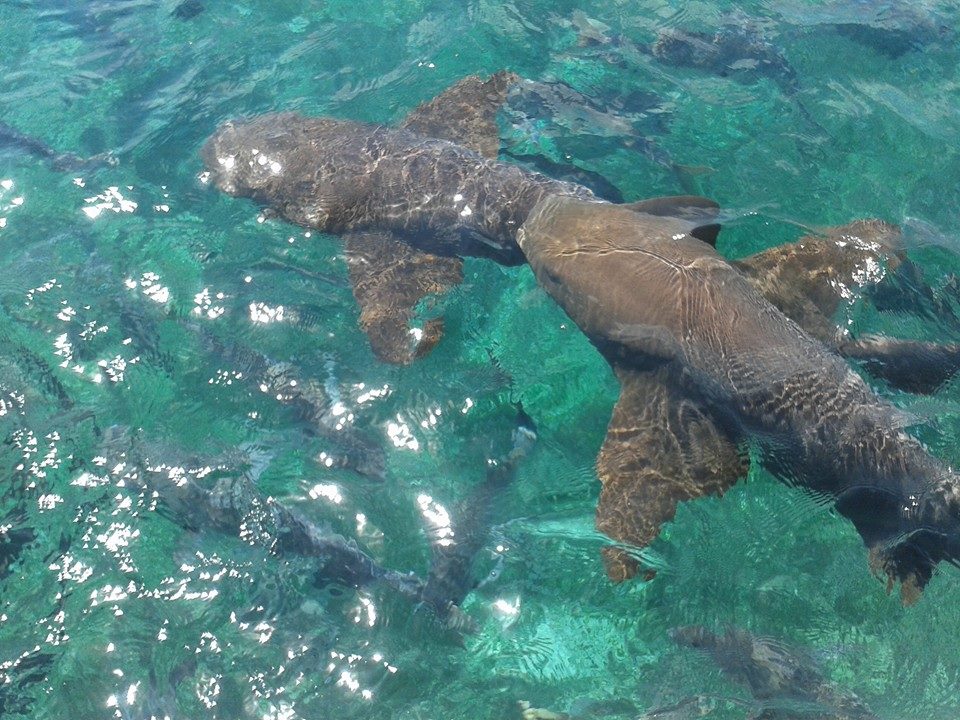
Shark Ray Alley is the encounter that makes Belize snorkelling famous. A short hop from the Hol Chan channel, this sandy, shallow patch within the marine reserve became a gathering point decades ago when fishermen cleaned their catch here and nurse sharks and southern stingrays learned to expect the scraps. Today the animals still arrive when boats do, and snorkellers drop into a few metres of clear water to find nurse sharks, harmless and sleepy, gliding past and rays flapping along the seabed. It is exciting and unusually accessible: the depth is shallow, the water is warm and guides brief everyone before entry. Operators typically pair it with Hol Chan, so the half-day trip gives you reef and wildlife in one outing. Expect to share the sandbank with other boats, which is part of the scene rather than a flaw.
The animals here are wild but habituated. Nurse sharks are bottom dwellers that feed on small fish and invertebrates and pose little threat to people, though they have strong jaws and should never be grabbed. Southern stingrays are curious and graceful, and their barbs are defensive only. Responsible guides emphasise looking rather than touching, keeping fingers away from mouths and never standing on the seabed, and they will usually demonstrate the shuffle-your-feet rule if you wade on the sandbar. Ask the operator how they approach feeding; the best ones follow reserve rules and do not encourage animals to depend on food.
Plan your trip around crowds and conditions. The alley is on the circuit of nearly every San Pedro snorkel boat, so mid-morning can be busy; earlier or later slots are quieter and the water is often clearer before wind picks up. Small-group sailboats and private charters spend less time bumping along with big boats and tend to have better guide-to-guest ratios. Cloud cover reduces visibility slightly, but the animals appear regardless, so an overcast day need not ruin the trip. Bring an underwater camera or a waterproof phone case, since this is the stop you will want to remember.
A full-day version of this outing adds coral gardens, a manatee-watching stretch and sometimes a lunch stop on Caye Caulker, a good choice if you want more than a half day on the water. If you are travelling with young children, check the operator's age guidance and whether life vests are provided. The sea can be choppy on windy days, and the boat ride back is often a good time to rest. Keep your itinerary flexible in the hurricane season, which officially runs until the end of November, because boat trips can be cancelled at short notice.
What to expect
The experience
A guided boat stop in shallow water inside the reserve where you snorkel alongside nurse sharks and southern stingrays.
Best time
Earlier or later in the day for fewer boats, and on calm, sunny days for the best underwater visibility.
How long
Roughly half an hour to an hour in the water, as part of a three to four hour combined Hol Chan trip.
Tips
Do not touch or grab the animals, keep your feet off the seabed, and listen to the guide briefing. A waterproof phone case or camera is worth bringing.
Quick picks
- Best for
- Anyone who wants close, safe wildlife encounters without deep water or scuba skills.
- Families
- Popular with older children; shallow depth helps, but life vests and age limits depend on the operator.
- Couples
- Pair it with a sailing trip and a beach-bar lunch for an easy shared highlight of the island.
- Pair with
- Hol Chan Marine Reserve on the same boat, then the Great Blue Hole later in the week.
- Time needed
- About an hour at the stop itself, within a half-day trip.
Good questions
Are the nurse sharks dangerous?+
Nurse sharks are docile bottom feeders and attack only when grabbed or provoked. Follow the guide's instructions, keep your hands to yourself and you will be fine.
Can I touch the stingrays?+
Guides sometimes allow gentle contact, but the rule is look rather than touch. Never stand on the seabed, since rays hide in the sand and their barbs are defensive.
Is Shark Ray Alley included with Hol Chan trips?+
Yes, most San Pedro operators combine the two stops. The tour we link visits both the reef and the alley.
How deep is the water?+
It is shallow, typically only a few metres, so snorkellers can see the bottom clearly. A life vest is usually available for less confident swimmers.
Is it crowded?+
It can be, because many boats visit the same sandbank. Early or late departures and small-group boats make the experience calmer.