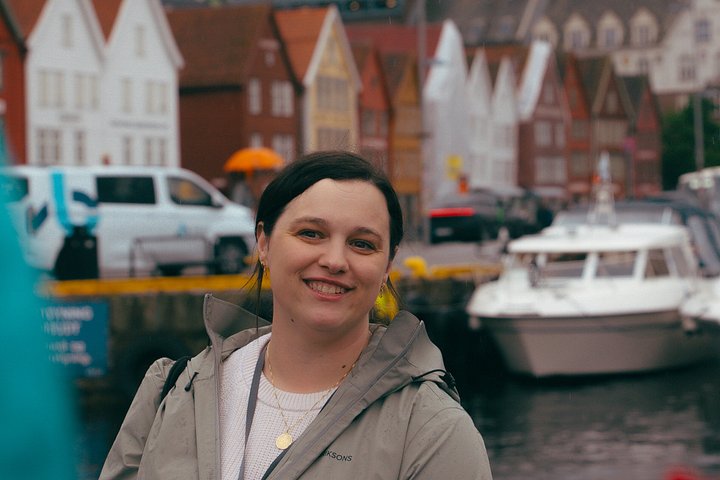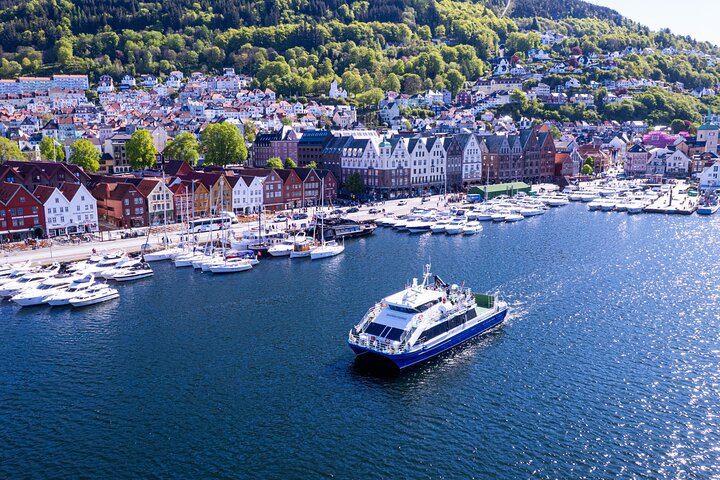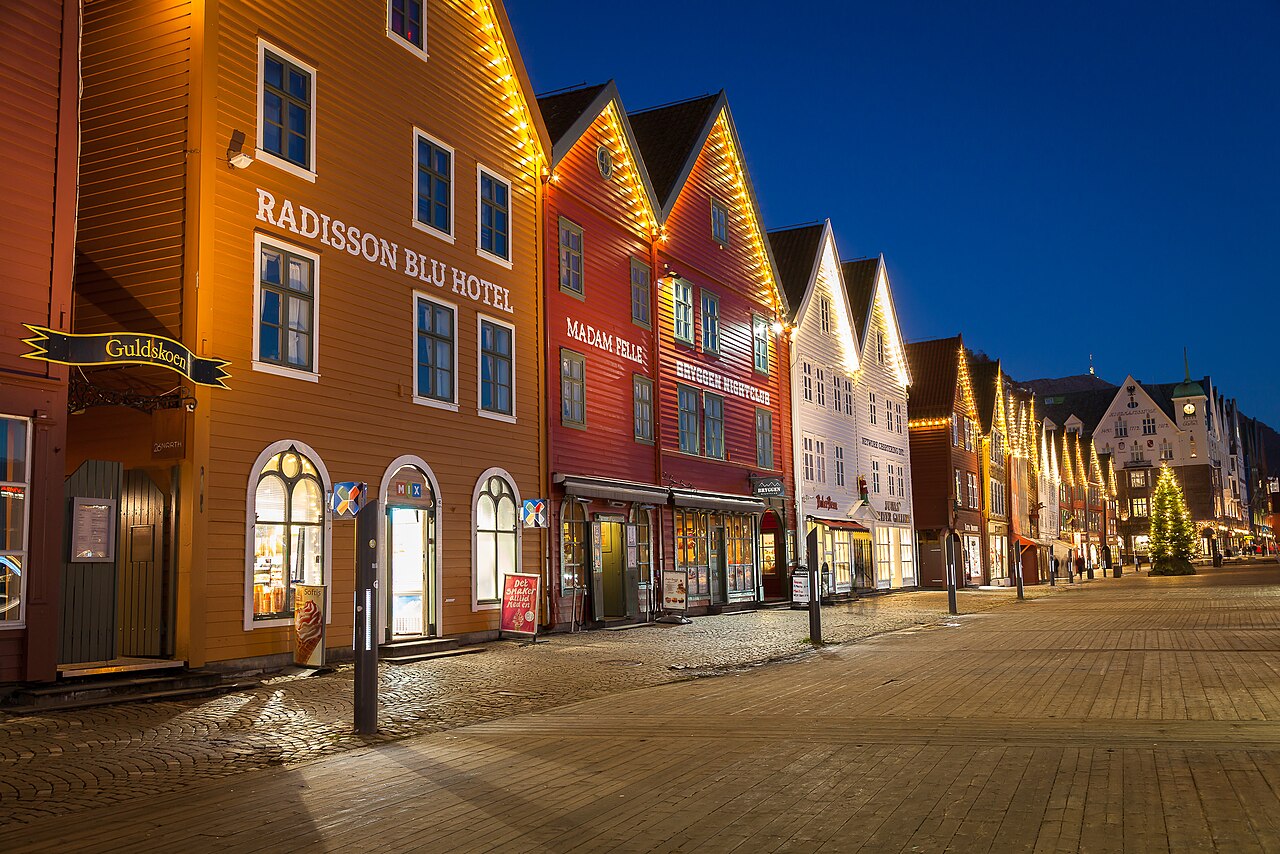
Bryggen is the old wharf on the east side of the Vågen harbour, and it is the reason most people put Bergen on a map. The long, jostling row of gabled timber houses, painted ochre, red, white and yellow, is what is left of the trading quarter where German Hanseatic merchants set up an office in 1360 and dominated the stockfish trade for almost four hundred years. Behind the street-front facades lies the real attraction, a maze of narrow wooden passages, galleries and courtyards that are now home to craft shops, small galleries, artist studios and restaurants. Bryggen is on UNESCO's World Heritage List, and Bergen itself is a designated World Heritage City. Fires have repeatedly swept through the area, the worst in 1702 and another in 1955, and each time the wharf was rebuilt on its medieval plan, which is why the alleys feel so unchanged. The buildings lean and creak, floors slope, and in places the timber piles beneath have settled, which gives the whole place a charming tilt. It costs nothing to walk the front or to duck into the passages, and it is at its most atmospheric early in the morning or in the dim light of a winter afternoon.
The way to enjoy Bryggen is to treat it as two visits. The first is the view from across the harbour or from the quay in front, where the whole line of gables reads as a single composition against the mountainside. The second is inside the rows: walk into the narrow passages between the buildings, look up at the overhanging galleries and the old warehouse hoists, and notice how the wooden structures sit on closely spaced piles.
Many of the passages are lined with small shops selling knitwear, ceramics and food, and you will find studios where makers work in view. Cobbles and uneven boards are the rule, so wear shoes with grip, and note that Bryggen is only partly wheelchair accessible because of the narrow doors, steps and rough surfaces. There are no public toilets on the wharf itself.
To understand what you are looking at, step into the Hanseatic Museum and Schøtstuene on Øvregaten. The museum covers the lives and trade of the Hanseatic merchants and, with the Schøtstuene assembly rooms, shows how apprentices and merchants lived and worked. As of the Visit Bergen listing for the 2026 winter season, it is open daily from 10:00 to 16:00 from 1 November to 23 December, and again on 27 to 30 December. In January it opens at weekends only, then returns to daily opening from February.
Guided tours run on Saturdays and Sundays through December. One of the wharf buildings, Finnegården 1a, is closed for a major renovation, which is a reminder that conserving a timber heritage site is a never-ending task. Bryggens Museum, with the archaeological finds from the 1955 excavations, and St Mary's Church, the oldest surviving building in Bergen, are both close by, so check their winter hours before you plan around them.
Plan it into a loop
Start at the Fish Market, walk the quay along the front of Bryggen, wander the passages, visit the Hanseatic Museum, and continue up to Bergenhus Fortress at the harbour mouth. In November the light fades early and the wet cobbles glisten, which many people find the most beautiful time of year.
Bryggen is also the natural starting point for a guided walk through the old town, which adds the stories of fires, fish and feuds that signs do not explain. Allow an hour for a wander, three if you add the museum.
What to expect
The experience
A self-guided stroll along the front of the wharf and through the narrow wooden passages behind it, with an optional visit to the Hanseatic Museum and Schøtstuene on Øvregaten.
Best time
Early morning before the tour groups, or in the blue hour of a winter afternoon when the facades glow under the lamps.
How long
An hour for the wharf alone; around three hours with the museum and a coffee stop.
Tips
Wear grippy shoes for wet cobbles and uneven boards. There are no public toilets on the wharf, so plan ahead. The museum has reduced opening in January, so check before you go.
Quick picks
- Best for
- Every first-timer: it is the sight that defines Bergen, and it is free.
- Families
- Children enjoy the creaking passages and the troll shops; keep hold of little hands on the uneven boards and near the water.
- Couples
- A dusk walk along the front, then dinner in one of the nearby wharf-side restaurants.
- Pair with
- The Fish Market, the Fløibanen funicular and a guided old town walk.
- Time needed
- One to three hours depending on whether you enter the museum.
Good questions
Is Bryggen free to visit?+
Yes, walking along the wharf and through its passages costs nothing. Museums and some exhibitions in the area charge admission.
Is the Hanseatic Museum open in November?+
According to its Visit Bergen listing, it is open daily from 10:00 to 16:00 from 1 November to 23 December 2026. Opening is reduced in January, so check before you go.
Why is Bryggen on the UNESCO list?+
It is the best surviving example of the medieval timber trading quarters of the Hanseatic League in northern Europe, rebuilt on its medieval plan after repeated fires. The booking page covers the wharf, its buildings and the street pattern.
Is Bryggen suitable for wheelchairs and pushchairs?+
Only partly. The front cobbles are hard going for lighter chairs and most passages and shops have steps, narrow doors or uneven floors.
How long do I need at Bryggen?+
An hour is enough to see the front and wander the passages. Add two hours if you visit the Hanseatic Museum, and more if you take a guided walk.