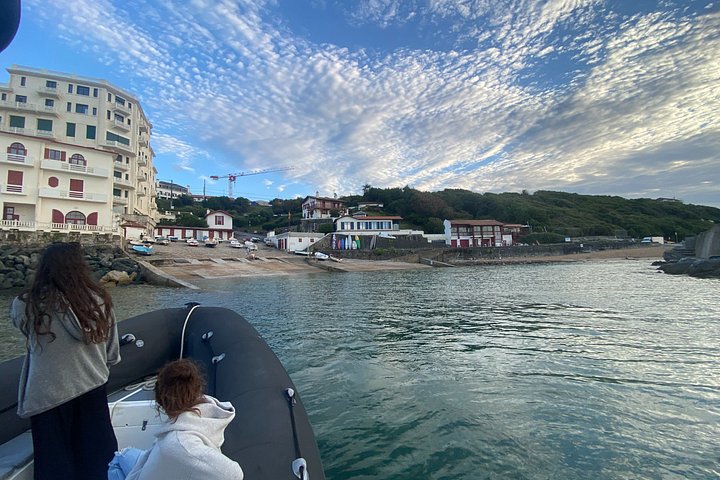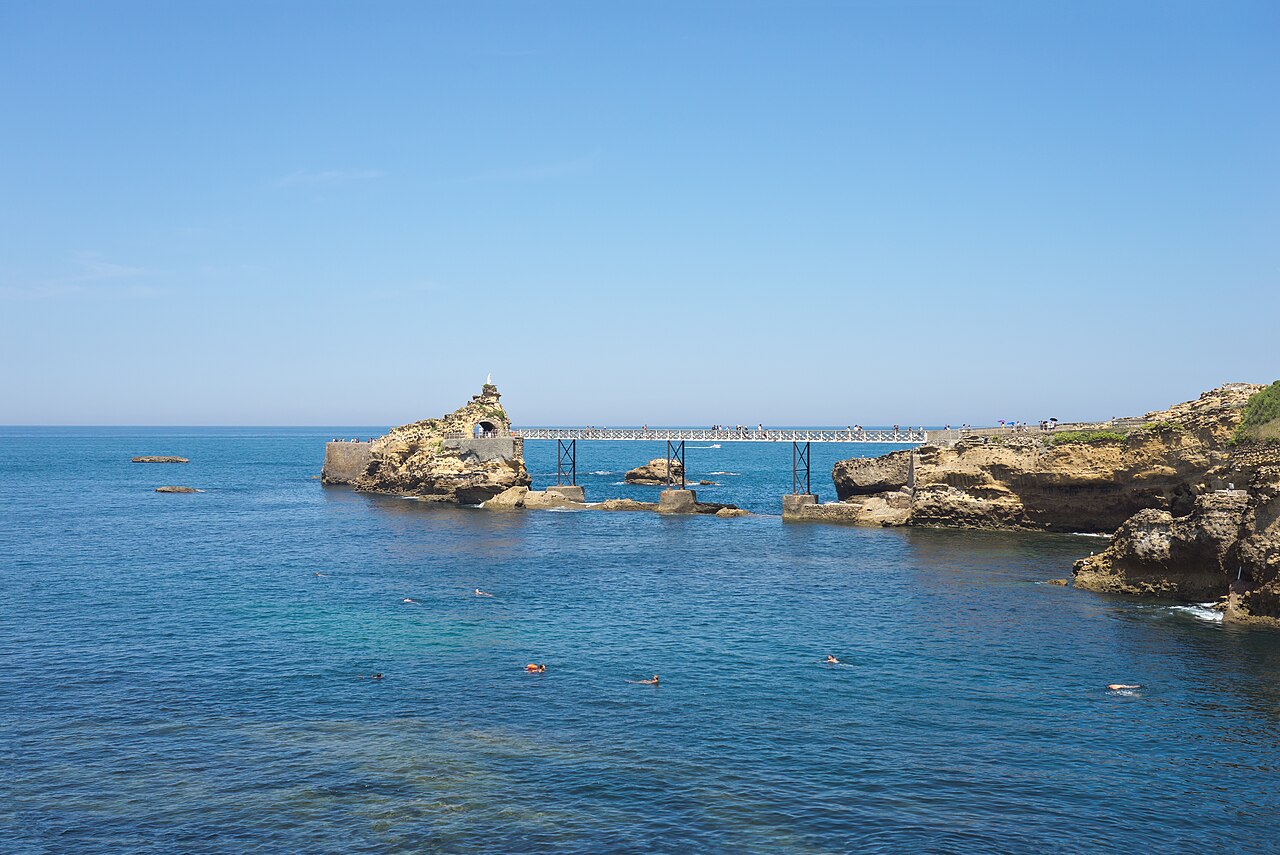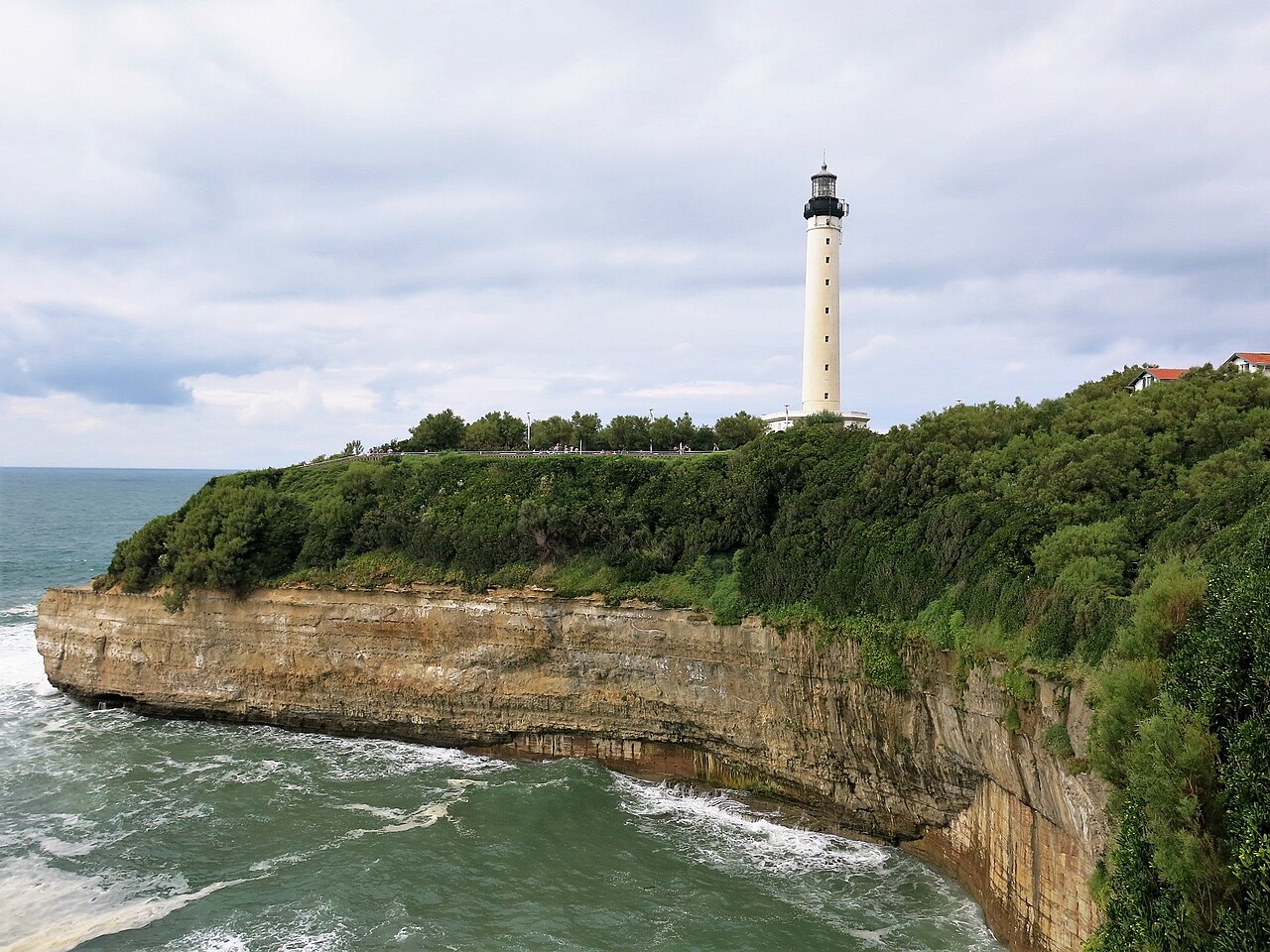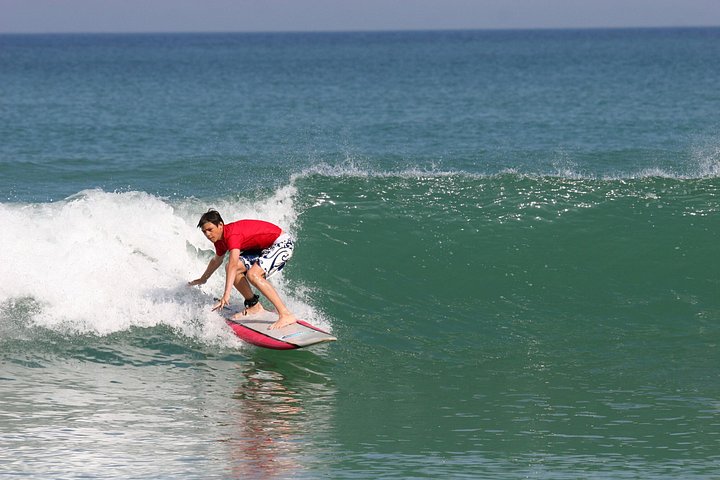
There is no better place in Europe to stand up on a board for the first time than Biarritz, and a guided beginner lesson is the easiest way to do it. The lesson is built around the basics: learning how to read the waves, practising the pop-up on the sand, paddling out and catching small, soft breakers. Instructors supply the board and wetsuit and keep a close eye on the group, and the beaches used for lessons are chosen for forgiving conditions. The experience combines sport, sea air and a sense of connection with the town’s history, and even people who only manage a few shaky rides finish with a big smile. It is also one of the most photographed activities on the coast, so expect plenty of pictures of the beach and a lot of laughing.
How it works
The lesson is a small-group session, usually around an hour and a half to two hours in total, which includes a briefing on the beach, a warm-up, practice on the sand and then time in the water. The activity is bookable ahead online, and the meeting point and the beach are confirmed when you book, because they depend on conditions and tide.
Equipment is normally provided, including the board, a leash and a wetsuit, and you only need swimwear, a towel and sun cream. Children can usually take part from a certain age, and most schools ask that participants can swim comfortably.
What to expect
You will start with a safety talk, learn the basic positions and the rules of the water, and then paddle out to waist-deep water where the instructor guides you toward small waves. Most beginners stand up at least once during a session, and the instructors are good at spotting the right wave.
The Atlantic is cool for much of the year, so the wetsuit is genuinely useful, and in summer you will be grateful for the sun cream. Conditions vary, and the school may move the lesson to a different beach or reschedule if the surf is too big or too flat, which is a safety measure rather than a problem.
Making the most of it
Book early in the day for the calmest water and plan a relaxed afternoon afterward, since surfing is more tiring than it looks. Eat a light meal before you go, drink plenty of water and tell the instructor about any health issues. If you love it, consider a second lesson or a private session to build skills, and look at the board-rental shops along the Côte des Basques for independent practice.
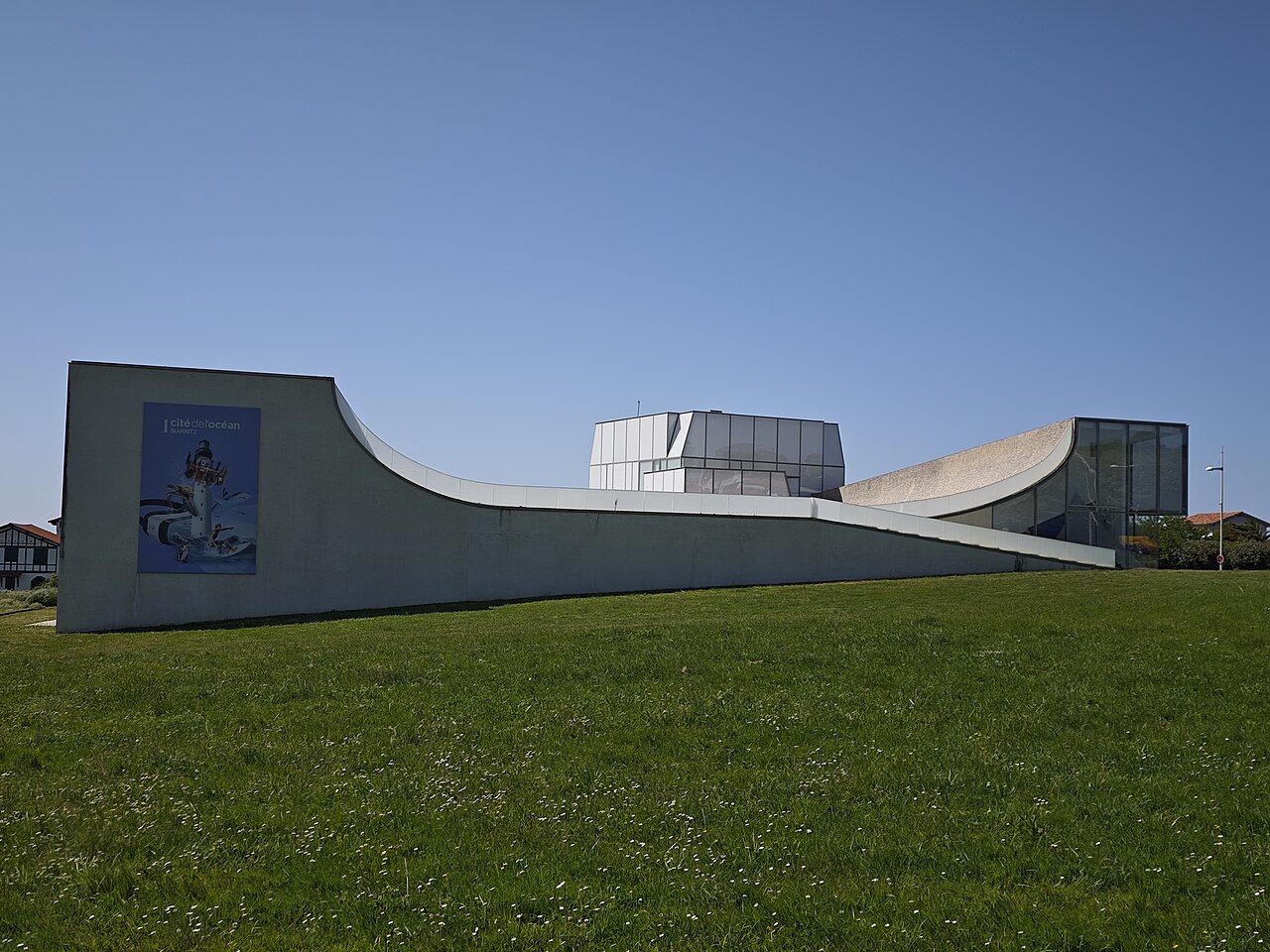
Check the cancellation terms when you book, because weather decisions can change plans, and keep a backup activity such as the Cité de l’Océan in mind for a flat or stormy day.
Good to know
Bring a swimsuit that stays on in the surf, a rash vest if you have one and sun cream that is water resistant. Avoid heavy meals for two hours beforehand, and remove jewellery and watches. Lessons run in most seasons, but the water is much colder in winter and early spring, so check whether a thicker wetsuit is included. Beginners often feel sore the next day, particularly in the shoulders and core, so plan a lighter itinerary afterward. Photographers on the beach sometimes sell action shots, which are worth asking about.
What to expect
The experience
A small-group beginner lesson with an instructor, covering technique on the sand and practice in small waves, with board and wetsuit supplied.
Best time
Morning for calmer water, or late afternoon in summer. Choose spring to early autumn for warmer conditions.
How long
Roughly two hours including briefing and kit-up.
Tips
Bring swimwear, a towel and sun cream, eat lightly beforehand and confirm the meeting beach when you book.
Quick picks
- Best for
- First-time surfers who want a safe, supervised introduction in the home of European surfing.
- Families
- Good for active older children and teenagers who can swim comfortably. Check minimum ages when you book.
- Couples
- A fun shared activity, followed by a sunset drink at the beach.
- Pair with
- The Côte des Basques at sunset and dinner in the old town.
- Time needed
- Half a morning or afternoon.
Good questions
Do I need experience to take the lesson?+
No. The lesson is aimed at beginners, and instructors start with the basics on the sand before you go into the water.
Is equipment provided?+
Yes. A board and wetsuit are normally included. You bring swimwear, a towel and sun cream.
Can children join?+
Often yes, from a minimum age that depends on the school, provided they can swim comfortably. Confirm the age limits when you book.
What if the weather or surf is bad?+
The school may move the lesson to another beach or reschedule if conditions are unsafe. Check the cancellation terms when you book.
How long does the lesson last?+
Allow about two hours in total, including the briefing, kit-up and time in the water.