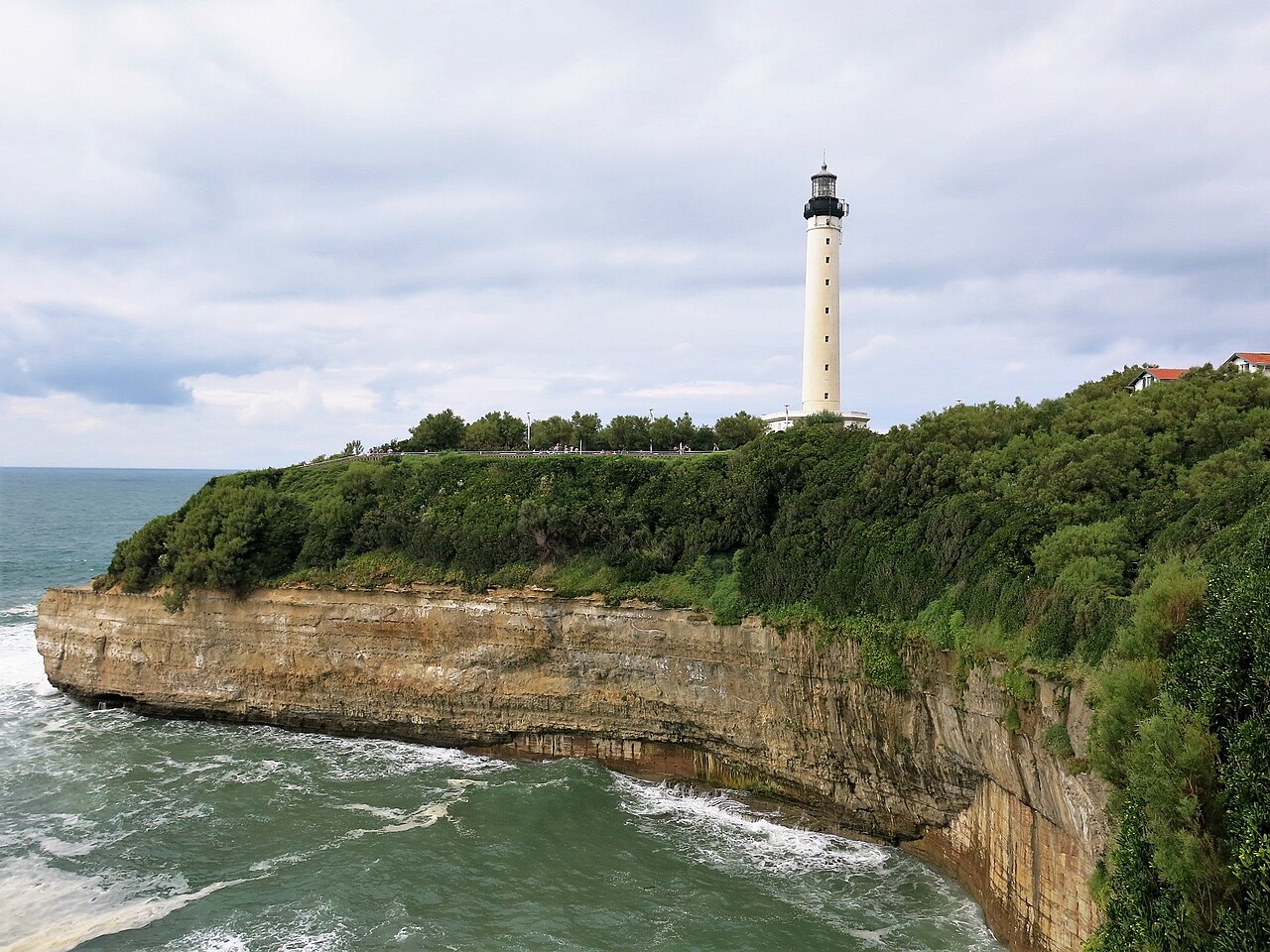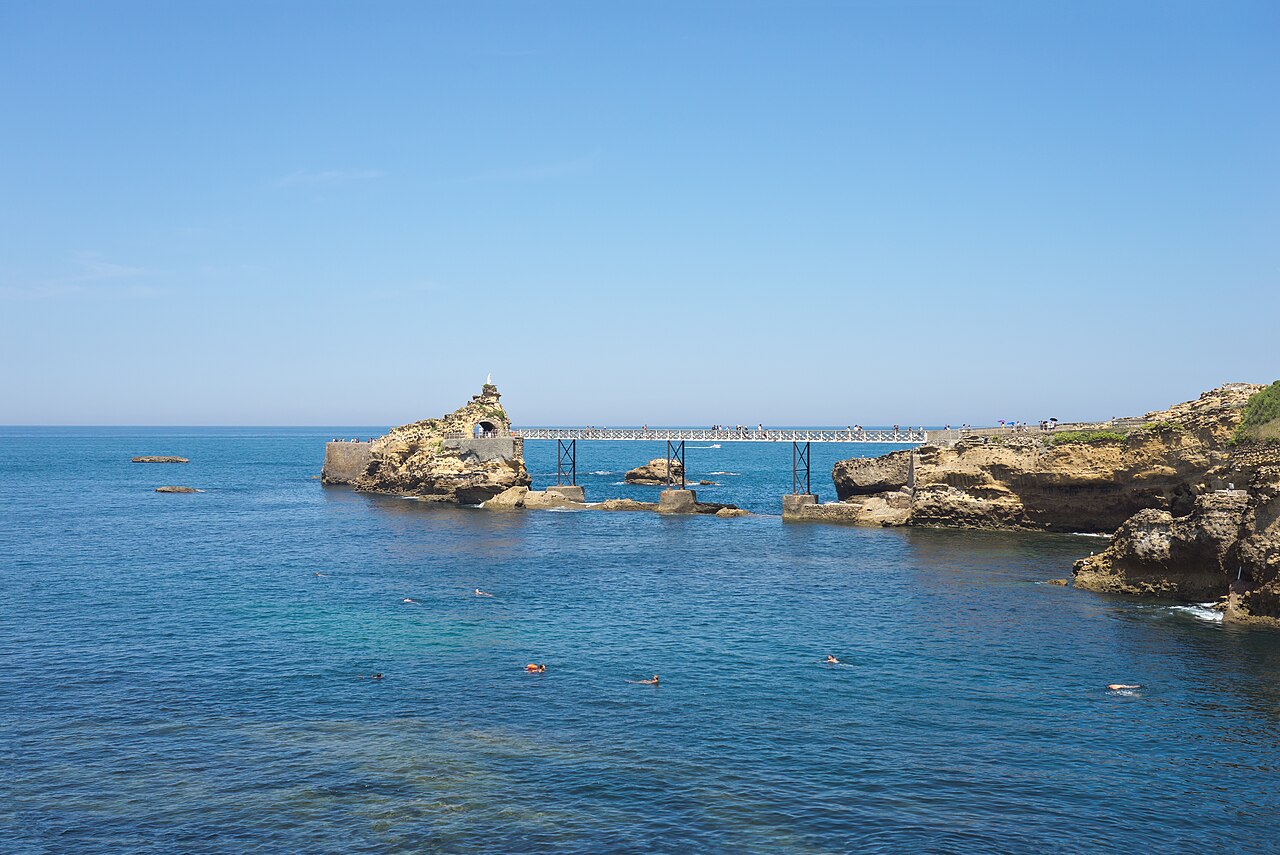
Ask anyone to picture Biarritz and the image is usually the Rocher de la Vierge, a pale rock rising out of the Atlantic just off the old town, crowned with a small statue of the Virgin and linked to the shore by a slender iron footbridge. The statue was placed there in the 1860s, in the years when the town was being transformed into an imperial resort, and the rock has been a point of pilgrimage, of courtship and of photography ever since. The walk out along the footbridge takes only a few minutes, yet it delivers the whole Biarritz mood: surf thumping against the base, gulls wheeling overhead, the lighthouse on its headland to the north and the long curve of the Grande Plage to the south. It costs nothing, it is open to anyone who can manage a short climb of steps, and it is the single most rewarding half hour in town.
How the visit works
The rock stands at the end of the Plateau de l’Atalaye, the headland above the Port Vieux, and you reach the footbridge by following the clifftop promenade from the town centre. A short flight of steps leads up onto the rock itself, where a paved path circles the statue and gives views in every direction. There is no ticket and no queue, but the path can be wet and slippery after rain and the wind is strong on exposed days, so wear shoes with grip and hold small children by the hand.
Barriers can close the rock during heavy swell or storms, which is the sea doing what it has always done here, so treat a closed gate as a reason to enjoy the view from the Atalaye instead.
What to look for
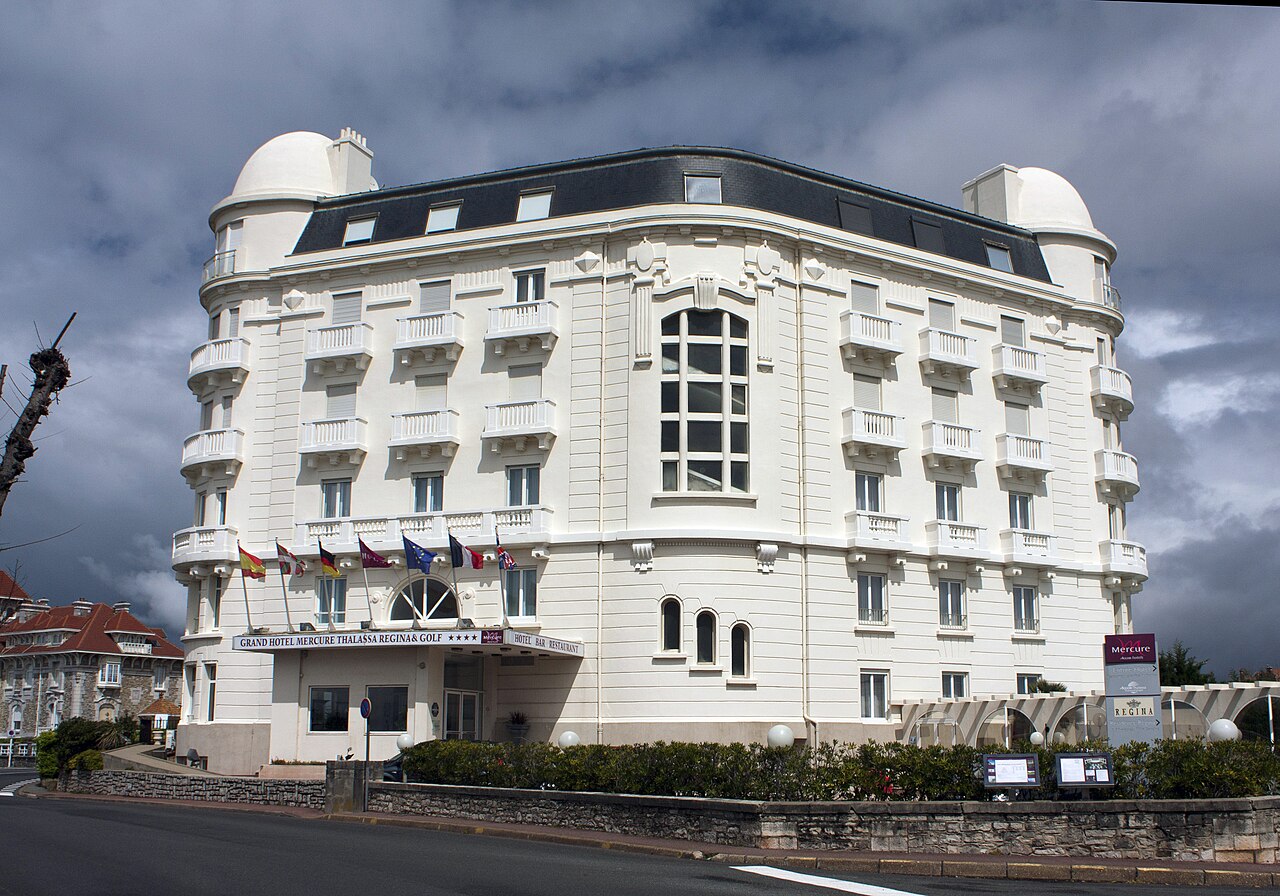
From the top you see the crescent of the Grande Plage, the elegant façade of the Hôtel du Palais, the rooftops of the old town and, on clear days, the Pyrenees fading into the south and the Spanish coast beyond. Below, the tiny Port Vieux beach sits in a sheltered cove with calm water, a favourite for families, while the surf breaks on the seaward side.
The footbridge is a point of pride locally because it was built by the workshop of Gustave Eiffel at the end of the nineteenth century, and the ironwork carries that engineering confidence. Look down at the foot of the rock as well, where you will see old tunnels cut through the stone, a reminder of earlier attempts to link the rock to land.
Making the most of it
Late afternoon is the classic time, because the sun sinks into the sea in the west and lights the rock from behind, and the benches on the Atalaye fill up quickly on summer evenings. Early morning is the quiet alternative and a good time for photographs without crowds. In winter the same spot is magnificent in a different way, with big Atlantic swells exploding against the base, though you will want a jacket.
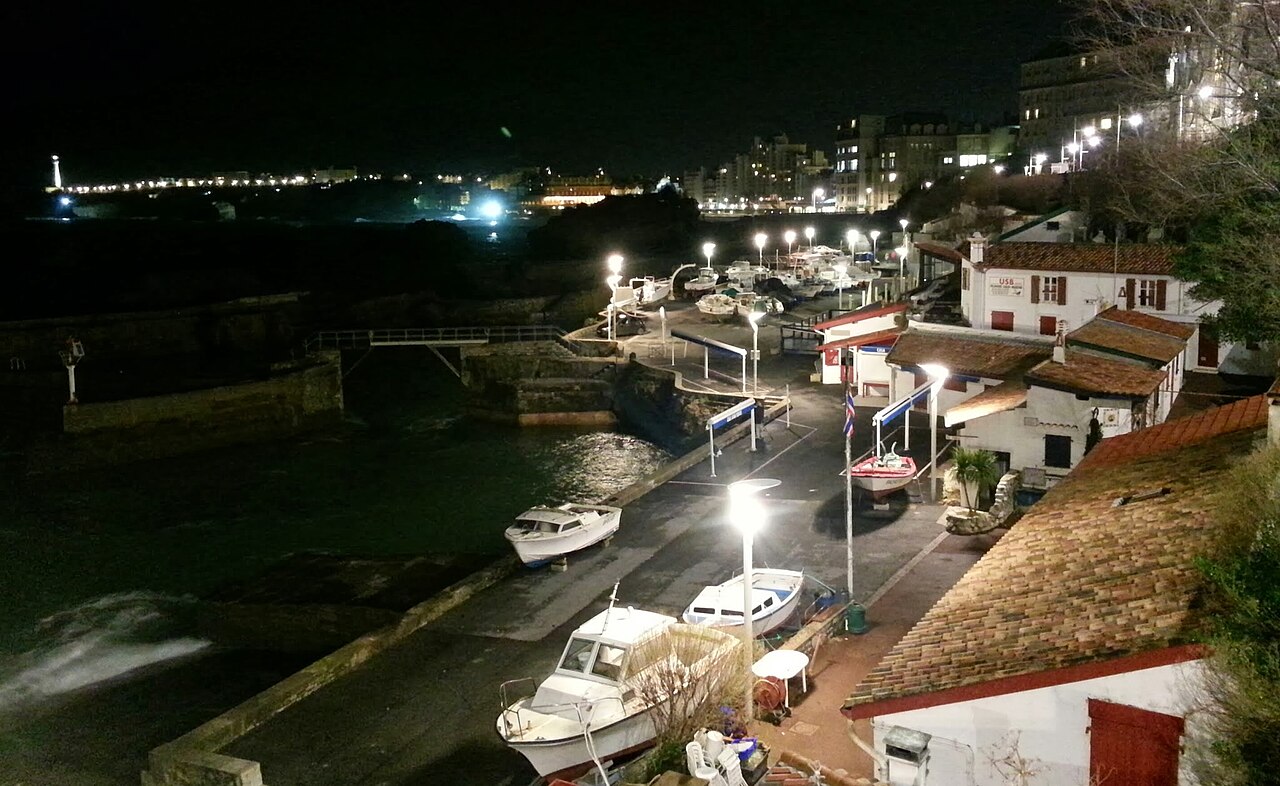
Pair the visit with a walk back through the Port des Pêcheurs and the old town, and keep a euro or two in your pocket for an ice cream or a coffee on the way.
Good to know
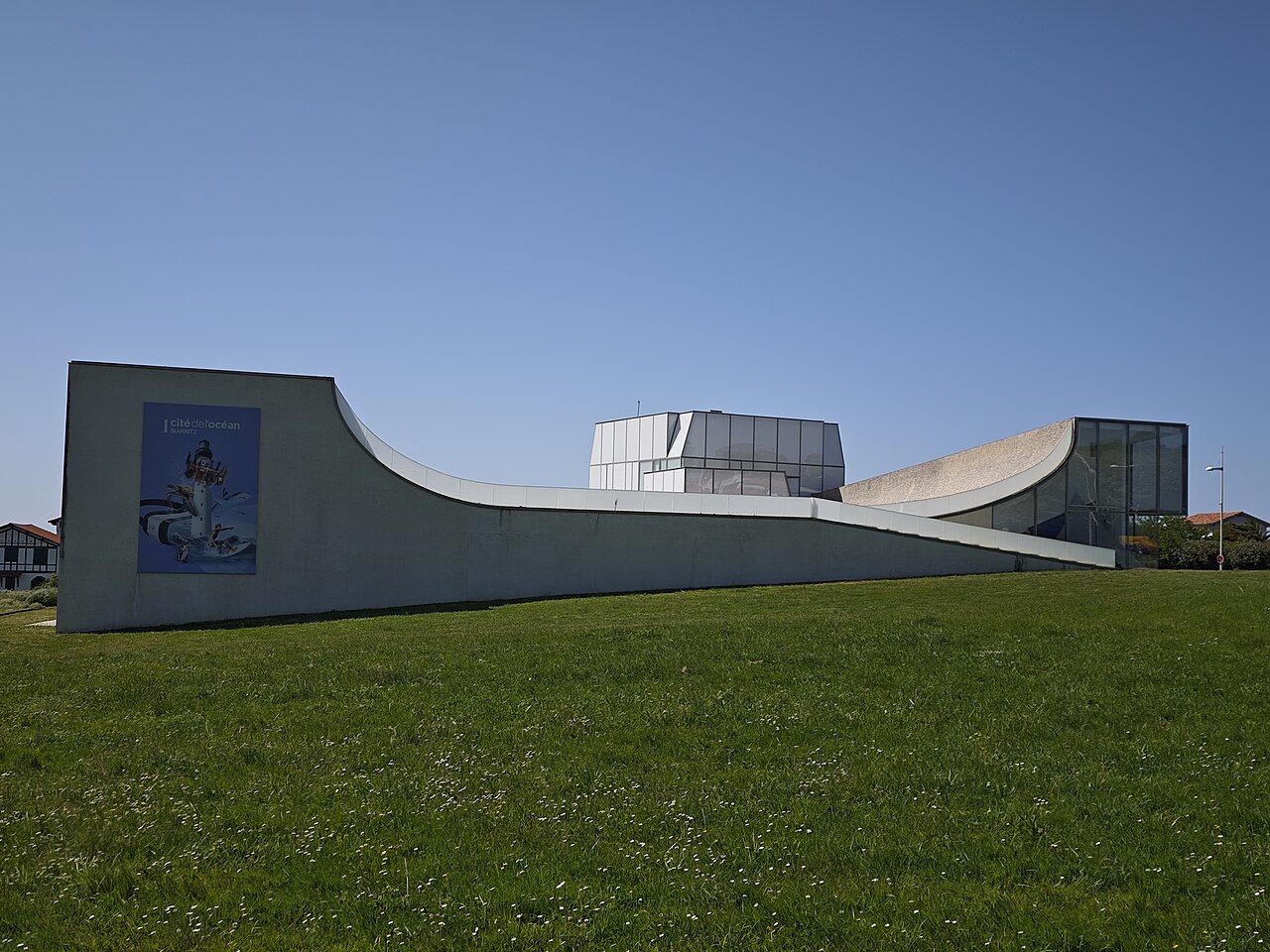
The rock is a few minutes’ walk from the Cité de l’Océan and the old harbour, so it slots easily into a half-day of sights. Public toilets and cafés are close by on the plateau, and the nearest paid parking fills early in summer, so walking from the centre is simpler.
Photographers will find the angle from the Port Vieux side flatters the footbridge, while the view from the rock itself is best for sunsets. Keep an eye on the sea during winter storms, when spray can reach the path and the rock is sometimes closed to visitors for safety.
What to expect
The experience
A short self-guided walk across an iron footbridge and around the rock, with sea views in every direction and no tickets or timed entry.
Best time
Late afternoon for sunset light, or early morning for quiet. Rough seas can close the rock.
How long
Half an hour is enough, longer if you stay for the sunset.
Tips
Wear shoes with grip, expect spray in big swells, and hold on to children on the steps and footbridge.
Quick picks
- Best for
- Anyone arriving in Biarritz for the first time and wanting the postcard view in half an hour.
- Families
- Fine for older children, but the steps and wet footbridge need a firm hold on little ones.
- Couples
- Arrive an hour before sunset, then walk down to the Port des Pêcheurs for a drink.
- Pair with
- The Port des Pêcheurs, the Grande Plage and the lighthouse promenade.
- Time needed
- Thirty to forty-five minutes.
Good questions
Is the Rocher de la Vierge free to visit?+
Yes. There is no charge to cross the footbridge and walk around the rock, and no booking is needed.
Who built the footbridge to the rock?+
The iron footbridge dates from the late nineteenth century and is associated with the workshop of Gustave Eiffel, which is why its ironwork looks so graceful.
Can the rock be closed?+
Yes. In heavy swell or storms the access can be shut for safety, so check conditions on the day and have the Atalaye promenade as a backup viewpoint.
What is the best time of day to go?+
Late afternoon gives the best light and sunsets, but the rock is quieter and cooler early in the morning.
Is it suitable for children and wheelchairs?+
Children usually enjoy it with supervision, but the steps up to the rock and the exposed footbridge make it unsuitable for wheelchairs and tricky for pushchairs.