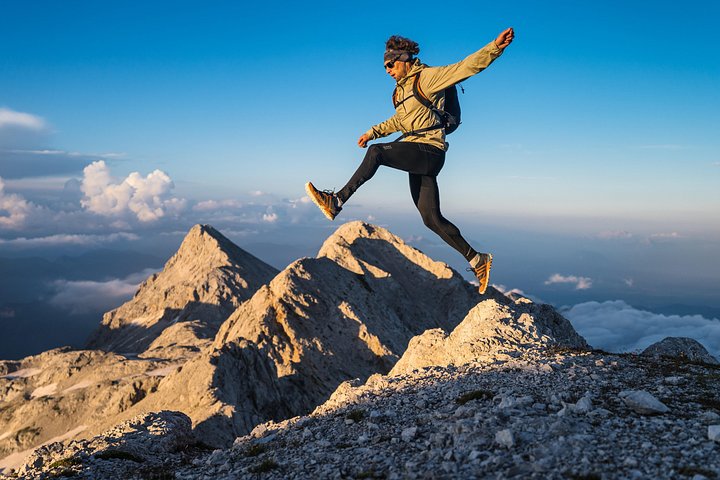
Mount Triglav is the symbol of Slovenia, and climbing it is a national rite of passage. This two-day guided ascent starts from the Bled area, with an IFMGA-certified mountain guide who selects the route, supplies safety advice and manages pace. The standard plan climbs on day one to a mountain hut, where you overnight, then continues on day two across exposed ridges with fixed cables and steel pegs to the summit and the iconic Aljaz Tower, a small metal shelter at the top. The route is demanding, with scrambling and exposure, and it requires good fitness, a head for heights and sound footwear. The reward is a panorama across the Julian Alps and, on clear days, to Italy, Austria and the Adriatic. Guided climbs are weather dependent, and guides will change the plan or turn back if conditions are unsafe. The usual season runs from about late June to September, when snow has cleared.
Preparation is essential. Triglav is not technical in the strictest sense, but it is serious: weather changes fast, falls can be fatal, and rockfall and crowds on the cables are real hazards. A guided trip gives you safety equipment, route knowledge and decision-making. You will typically need a helmet, harness and via ferrata set; ask whether these are included or rented.
What fitness is needed? You should be comfortable hiking for six to eight hours with several hundred metres of ascent per day, and confident on steep terrain. Previous mountain experience helps. Vertigo is a real issue on exposed ridges. Training with long hikes and stairs for a few weeks before travel is sensible.
Gear checklist
Sturdy boots with ankle support, layers including a waterproof jacket, gloves for the cables, a headlamp, sun protection, water and snacks. Hut stays are simple, with shared dormitories and hearty meals; bring a sleeping bag liner and earplugs. Book huts early in the high season.
Culture
Tradition says first-time climbers are 'baptised' at the summit, with a light-hearted ceremony in some groups. The Aljaz Tower, named for a priest who bought the summit to protect it, is a place to rest and take photographs.
If you are less experienced, consider alternative guided hikes in the same range that offer views without the exposure. Weather windows can be narrow, so keep a spare day. After the climb, recovery in a lakeside cafe is richly deserved. Insurance that covers mountain activity is strongly advised.
What to expect
The experience
A two-day guided ascent with a night in a mountain hut, fixed-cable sections and a summit at the Aljaz Tower.
Best time
Roughly late June to September, once snow has cleared.
How long
Two days.
Tips
Train beforehand, bring sturdy boots, layers and a headlamp, and keep a spare day for weather.
Quick picks
- Best for
- Fit, confident hikers who want a defining achievement.
- Families
- Not for young children; older teens with experience only.
- Couples
- A big shared challenge for active pairs.
- Pair with
- A recovery day at the lake.
- Time needed
- Two days plus a buffer.
Good questions
How high is Triglav?+
2,864 metres, the highest peak in Slovenia.
Is it dangerous?+
It is a serious mountain with exposure, so guiding, good weather and fitness matter.
Do I need climbing experience?+
Not technical climbing, but comfort on exposed, cabled terrain is needed.
When can I climb?+
Mainly late June to September.
What about the Aljaz Tower?+
A small metal shelter on the summit and a national symbol.