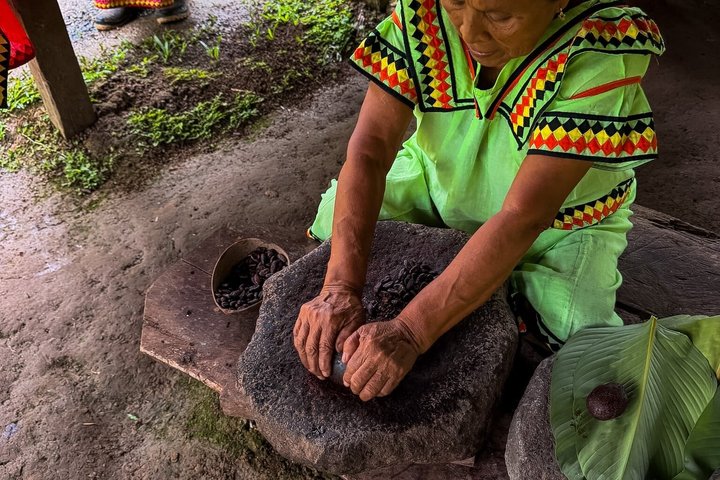
The Ngabe-Bugle are the largest indigenous group in Panama, and their communities form a living part of the Bocas del Toro landscape. The tourism board points to Bahia Honda and Salt Creek as places where community-led tours offer guided hikes, a cacao workshop, a visit to a bat cave and traditional meals. A visit is a chance to learn about daily life, crafts, farming and customs directly from the people who live there, rather than watching from a boat. The board also mentions Naso Tjer Di, an indigenous community on the continental side where visitors can stay, learn customs and explore the land, ideally with a certified guide. These visits are slower and more personal than a standard tour, and they work best when you arrive with curiosity, patience and respect for the community.
Why it is worth making time
The islands are often presented as beaches and reefs, but indigenous communities have lived here for generations and continue to shape its culture. Visiting in a community-led way means your money goes directly to the people hosting you, whether through a guide fee, a meal or a craft purchase. You are also likely to learn more about cacao, medicinal plants and the forest than on any commercial tour, and you will see how traditional knowledge and modern life meet.
What to know before you go
Arrange your visit through a community-run program or a reputable operator that works with local families, and avoid showing up unannounced. Ask permission before taking photographs, especially of people, and follow your guide on what is appropriate to touch, photograph or buy.
Dress modestly, wear shoes for muddy trails and carry insect repellent, water and cash in small bills. Spanish helps, but guides often speak enough English for tours. Conditions can be rustic, with basic facilities and limited phone coverage, so bring a flashlight and be flexible with timing, since schedules follow community life.
Making it work
Plan a half-day or full-day visit and pair it with a cacao-focused outing elsewhere in the archipelago for contrast between community and commercial farms. If you want to stay overnight, ask about community stays and what is included. Be generous with time and questions, buy handmade crafts directly from the makers at the price they ask, and avoid bargaining hard.
Visit in dry weather if you can, since trails and boat access are easier, and check conditions before you go. Treat the experience as a cultural exchange rather than a performance, and you will come away with a much deeper sense of the region.
Language and expectations are worth a thought. Many community members speak Ngabere as a first language, with Spanish and sometimes English as additional ones, so patience and a few polite Spanish phrases go a long way. Do not expect a staged performance; instead expect hospitality, conversation and a view into ordinary routines.
Ask your host how to contribute fairly, whether through a meal, a fee or a craft purchase, and avoid giving sweets or money directly to children. Respectful visitors are welcomed back, and communities that benefit from tourism are better able to decide how it develops.
What to expect
The experience
A community-led visit with guided hikes, a cacao workshop, a bat cave visit and traditional meals in a Ngabe-Bugle village.
Best time
A dry day, when trails and boat access are easiest.
How long
Half a day to a full day, with overnight stays possible in some communities.
Tips
Arrange through a community program, ask before photographing, dress modestly and carry small bills.
Quick picks
- Best for
- Travelers who want a respectful, personal look at indigenous life.
- Families
- Good for curious older children; trails are muddy and facilities basic.
- Couples
- A quiet, culturally rich day away from the tour crowds.
- Pair with
- A cacao farm tour or a quiet day in Bocas Town.
- Time needed
- Half a day to a full day.
Good questions
Who are the Ngabe-Bugle?+
They are Panama's largest indigenous group, with communities across the region, including areas near the Bocas del Toro archipelago.
How should I arrange a visit?+
Book through a community-run program or a reputable operator that works with local families. Do not show up unannounced.
Can I take photographs?+
Always ask permission first, especially of people, and follow your guide on what is appropriate.
What can I do on a visit?+
Guided hikes, cacao workshops, a bat cave visit, craft buying and traditional meals are among the options mentioned by the tourism board.
Is it suitable for children?+
Often yes for curious older children, but trails are muddy and facilities basic, so check with the host.