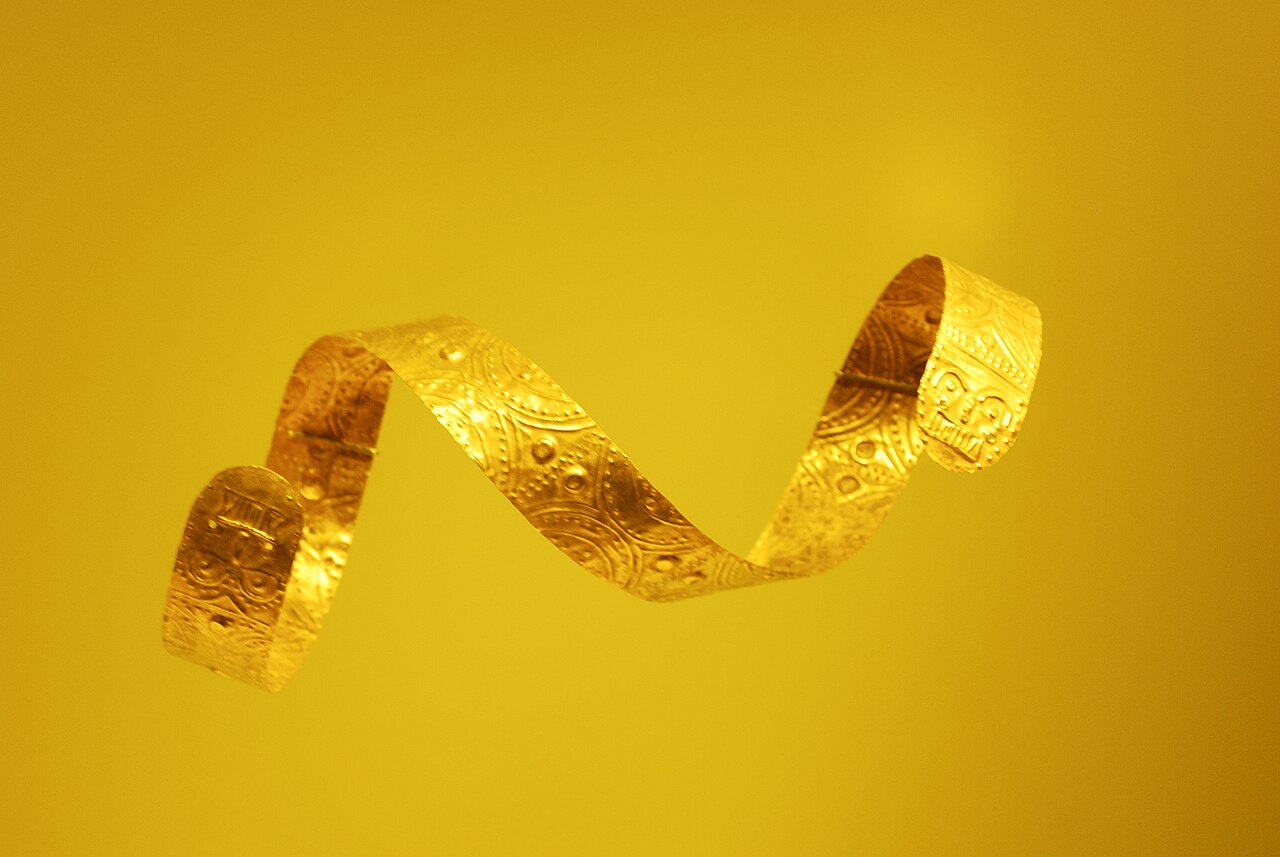
The Museo del Oro belongs to the Banco de la República and holds tens of thousands of objects made by the peoples of ancient Colombia, most of them in gold and tumbaga, an alloy of gold and copper, with ceramics, stone, shell and textiles alongside. It faces Parque de Santander at the edge of the old center, so it is an easy walk from La Candelaria and the Botero Museum. The displays are organized by region and culture, following the Tairona, Muisca, Quimbaya, Calima, Sinú and other societies, and the explanations make clear that these were not trinkets but ritual objects: nose rings, pectorals, helmets, ceremonial flasks for lime used with coca, and figures that connected leaders with the spirit world. The star is the Muisca raft, a tiny gold model of a chief and his attendants on a lake, which is tied to the El Dorado legend that grew up around Lake Guatavita. The museum is arranged over several floors, with the most memorable room near the top: the Offering Room, where a dark chamber suddenly lights up and thousands of gold pieces glow around you. Labels are in Spanish and English, there are audio guides, and the museum is well used to first-time visitors. It is closed on Mondays and entry is inexpensive, but check the booking arrangements for your date before you go.
Why the gold matters: for the societies who made it, gold was not currency. It was valued for its colour, its link to the sun and its ability to hold a shape, and objects were buried with leaders or offered in lakes and caves. The Spanish melted down most of what they found, which makes the surviving pieces, many recovered from graves and lake beds, precious in a second sense. The museum's strength is that it puts the objects in a human story, so you leave understanding how people lived, traded and worshipped, not only admiring shine.
Visiting well: allow about two hours, or a focused 75 minutes if you are pressed. Start at the top and work down if the flow allows, and hold the Offering Room for a moment when you have time to stand and take it in. A guided tour or an audio guide adds a great deal because the labels are brief. The museum is busiest on weekends and in school holidays, so a weekday morning is the best bet, and bags may be checked at the door. Photography rules vary by room, so follow the signs.
Making a day of it: you are in the middle of the historic center, so pair the museum with the Botero Museum, lunch in a Candelaria courtyard and the walk along Calle del Embudo. At this altitude, pace yourself, drink water and expect to feel a little breathless on stairs on the first day. If you want a ticketed walking tour that covers the neighborhood around the museum, the La Candelaria tour from Tiqets is a good companion.
What to expect
The experience
A self-guided museum visit across several floors of gold, ceramic and stone objects, organized by culture, ending in the dark Offering Room full of gold pieces.
Best time
Weekday mornings, shortly after opening, before the school groups and weekend crowds arrive.
How long
About two hours with the audio guide, or 75 minutes at a brisk pace.
Tips
Closed Mondays, so plan around it. Check the museum booking arrangements for your date, bring ID, and take it slowly at altitude.
Quick picks
- Best for
- Anyone with a day or more in Bogotá, since it frames everything you see afterward, from Guatavita to the Muisca history in Candelaria.
- Families
- Children enjoy the Offering Room and the masks and animal figures, and the museum has simple activities for younger visitors.
- Couples
- A relaxed morning here followed by lunch in a Candelaria courtyard is an easy, memorable first day.
- Pair with
- The Botero Museum, a La Candelaria walking tour and a trip to Lake Guatavita to see where the legend began.
- Time needed
- Two hours inside, plus the walk from Candelaria.
Good questions
How long do you need at the Gold Museum?+
Most visitors spend about two hours. Plan 75 minutes if you only want the highlights, and longer with a guided tour.
Is the Gold Museum closed on any day?+
Yes, it is normally closed on Mondays and open the rest of the week. Hours can change around public holidays, so check before you go.
Do I need to book ahead?+
The museum has used a booking link for visitors, so reserve a slot online for your date when you can. Weekends and school holidays fill first.
Is there English information?+
Yes, the labels and audio guides are available in English as well as Spanish. A guided tour adds context the labels leave out.
What is the Muisca raft?+
It is a small gold model of a chief and attendants on a raft, linked to a lake ritual at Guatavita. It inspired the El Dorado legend, and it is the museum's best-known piece.