Isla Incahuasi rises from the heart of the Salar de Uyuni like a ship on a white sea. It is the top of an ancient volcanic and coral outcrop that was once an island in a prehistoric lake, and it is now ringed by salt crust that stretches to the horizon in every direction. The island is covered in tall cardón cacti, some of them many meters high and hundreds of years old, which grow only a tiny amount each year. A circular trail of about thirty to forty-five minutes climbs through the cacti to the highest point, where the view across the flat is one of the great sights of the Bolivian altiplano.
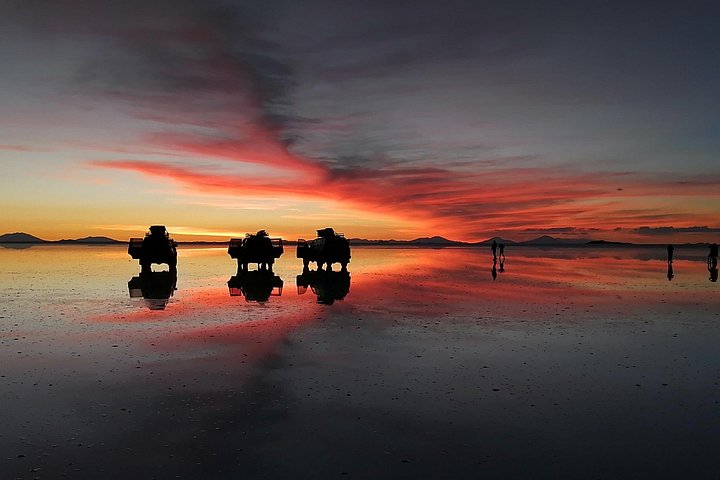
Incahuasi is a standard stop on most one-day Salar tours and is usually visited around midday, after the salt hotel and the salt-flat photography stops and before lunch. The jeep drives directly across the crust for an hour or more, and on the way you pass hexagonal patterns in the salt, mirages shimmering on the surface and the sensation of floating in an endless white space.
Arriving at the island is a surprise, because the cacti and rocks seem to come from nowhere. Facilities are simple: a small restaurant or a place to eat packed lunch, toilets, and a ticket booth where an entry fee is collected.
The trail is easy but the altitude, about 3,650 meters, makes it feel harder than it looks, so walk slowly, drink water and take breaks at the viewpoints. Do not touch or climb on the cacti, which are slow-growing and protected, and stay on the marked path. The rock underfoot is rough and sharp, so wear closed shoes.
The sun is intense, with strong reflection from the salt, and sunglasses and sunscreen are essential, even on cloudy days. Early in the morning or late in the afternoon the light is softer and the cacti throw long shadows, but most tours arrive at midday when the sun is highest.
Seasons change what you can do. In the dry season, from about May to October, the crust is firm and the island is easy to reach by vehicle. During the wet season, roughly December to March, a thin layer of water covers parts of the flat and gives the mirror effect, and some tours switch to a route that avoids the deepest water, so Incahuasi may be harder to reach or skipped altogether.
Ask your operator which stops are possible on the day you travel. The flat also has the Colchani salt works, the salt hotel and the Dakar monument as other typical stops.
If you want more time at the island, consider a tour that stays for sunrise or sunset or a multi-day trip where the island is part of a longer route. A few private options extend the stay and include meals on the island. Photographers can do creative shots with perspective on the salt, and the island offers a more varied setting than the plain.
Carry some cash for the entry fee and a drink, bring layers because the wind can be cold, and plan on about an hour at the island. It is often the highlight of the Uyuni day trip and sits easily alongside the train cemetery and the lagoons route.
What to expect
The experience
A drive across the salt crust to a rocky cactus-covered island, with a looping trail to a viewpoint over the white plain.
Best time
The dry season from May to October, when the crust is firm; the island may be harder to reach during the wet season.
How long
About an hour on the island, within a full-day tour from Uyuni.
Tips
Walk slowly at 3,650 meters, wear closed shoes and sunglasses, do not touch the cacti, and bring cash for the entry fee.
Quick picks
- Best for
- First-time visitors to the Salar who want more than just white flats and reflections.
- Families
- The trail is short and easy, though the altitude and sun need care.
- Couples
- A quiet viewpoint with a view over the endless plain.
- Pair with
- The Salar day tour, the train cemetery and the Colchani salt works.
- Time needed
- One hour on the island, as part of a full day.
Good questions
What is Isla Incahuasi?+
It is a rocky island of ancient coral and volcanic rock in the middle of the Salar de Uyuni, covered with giant cardón cacti and crossed by a short trail.
How long is the walk?+
The loop trail takes around thirty to forty-five minutes at an easy pace, longer if you stop for photographs.
Is there an entry fee?+
Yes, a small fee is usually collected at the island and often paid in cash. Check with your operator whether it is included in the tour.
Can I visit in the wet season?+
Sometimes. High water can make the island harder to reach, and tours may change route. The dry season from May to October is the most reliable.
Are there facilities?+
There are basic toilets and a simple restaurant or picnic area. Bring water and snacks to be safe.