Tiwanaku was the capital of a powerful pre-Hispanic civilization that flourished on the Altiplano near Lake Titicaca, with its peak between about 500 and 900 AD. The site is on UNESCO's World Heritage List and sits at about 3,850 meters. The key monuments are the Akapana, once a stepped pyramid, the Kalasasaya, a large open temple believed to have served as an observatory, and the Gate of the Sun, carved from a single block of andesite. The nearby Puma Punku complex is known for its precisely cut stone blocks. The ruins are rough and exposed, and much is still being excavated, so a guide who explains the layout makes a big difference.
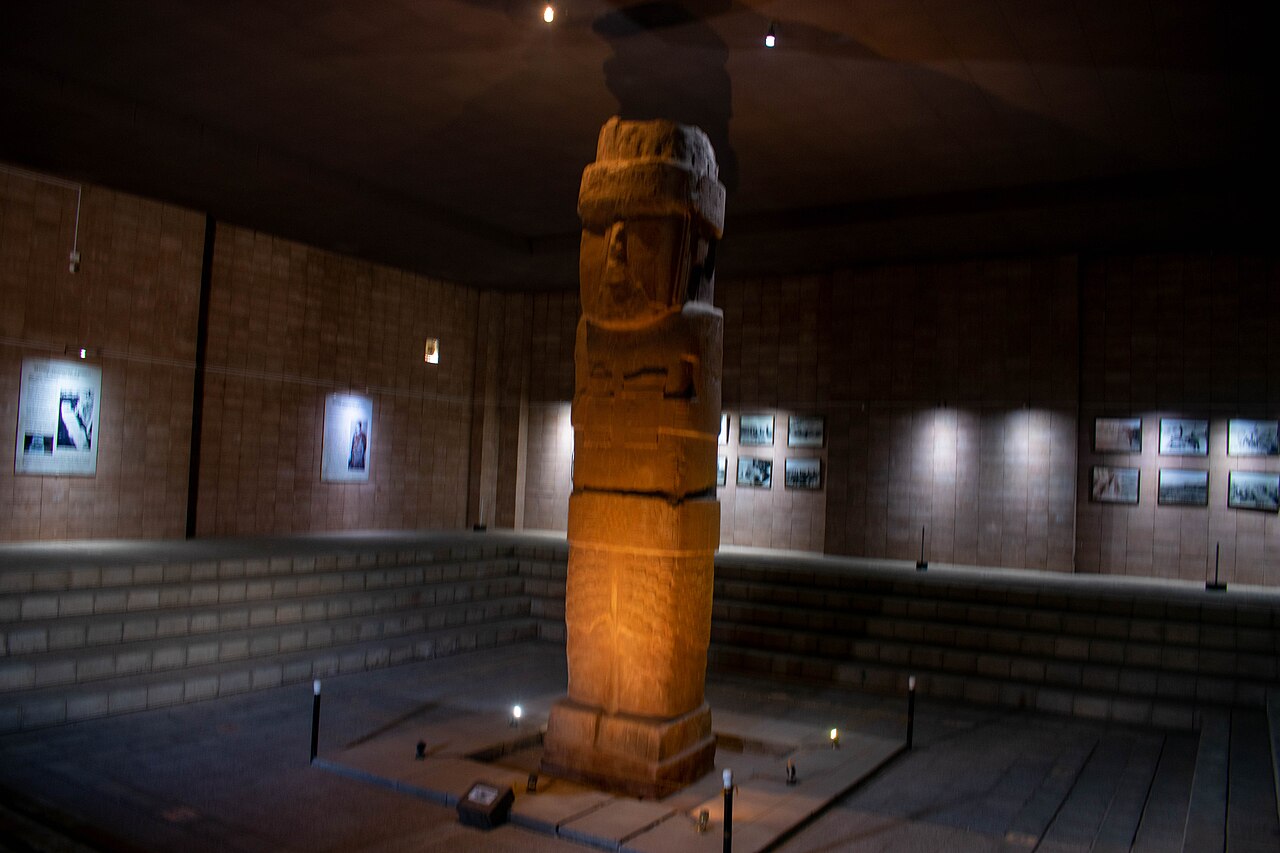
Context transforms the visit. Tiwanaku controlled trade and religion across a vast region long before the Incas, and Inca tradition later incorporated it into their own origin stories. The modern town covers much of the adobe city, but the stone ceremonial buildings survive in protected archaeological zones. The on-site museums hold ceramics and carved stones, and many of the best monolithic pieces are also displayed in La Paz museums, so ask your guide what is where.
Getting there: it is about an hour and a half by road from La Paz. Day tours with a guide are sold online, and independent visitors can reach it by public minibus or taxi from La Paz. The Viator listing used here is a Tiwanaku and Titicaca day trip from La Paz with a 4.5 rating and 62 reviews, which combines the ruins with a visit toward the lake; check the product page for the full itinerary, because Tiwanaku is the main stop but not the only one. Entry to the site is charged separately by the site authority unless the tour says otherwise.
Practical advice: the plateau is windy, cold in the shade and very sunny, so wear layers and sunscreen. Paths are uneven and there is little shade. Go with realistic expectations, since the ruins are partially reconstructed and the real interest lies in the context and the carving. Plan the visit as a half or full day, combine it with Lake Titicaca if you want to see more, and confirm that the site is open on the day because strikes, rain or conservation works occasionally limit access.
What to expect
The experience
A guided walk through the Akapana, Kalasasaya and Gate of the Sun, with the Puma Punku complex and on-site museums.
Best time
Morning on a dry day for the clearest light and fewer crowds.
How long
Two to three hours on site, plus roughly three hours of round-trip travel.
Tips
Take a guide for context, wear layers and sunscreen, bring water and cash for entry fees, and check opening days.
Quick picks
- Best for
- History and archaeology lovers.
- Families
- School-age children enjoy the big stones and open space, but there is little shade.
- Couples
- Pair with a lakeside stop for sunset views.
- Pair with
- Lake Titicaca and the museums of La Paz.
- Time needed
- Half a day on a short tour; a full day with the lake.
Good questions
How far is Tiwanaku from La Paz?+
It is about 70 kilometers west of the city, roughly an hour and a half by road. Tours with hotel pickup are the easiest option.
Is a guide necessary?+
The ruins are easier to understand with a guide, because many structures are partly reconstructed. A guide also explains the carvings and the Gate of the Sun.
What is the Gate of the Sun?+
It is a monumental gateway carved from a single block of andesite in the Kalasasaya temple. Its frieze has been interpreted as an agricultural calendar.
Is the Viator tour only about Tiwanaku?+
It is a Tiwanaku and Titicaca day trip, with the ruins as the main stop. Check the product page for the exact route and what is included.
What should I bring?+
Warm layers, sunscreen, a hat, water and some cash for entry fees. The site is windy and exposed.