One of Brighton's great advantages is how much lies within an hour. The South Downs rise just north of the city, the chalk cliffs of the Seven Sisters run along the coast to the east, and a string of historic towns and houses sits along the railway line. You can base yourself in Brighton for several days and take a different trip each time.
The Seven Sisters and the South Downs
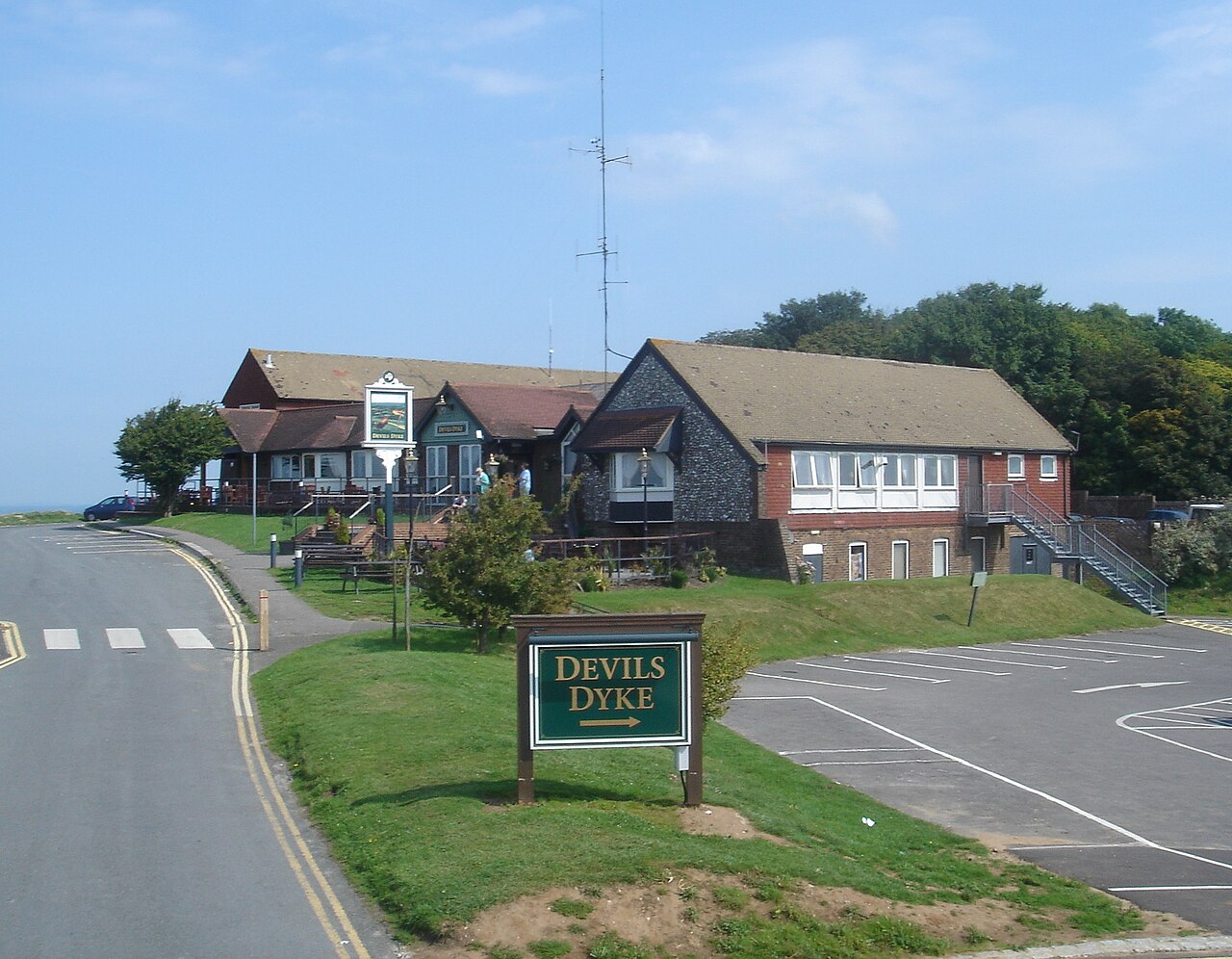
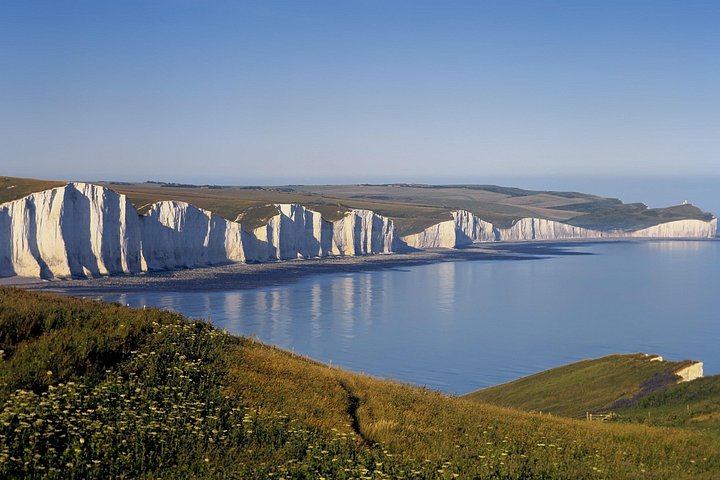
This is the headline day trip. The small-group minibus tour from Brighton takes about six and a half hours and visits several viewpoints, including Devil's Dyke, the Long Man of Wilmington and a long stop at Seaford Head with views of the white cliffs. It runs in all weather and is a relaxed way to see the coast without a car. If you prefer to go independently, buses and walking routes reach Seven Sisters Country Park and Cuckmere Haven, but check timetables and allow plenty of time for the return. Cliff edges are unstable, so keep well back.
Lewes
Only about fifteen minutes by train, Lewes is the easiest half-day trip. The Norman castle has a keep you can climb for views, and the High Street and its steep alleys, called twittens, are lined with antique shops, bookshops and pubs. The castle runs reduced hours in winter, so check the timetable. Lewes also makes a good pairing with Charleston or a walk on the Downs.
Charleston
East of Lewes, near the village of Firle, this farmhouse was the country home of the painters Vanessa Bell and Duncan Grant and a meeting place for the Bloomsbury Group. It is a small, personal house, with painted walls and furniture, a walled garden and a gallery. Entry is normally by timed ticket and the house is open on a seasonal pattern, so plan ahead. It is easiest with a car, though you can combine train and bus or taxi.
Arundel
West of Brighton, along the coast line, Arundel has a hilltop castle that has been the seat of the Dukes of Norfolk for centuries, a cathedral, antique shops and a river. The castle is a seasonal attraction, usually open in the warmer months and closed in winter. The train journey takes around an hour with a change, and the town is small enough to explore in an afternoon after the castle.
Devil's Dyke and Ditchling Beacon
For a free half day, head to the Downs. Devil's Dyke is a vast dry valley with Iron Age ramparts and a broad view of the Weald. Ditchling Beacon is among the highest points in East Sussex and a quieter place for a walk, wild flowers and stargazing. Both are National Trust sites, with paid parking and limited bus services, so check how you will travel and bring waterproof footwear.
Getting around without a car
Brighton is well placed for car-free trips. The train station has services east and west along the coast and north to London, and the line to Lewes is frequent. Local buses reach the edge of the Downs at set times, and some run only at weekends or in season, so look up the latest timetable before you commit. Small-group tours remove the logistics, which is a real advantage on the Seven Sisters, where rural stops are spread out and public transport is slow. If you drive, use the National Trust car parks at the Downs and arrive early on fine weekends.
Combining trips
Some pairings work especially well. Lewes and Charleston make a satisfying day for history and art lovers, with a pub lunch in between. Devil's Dyke and the Seven Sisters tour overlap, since the tour stops at the Dyke, so choose one or the other if time is short. Arundel is best kept as a day of its own, because the castle, the cathedral and the river need unhurried time. Ditchling Beacon works well as a late-afternoon walk after a morning in town.
Choosing and timing
In summer, long days make the coast and the Downs ideal, and gardens at Charleston and Arundel are at their best. In winter, days are short, some sights open less often and paths are muddy, but the low light on the chalk is beautiful. Pick clear days for the cliffs and viewpoints and save the indoor houses and towns for showery ones. Pack layers, water and a snack, and check the last train home before you set off.