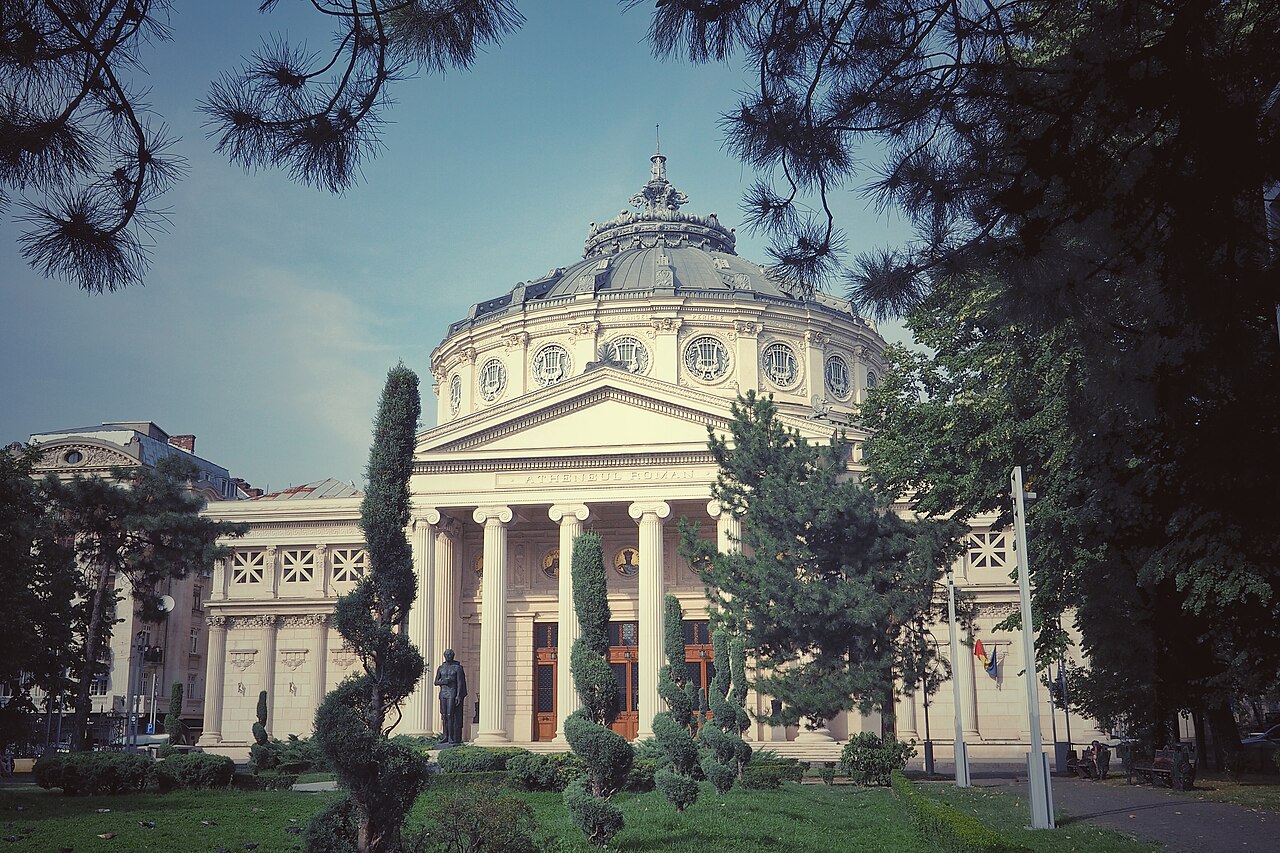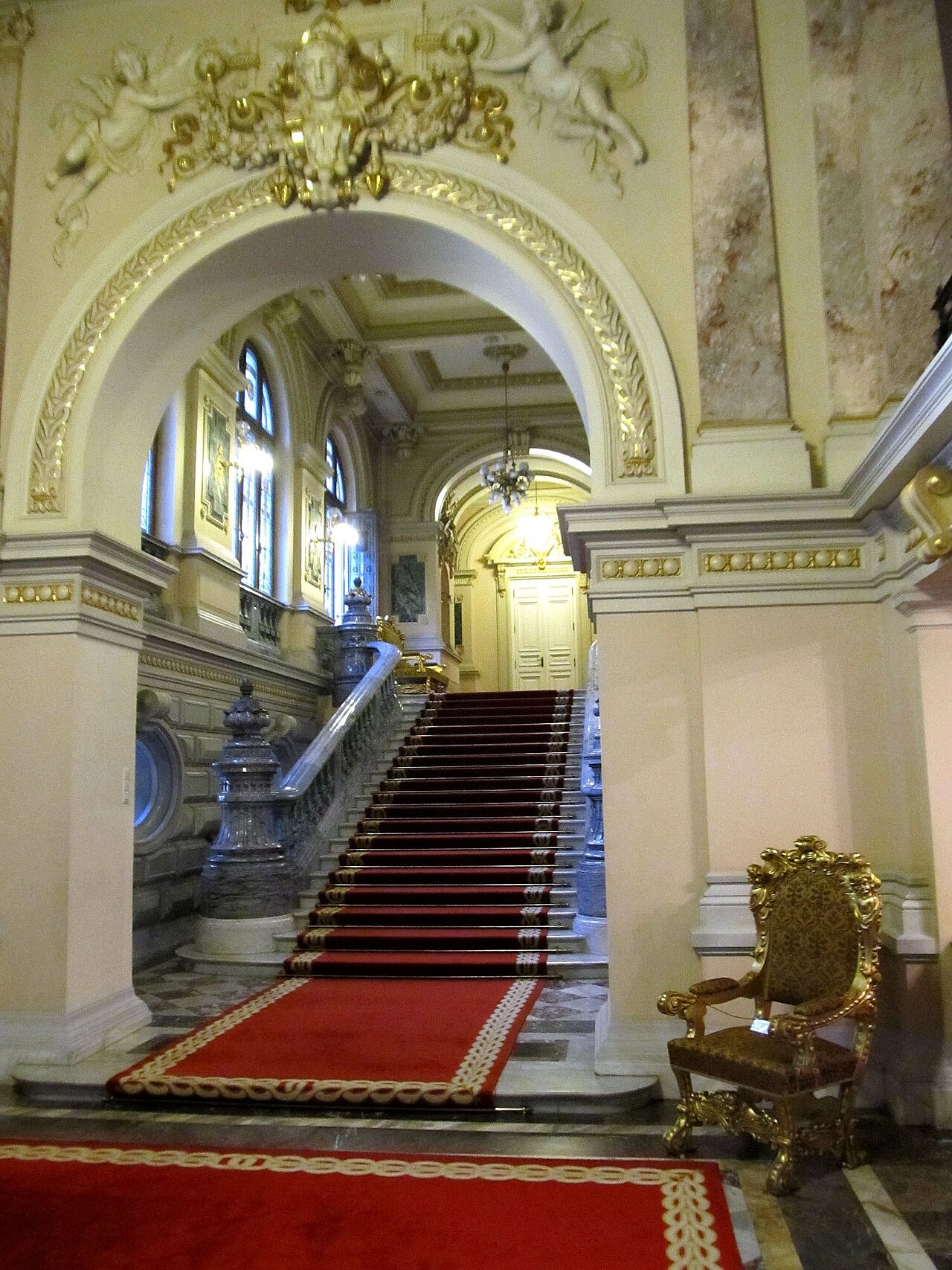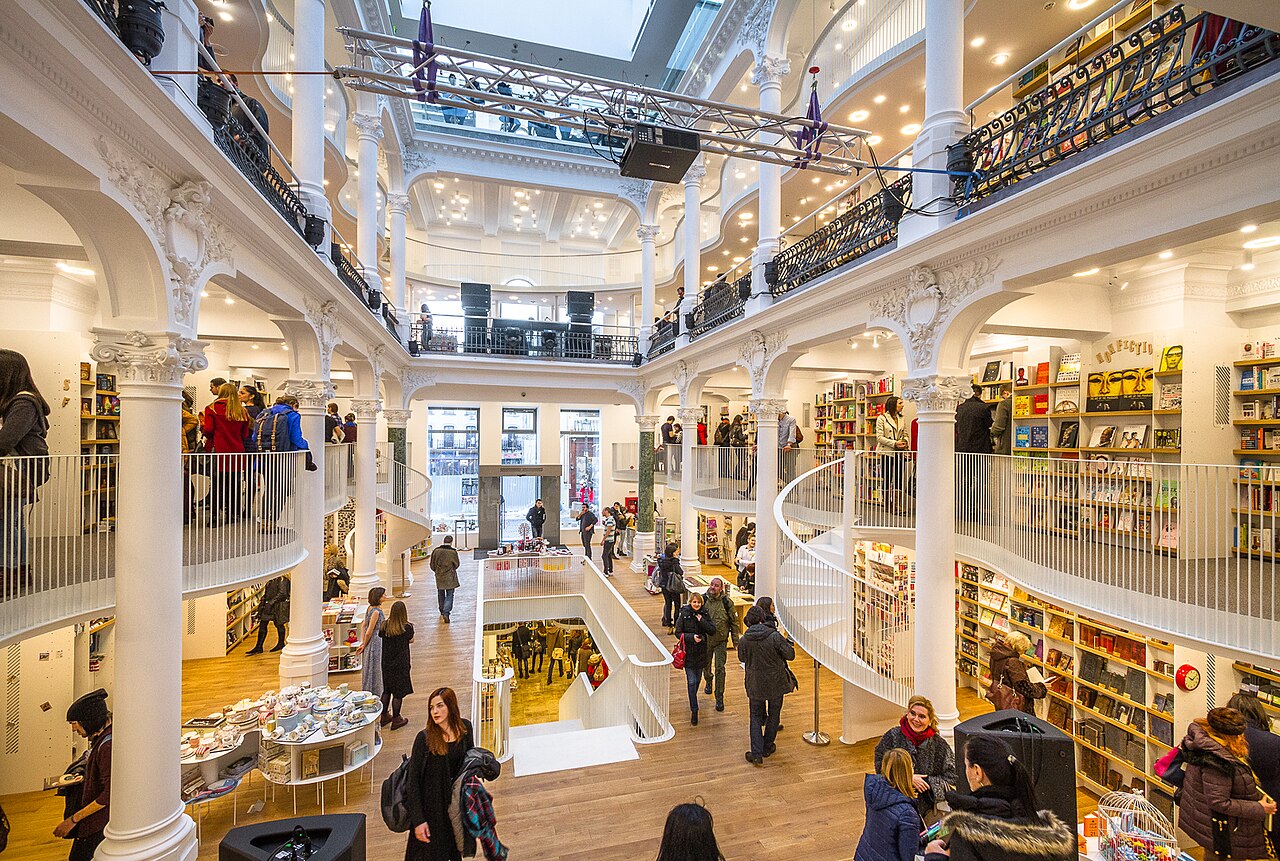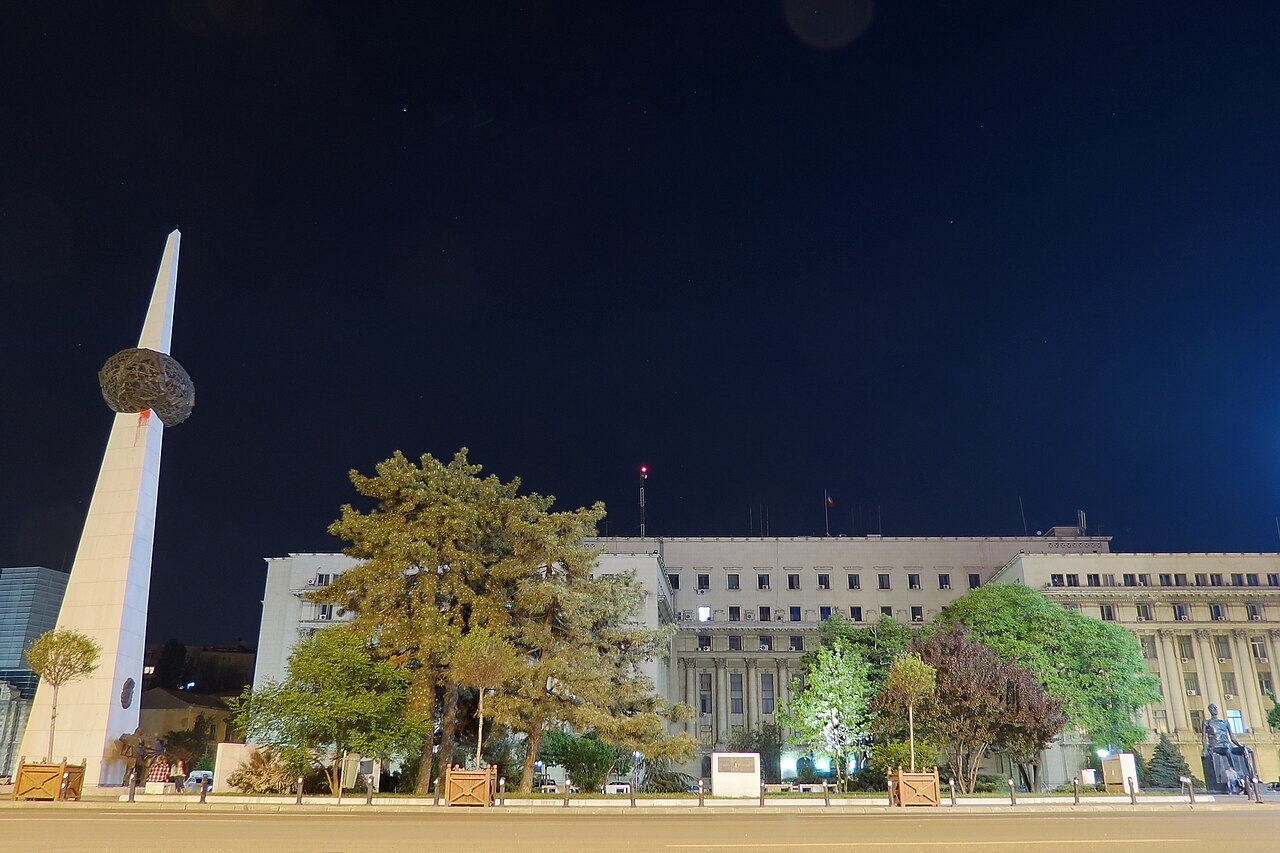
Revolution Square is where the recent history of Bucharest turns. On 21 December 1989 Nicolae Ceaușescu gave his last public speech here before fleeing the capital, and the events that followed ended the communist dictatorship. The square has been called Palace Square, Republic Square and Gheorghe Gheorghiu-Dej Square, and it took its present name after the revolution. It is one of the best-framed urban spaces in the city, surrounded by the former Royal Palace, which houses the National Museum of Art, the Romanian Athenaeum, the Carol I Central University Library, Kretzulescu Church and the former headquarters of the Central Committee of the Communist Party, from whose building the dictator addressed the crowd. In the centre stands the Memorial of Rebirth, a 25-metre monument by the architect Alexandru Ghilduș, whose Wall of Remembrance carries the names of 1,058 people who died in the revolution. It is controversial, and has long been nicknamed the Potato on a Spike. Whatever you think of the design, it is a moving place when you know the story, and it is free, open and central.
How to visit
The square is on Calea Victoriei in the heart of the centre, a short walk from University Square and the Old Town, and the metro line M2 stops nearby. Several trolleybus and bus lines run past. There is no entry fee and no opening hours, so you can come at any time.
Most visitors combine it with a visit to the National Museum of Art or a concert at the Athenaeum, both of which are right on the square. Check the museum’s closing days before you go, since it is closed on Mondays and Tuesdays.
What to expect
An open urban space with heavy traffic on its edges, so cross carefully. The memorial dominates the centre, and the buildings around it give a lesson in Bucharest’s eras, from the royal palace through the monumental party headquarters to the Belle Époque Athenaeum. Take time to read the names on the Wall of Remembrance, and look for the balcony on the former Central Committee building. The square is an everyday space, and on some days it hosts commemorations, so be respectful if a ceremony is in progress.
Making the most of it
Come in the morning for the best light on the Athenaeum, or at dusk when the facades are lit. Combine it with a walk north along Calea Victoriei, or south to the Old Town, and read about the events of December 1989 beforehand so the setting makes sense.
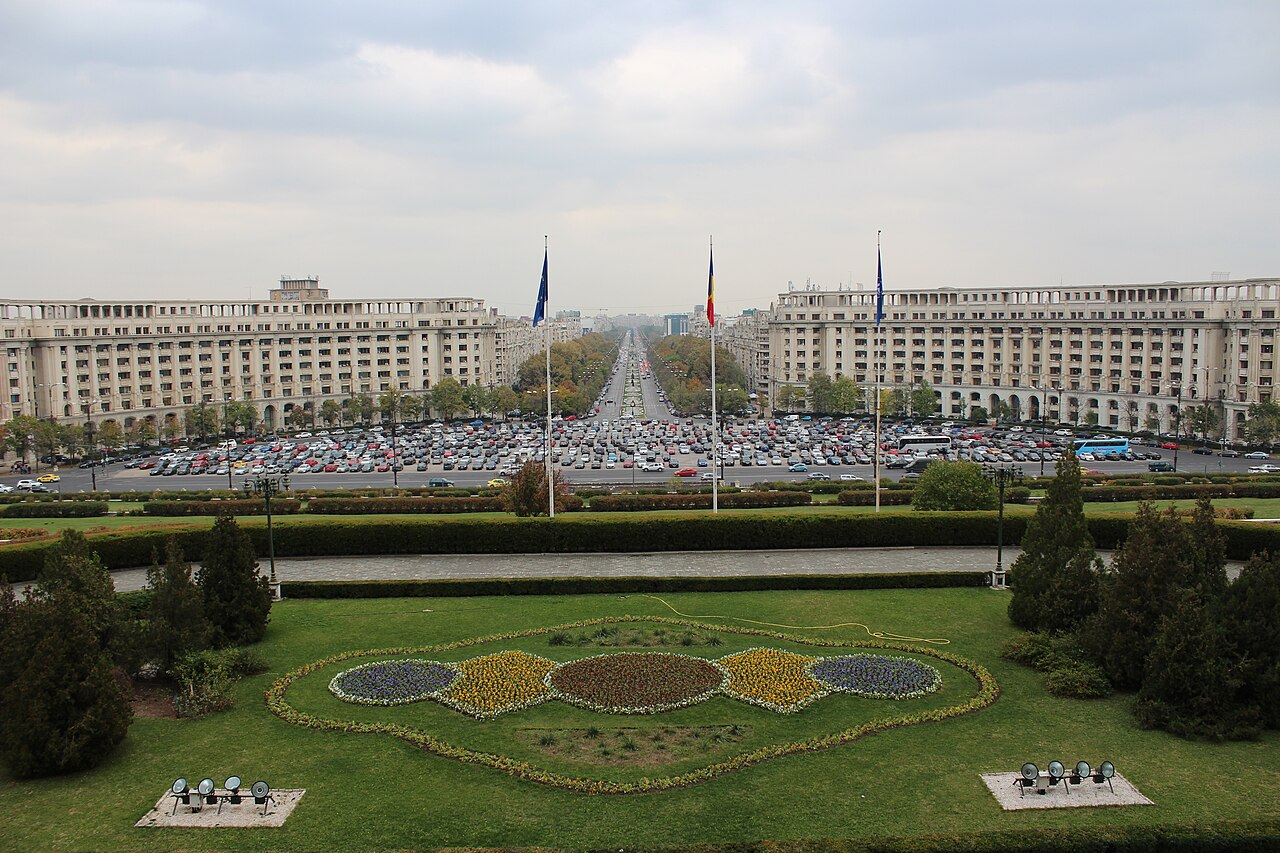
If you want more depth, pair it with the Ferestroika museum and the Palace of the Parliament, which show other sides of the communist period. Allow half an hour for the square alone, or longer if you go into the museum or the library nearby.
It is worth coming back at a different time of day, since the square looks quite different in the early morning, when it is quiet, and after dark, when the buildings are lit. Look up as well as around: the roofline and balconies tell the story of the surrounding buildings. A guidebook or a short article on 1989 on your phone will help you read the buildings.
What to expect
The experience
A self-guided visit to a historic city square with a memorial to the 1989 revolution, surrounded by major buildings.
Best time
Morning for the light on the Athenaeum, or dusk when the facades are lit.
How long
Thirty minutes to an hour, longer with a museum visit.
Tips
Read about December 1989 beforehand, take care crossing the traffic and remember that the National Museum of Art is closed on Mondays and Tuesdays.
Quick picks
- Best for
- History lovers and first-time visitors who want to see where the revolution happened.
- Families
- Easy and free, though the history is more meaningful for older children.
- Couples
- A good start or end to a walk along Calea Victoriei.
- Pair with
- The National Museum of Art, the Romanian Athenaeum and Cișmigiu Gardens.
- Time needed
- Thirty minutes to an hour.
Good questions
What happened at Revolution Square?+
On 21 December 1989 Nicolae Ceaușescu gave his last public speech here before fleeing the capital, a key moment in the end of the communist dictatorship.
What is the monument in the centre?+
The Memorial of Rebirth, a 25-metre monument by Alexandru Ghilduș with a Wall of Remembrance carrying the names of 1,058 people who died in the revolution.
Why is it called the Potato on a Spike?+
It is a popular nickname from critics of the memorial’s abstract design.
Is it free?+
Yes, it is a public square that you can visit at any time.
What is around it?+
The former Royal Palace, now the National Museum of Art, the Romanian Athenaeum, the Central University Library, Kretzulescu Church and the former Central Committee building.