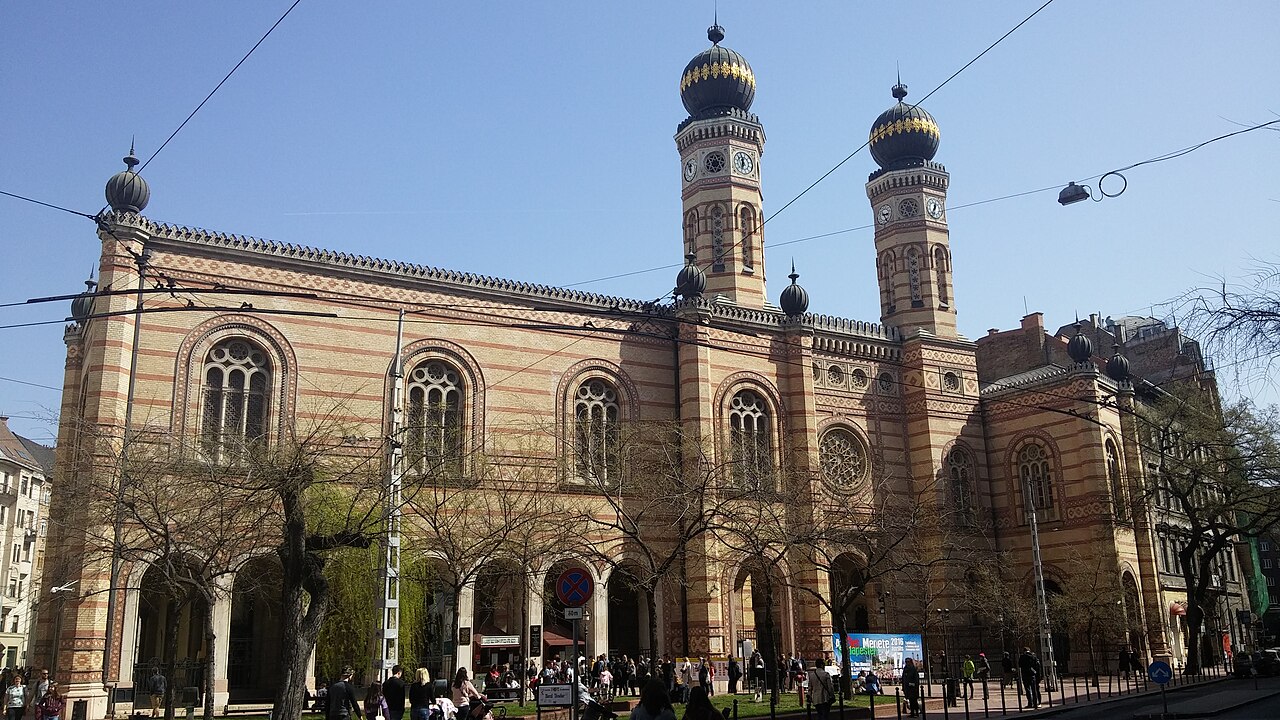
The Hungarian Jewish Museum and Archives stands at Dohány utca 2, in the same complex as the Great Synagogue, and it adds something the synagogue visit alone cannot: the long, ordinary story of Jewish life in Hungary, from religious practice and family customs to the professions, schools and neighbourhoods that made the Jewish Quarter what it was. The museum opened in 1932, long before the district became a nightlife quarter, and it has been a place of memory for the community ever since. Its collections and the archive behind it document religious ritual, daily life and the way Hungarian Jews were woven into the culture of the city, as well as the persecution of the 1940s, which is why many visitors treat it as the quiet counterpart to the grand building next door. Where the synagogue is about scale and architecture, the museum is about people, and it rewards slow reading. Most visitors meet it as part of a combined ticket that covers the museum and the synagogue complex, with a live guide available in several languages, and the combined visit is commonly given about two and a half hours. Opening days follow the Jewish calendar: the complex is open Sunday to Thursday during the day, closes early on Friday and is closed on Saturday, so plan around that rather than hoping for a weekend slot.
Why add it to a synagogue visit: the Dohány Street complex is one of the most emotional places in Budapest, and the museum is where the context lives. If you only walk through the synagogue you see the building and the memorial garden; with the museum you see the objects that explain who used it, how they lived and what was lost. It suits anyone who wants to understand the Jewish Quarter beyond its ruin bars and restaurants, and it pairs naturally with a walk along Kazinczy utca and the other streets that made up the former ghetto.
Working the visit
Tickets are sold as timed entries, often as a fast-track bundle with the synagogue, so choose the date first and arrive a little early because security screening comes before the doors. Dress modestly, and expect covering for the shoulders and knees at the religious parts of the complex; men are asked to cover their heads in the synagogue itself.
Exhibits are labelled in English as well as Hungarian, but a guide adds a lot, particularly for the archive material, so consider the guided option if you are short on background. Photography rules vary by room, so follow the signs.
Getting there
Dohány utca is a few minutes from Astoria and Deák Ferenc tér, both on the metro, and trams run along the Grand Boulevard close by. Allow time before or after for the Holocaust memorial garden and the Tree of Life behind the synagogue. Because opening hours are shorter on Fridays, aim for a morning slot, and check the current hours and any holiday closures when you book.
If you have only one afternoon for the quarter, a good sequence is the museum and synagogue first, a slow walk along Kazinczy utca afterwards, and a late lunch at one of the traditional kosher-style or modern Hungarian places nearby. Bring a light layer, since the stone interiors can be cool outside summer, and leave extra time for the security queue at busy hours so your timed entry is not missed.
What to expect
The experience
A museum and archive in the Dohány Street synagogue complex, usually visited with the synagogue on a combined timed ticket.
Best time
Morning, Sunday to Thursday. Friday closes early and Saturday is closed.
How long
About two to two and a half hours with the synagogue; about an hour for the museum alone.
Tips
Choose a date first, arrive early for security screening, dress modestly and consider the guided option for the archive material.
Quick picks
- Best for
- Visitors who want the human story behind the Jewish Quarter, not only its architecture.
- Families
- Fine for older children and teenagers who can handle serious history; younger ones may find it long.
- Couples
- A reflective visit; follow it with a quiet coffee on Kazinczy utca.
- Pair with
- The Dohány Street Synagogue, the memorial garden and a walk through the former ghetto streets.
- Time needed
- Two to two and a half hours.
Good questions
When is the Hungarian Jewish Museum open?+
It follows the synagogue complex: open Sunday to Thursday during the day, closing earlier on Friday and closed on Saturday and Jewish holidays. Check the current hours when you book.
Is the museum part of the Dohány Street Synagogue visit?+
Yes, it sits in the same complex at Dohány utca 2, and many tickets cover the museum and the synagogue together. A fast-track bundle with a live guide is a common choice.
How long should I allow?+
Plan about two to two and a half hours for the combined visit, or roughly an hour if you only go to the museum.
Is there a dress code?+
Dress modestly with covered shoulders and knees, and men cover their heads inside the synagogue. Covering is usually available at the entrance.
Is it suitable for children?+
Older children and teenagers who can cope with serious history generally manage well. The subject matter and the length make it harder going for young children.