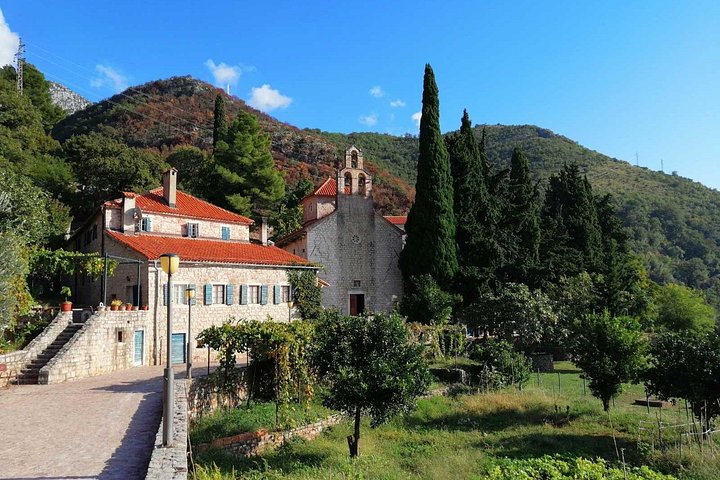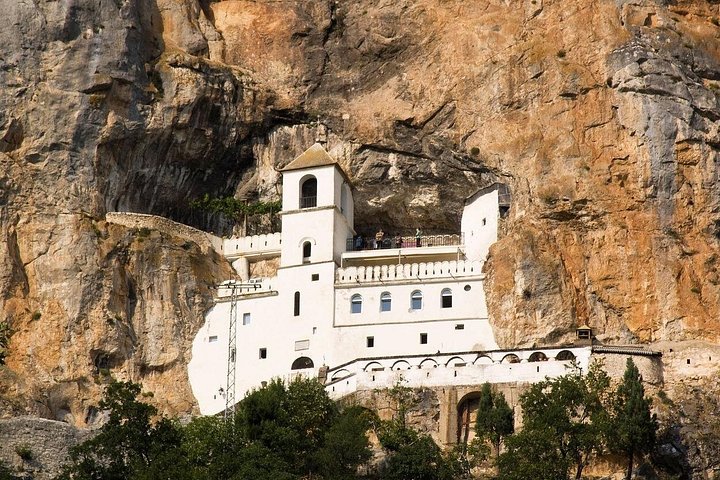
Ostrog Monastery is among the most striking religious sites in the Balkans, a white complex built into an almost vertical rock face high above the Zeta plain. It was founded in the seventeenth century and is dedicated to Saint Basil of Ostrog, whose relics rest in a cave church there and draw pilgrims of many faiths from across the region. The setting is spectacular, with terraces clinging to the cliff and a view that spreads to the horizon, and the atmosphere is quiet and devout. This full-day tour from Budva takes care of the long mountain road, and a guide explains the story of the monastery, its customs and the etiquette of visiting. It is a meaningful outing for people with an interest in religion, history or dramatic places, and it can be paired with a stop at a village or viewpoint on the way back. Visitors are asked to dress modestly and to respect worshippers.
How it works
The tour leaves early from Budva and drives inland for around two hours, climbing a winding road to the lower monastery. From there, you may walk up the steep path or take transport the final stretch, depending on the road. The upper monastery has the main church and the relics cave, which is small and often crowded with pilgrims, so expect to queue at busy times.
What to expect
White-washed walls, painted icons, candles and a hush that suits the place. Many pilgrims come barefoot or walk up the last stretch as an act of devotion. Photography inside the churches is not allowed or limited, so follow the guide’s advice. There is a small shop and a cafe at the lower level.
Dress code
Shoulders and knees must be covered, and women may be asked to cover their heads in the chapels. Bring sturdy shoes for the stairs and steps, and a light jacket for the cool air at altitude. Keep voices low and follow local custom.
Good to know
Visits are busiest on weekends, religious holidays and in summer, so a weekday morning is calmer. The walk can be strenuous for people with limited mobility, so ask about vehicle access. The tour is a long day, so plan on a relaxed evening afterwards. Pair it with a monastery tour near Budva for a quieter cultural theme, or choose Cetinje for history and museums. Prices are general and depend on the operator and the group.
Visiting with respect
Remember that Ostrog is a working pilgrimage site, not a tourist attraction, and the people you meet may be on a deeply personal journey. Move quietly, avoid blocking paths, and follow queue etiquette at the relics. Bring a small donation if you wish to light a candle. In summer, queues form early, so arrive soon after opening. Check your footwear: the stairs and uneven stones need flat, supportive shoes.
Many visitors also bring a bottle of water and a light snack, since facilities are limited. Allow time to sit on a terrace and take in the view, which is part of the experience. Many visitors find that the quiet moment on the terrace, looking over the plain, is the part they remember most, so allow yourself time to simply sit and look.
What to expect
The experience
A guided drive, a visit to the cliff monastery and the story behind it.
Best time
Weekday mornings, to avoid the biggest crowds.
How long
Eight to nine hours.
Tips
Dress modestly and wear sturdy shoes.
Quick picks
- Best for
- A powerful, quiet sacred place.
- Families
- Long travel and steps, so best for older children.
- Couples
- A shared, reflective day out.
- Pair with
- Cetinje or a Budva monastery tour.
- Time needed
- A full day.
Good questions
Do I need to dress modestly?+
Yes. Cover shoulders and knees, and women may need a head covering.
Can I take photographs?+
Not inside the churches, and rules vary elsewhere, so ask the guide.
Is the climb difficult?+
There are steep paths and steps, but some vehicle access may be available.
How long does the drive take?+
Around two hours each way from Budva.
When is Ostrog busiest?+
Weekends, religious holidays and summer.