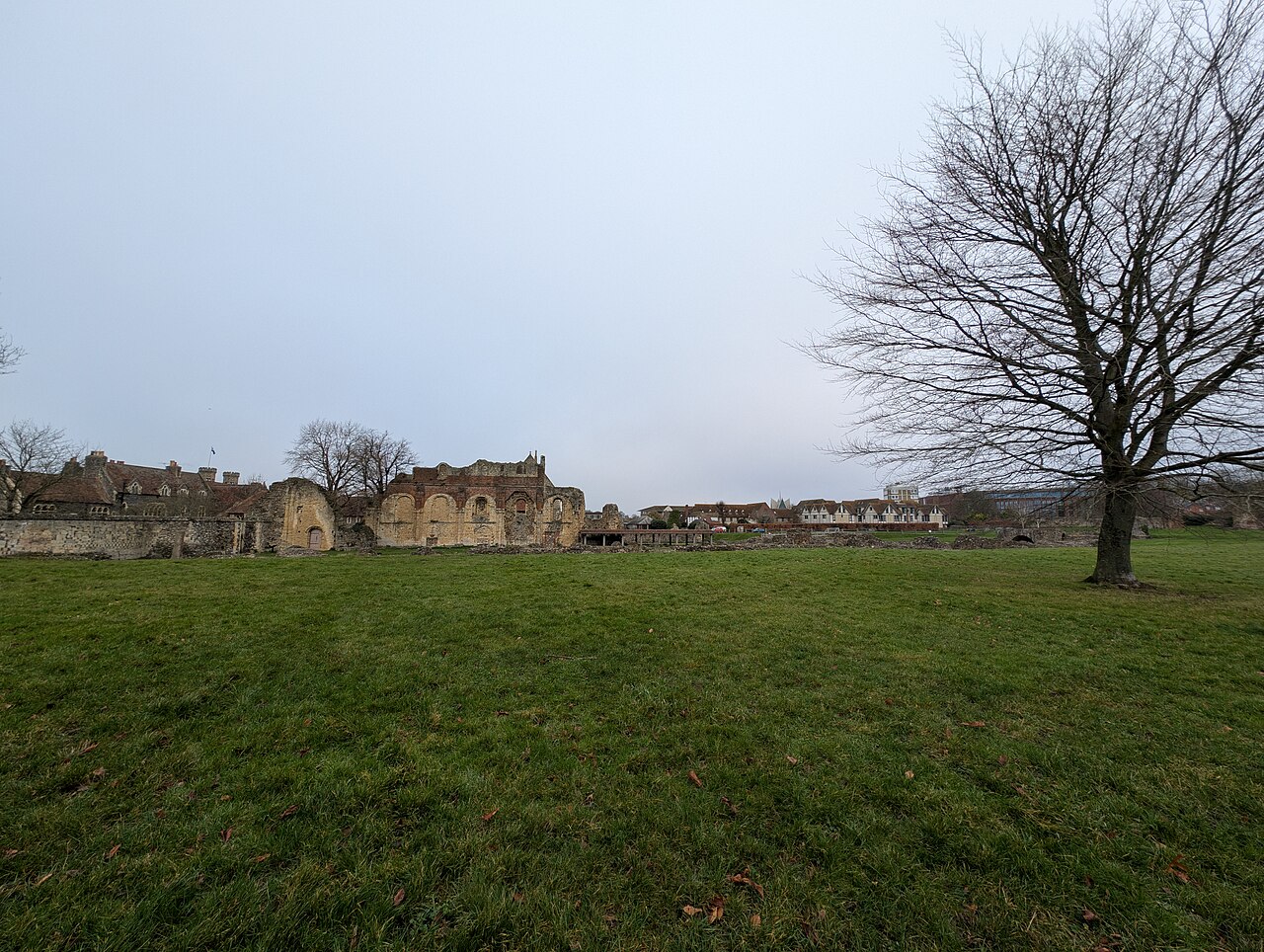
St Augustine's Abbey is the quiet counterpart to the cathedral, and many visitors find it the more atmospheric of the two. Augustine arrived in Kent in 597 on a mission from Pope Gregory and founded a monastery just outside the city walls, which became the burial place of the early Kentish kings and archbishops. Over the centuries the abbey grew into one of the great Benedictine houses of England, with a Norman church and extensive cloisters, until Henry VIII dissolved it in 1538 and part of the site was turned into a royal residence. What remains are low flint walls, the footprints of churches layered over one another, and open lawns, with the cathedral rising over the rooftops to the west. Together with the cathedral and St Martin's Church, the abbey forms the Canterbury World Heritage Site.
Think of the abbey as a place to read the ground. Much of the site is foundations and low walls, so it helps to pick up the guide material at the start and follow the story from Augustine's first small church, through the Saxon building and the Norman rebuild, to the great medieval abbey.
An exhibition on site sets out the story, and the layout makes sense once you know where the main altar and the cloisters stood. The lawns are open and flat, which makes the abbey an easy visit for families, and it is a pleasant place to sit if the cathedral has been crowded.
Tickets are sold by date and time slot online, with a saver price for booking until midnight the day before. You can also buy on the day, at the full price, and English Heritage members get in free with their card. Opening days and hours change with the season, so use the date picker on rather than assuming the summer pattern, and note that the site can close for events. The abbey sits a few minutes outside the main pedestrian streets, which keeps it quiet even on busy weekends.
Combine it sensibly with the rest of Canterbury. It is about a ten minute walk from the cathedral, so the two make a natural pair, with the abbey best seen first on a morning when you want peace and the cathedral after lunch. St Martin's Church, often described as the oldest parish church in continuous use in England, is a short walk further along the same road if you want to complete the World Heritage trio. Bring layers, as the site is open to the weather.
What to expect
The experience
A self-paced walk around the abbey ruins and lawns with an exhibition and guide material, on a date-specific ticket.
Best time
A dry morning, when the site is quietest and the low walls are easiest to read.
How long
About an hour to an hour and a half.
Tips
Use the date picker to see current opening days, book before midnight the day before for the saver price, and wear layers because there is little shelter.
Quick picks
- Best for
- History lovers and anyone who wants a quieter alternative to the cathedral.
- Families
- Wide lawns and low walls give children room to roam while you tell the story of Augustine.
- Couples
- A calm, scenic stop before a pub lunch in the old streets.
- Pair with
- Canterbury Cathedral, or St Martin's Church a short walk along the same road.
- Time needed
- Allow about an hour.
Good questions
Who founded St Augustine's Abbey?+
Augustine founded it after arriving in Kent in 597 on a mission from Pope Gregory. It became the burial place of early Kentish kings and archbishops.
Is St Augustine's Abbey part of the cathedral?+
No, it is a separate site run by English Heritage, though both are part of the Canterbury World Heritage Site. The abbey is about a ten minute walk from the cathedral.
Do I need to book in advance?+
Booking is optional, but buying online until midnight the day before gives a discount. You can also buy on the day at the full price.
Is the abbey open all year?+
It is open through the year, but days and hours change with the season. Check the date picker on the booking page before you set out.
Is the abbey suitable for children?+
Yes, the open lawns and low ruins suit families well. Use the guide material to turn the visit into a treasure hunt through history.