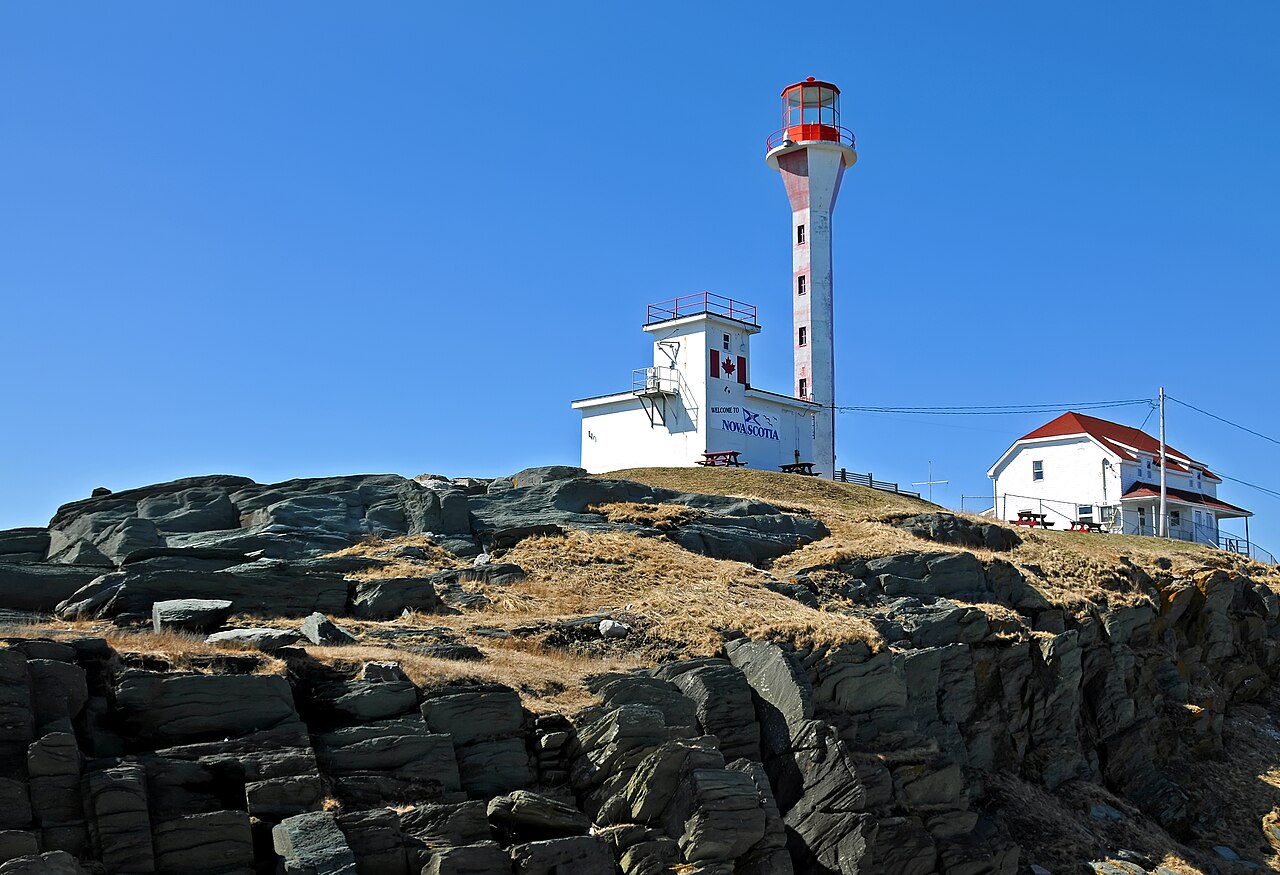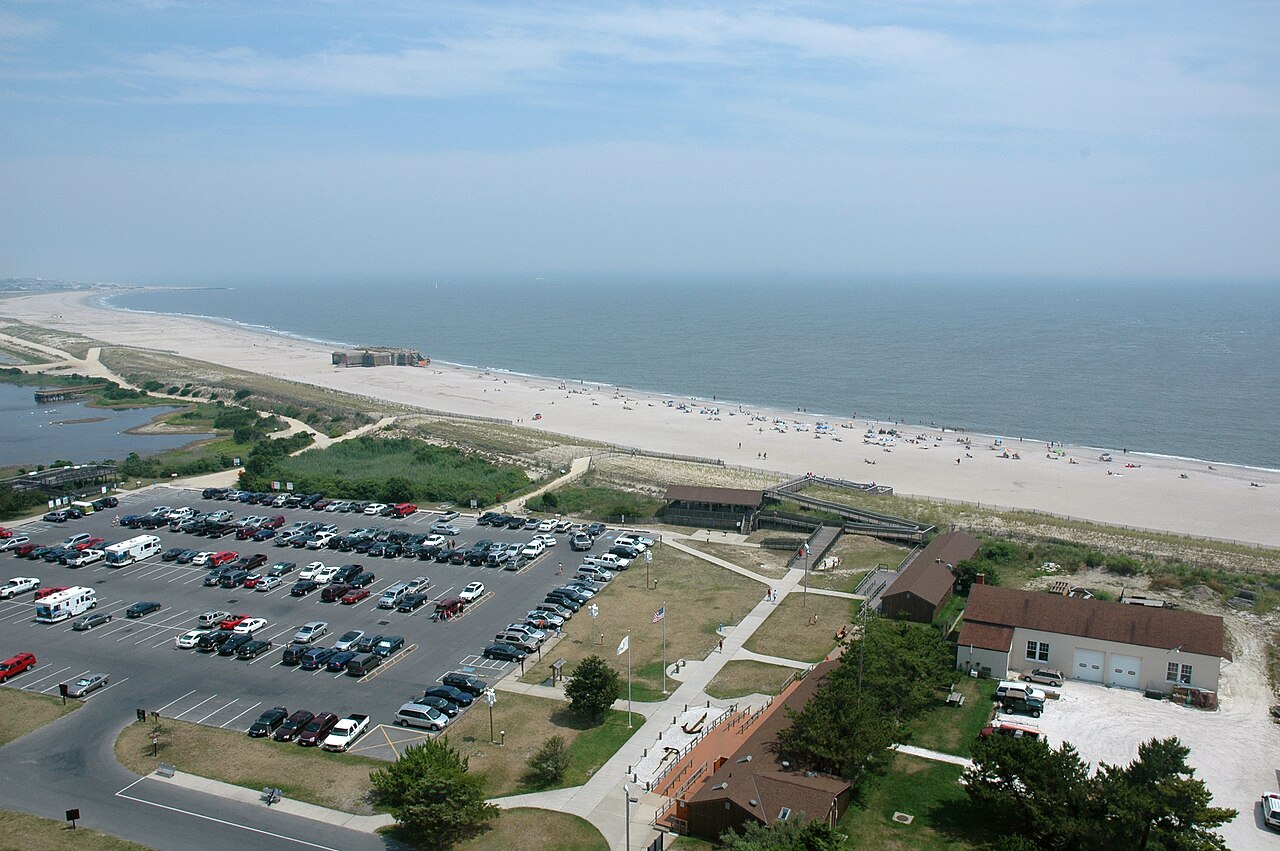
Cape May Point State Park surrounds the lighthouse and protects a mosaic of habitats at the very tip of the peninsula: sandy beach, dunes, freshwater ponds, wet meadows, woodlands and marsh. Walkers can follow a network of trails, including boardwalks and a short loop around the ponds, with signs explaining the plants and animals. The park is internationally known for birds, because the position of the cape funnels migrating species into a narrow area before they cross Delaware Bay. In autumn, raptors such as hawks, falcons and eagles pass overhead in large numbers, and songbirds, shorebirds and waterfowl add to the movement. A dedicated hawk watch platform allows visitors to join experienced counters and watch the flights, and a visitor center offers exhibits and information on the park and its wildlife. The park also has a beach, where visitors can walk along the water, look for Cape May diamonds and enjoy views of the lighthouse rising behind the dunes. Remains of a World War II bunker stand near the beach, a reminder of the military role this site once played. The park is open all year, and each season has its own character: spring migrants, summer beach days, autumn raptors and quiet winter walks.
What to do
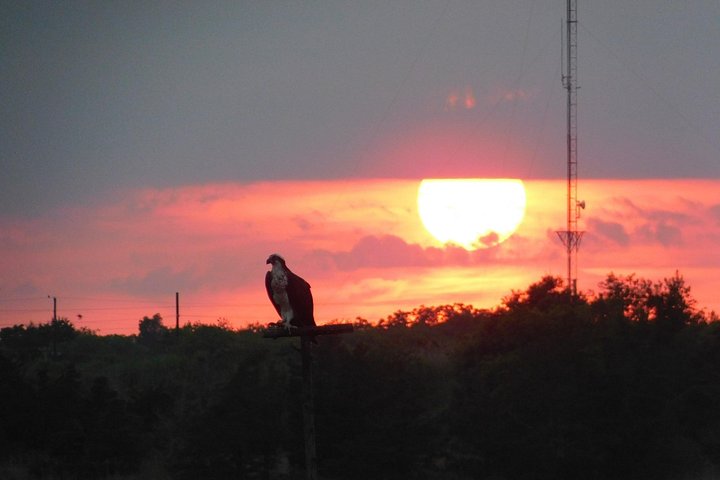
Walk the trails at a relaxed pace, bring binoculars if you have them and stop at the platform to ask the counters what is flying. Interpretive displays at the visitor center explain the park's history and ecology. In the right season you may spot ospreys, herons, egrets, hawks, warblers and shorebirds, along with butterflies, dragonflies and turtles. The park is a good place for children to learn about nature, with simple loops and open spaces for exploring.
Practical tips
Parking is available near the lighthouse and visitor center, and in summer it may require a daily fee, so check at the entrance. Wear sturdy shoes, bring insect repellent from late spring through autumn, and carry water because shade can be limited. Dogs are generally allowed only on leash in designated areas, and some beach zones are closed in nesting season to protect shorebirds, so follow posted signs. The park can be windy and exposed, so a light jacket helps in shoulder seasons.
Who it suits
Nature lovers, birders, hikers, families and photographers. It is an easy half-day outing and combines well with the lighthouse climb, Sunset Beach and the bird observatory. For a different view of the same habitats from the water, the marsh eco cruises complement a land visit, and the sunrise or sunset light on the dunes is particularly good for photography.
Seasonal highlights
Spring brings warblers and other songbirds, summer brings nesting shorebirds and beach crowds, autumn brings the great raptor flights and monarch butterflies, and winter brings ducks, geese and a few northern visitors. The park never feels the same twice. Check the visitor center for current sightings, and consider joining a ranger or society walk if you want help finding birds. Photographers should arrive early or late for the best light on the dunes and the lighthouse.
Facilities and access
The visitor center offers restrooms, exhibits and trail maps, and most main paths are flat and suitable for strollers, although sandy sections can be tiring. Early morning is quiet and cool in summer, while late afternoon gives warm light on the dunes and the tower. Bring a hat, because shade is scarce on the beach and open meadows.
What to expect
The experience
A state park of dunes, ponds, marsh and beach with trails, a hawk watch platform and a visitor center around the lighthouse.
Best time
Autumn for raptor migration; spring for songbirds; summer for beach days; winter for quiet walks.
How long
Two to four hours.
Tips
Bring binoculars, repellent and water, follow posted nesting-area signs and check parking rules.
Quick picks
- Best for
- Nature lovers, birders and families who want easy trails and views.
- Families
- Simple loops and open spaces suit children.
- Couples
- Peaceful walks and good light at sunrise and sunset.
- Pair with
- The lighthouse climb and Sunset Beach.
- Time needed
- Two to four hours.
Good questions
Why is Cape May Point famous for birds?+
It sits at the tip of a peninsula where migrating birds concentrate before crossing Delaware Bay.
Is there a hawk watch platform?+
Yes, where visitors can watch autumn raptor migration alongside experienced counters.
Can I swim at the park?+
There is a beach, but check posted signs for swimming rules and lifeguard coverage.
Are dogs allowed?+
Usually on leash in designated areas only, and some beaches close seasonally for nesting birds.
Is there a fee?+
Parking may be charged in summer. Check at the entrance.