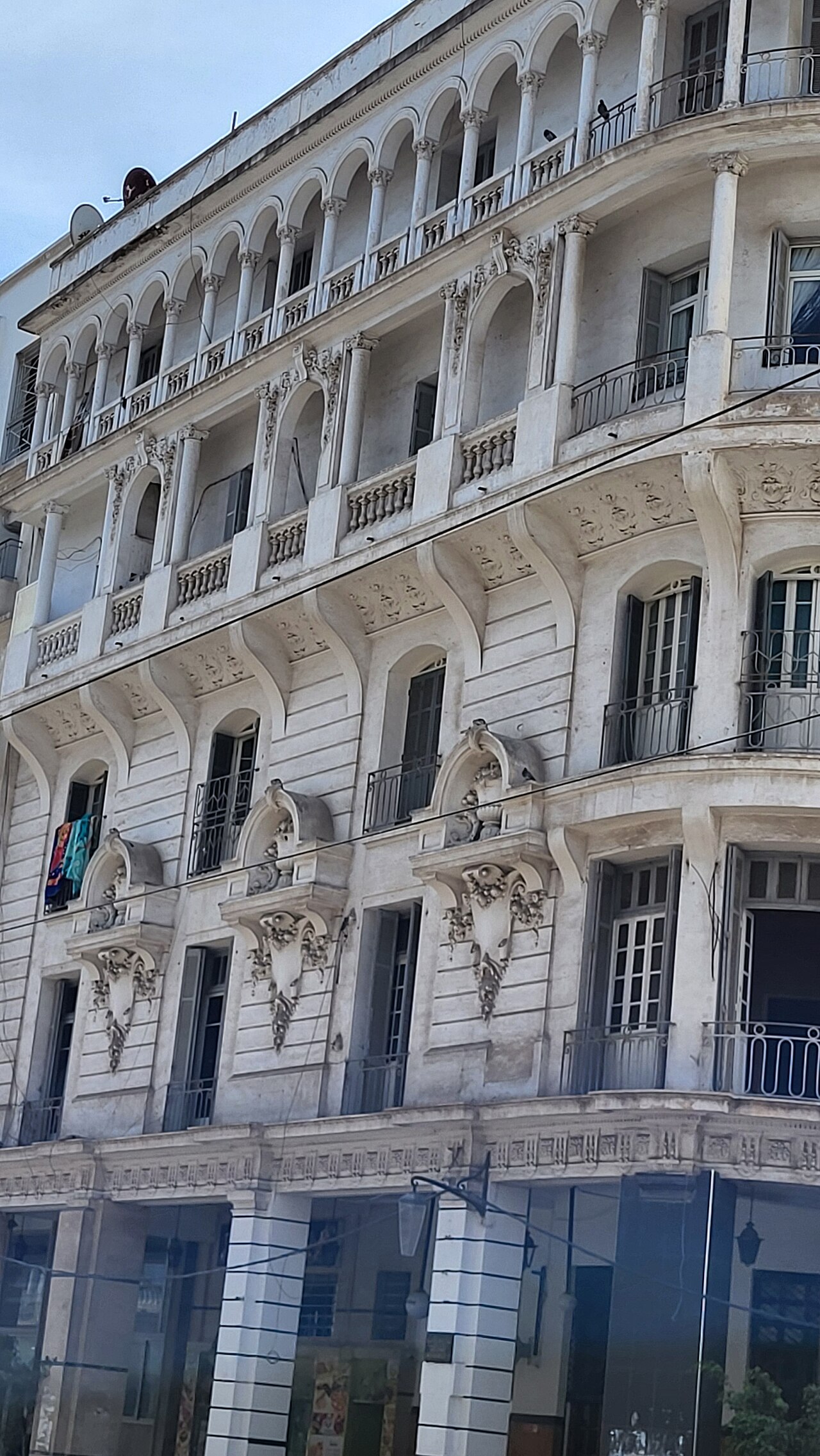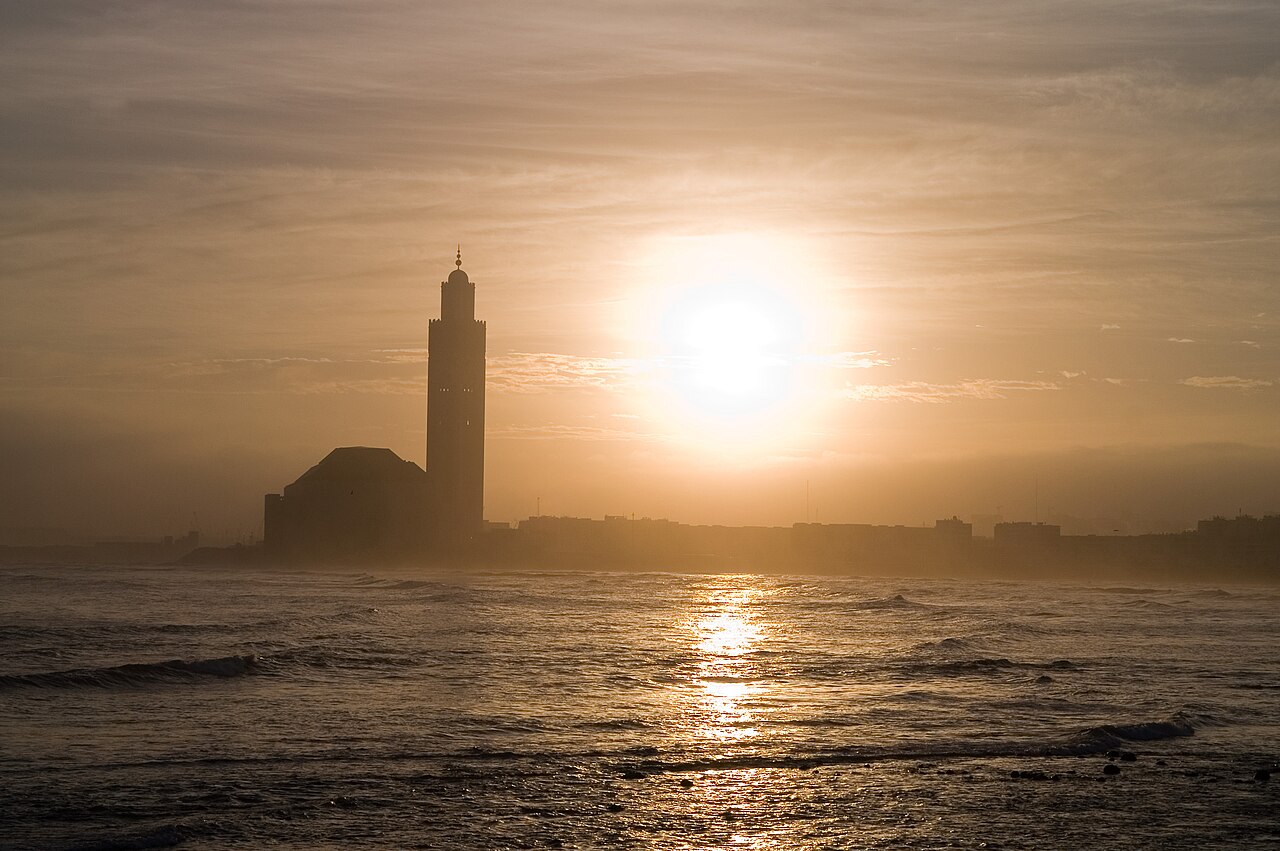
Casablanca is not an ancient city, but it has two medinas that reward a slow walk. The old medina, tucked behind the ramparts near the port, is small, residential and unpolished: laundry above the lanes, boys playing football in the alleys, tiny shops selling spices, fabric and household goods, and a sense of daily life that more famous medinas have traded for tourism. Across the city, the Habous quarter, also called the New Medina, was laid out in the 1920s and 1930s by French planners working with Moroccan craftsmen, who wanted a tidy neighbourhood that echoed the traditional medina. Its arcaded streets, white facades, carved cedar doors and green-tiled roofs make it one of the most photogenic parts of the city. The Habous is known for its book and craft stalls, its Royal Palace gate, the Mahkama du Pacha with its lavish plasterwork, and above all for its pastry shops, where traders have been selling almond sweets and other pastries for generations. A guided half-day tour that links the two, with a photo stop at Rick's Cafe by the medina wall, is the easiest way to understand how Casablanca grew from a fishing port into a modern metropolis.
The old medina is the earliest part of the modern city, a walled enclave that grew when the Alaouite sultans developed the port in the eighteenth century. Its ramparts and the bastion of La Sqala still stand beside the fishing harbour, and the lanes inside are best explored with a guide, who can explain who lives behind the doors and point out the small mosques, ovens and workshops that make a medina function. It is not a place of big-ticket sights; it is a place to watch ordinary Casablanca go about its day.
The Habous is a deliberate contrast. Built from the 1920s as a planned neighbourhood, it combines European urban order with Moroccan detail, so the lanes are wide and arcaded and the houses face inward on courtyards. The district includes the Mahkama du Pacha, the former courthouse with its magnificent carved ceilings and tilework, a mosque, a souk of leather and brass goods, a famous street of booksellers, and the pastry shops that draw locals from all over the city. Saving an hour here for browsing and a coffee is time well spent. Be ready to bargain politely, and treat any quoted price as a starting point.
Practical points: both quarters are comfortable on foot in the morning, when shops are open and the light is gentle. Some shops close in the early afternoon, and Fridays are quieter around prayer time. A guide adds real value because the two medinas lack the signposting of bigger tourist districts. Carry small notes, keep valuables in a front bag, and combine the visit with lunch at one of the simple Moroccan restaurants nearby. Plan on three to four hours for both quarters, and finish with the pastries, which make excellent gifts.
What to expect
The experience
A guided morning walk through the old medina and the Habous quarter, with a stop at the walls beside Rick's Cafe and time to browse the shops and pastry stalls.
Best time
Morning, when the shops are open and the lanes are cool and quiet.
How long
Three to four hours with the guide, plus extra time if you want to shop in the Habous.
Tips
Carry small notes, cover shoulders and knees near mosques, bargain with a smile, and buy pastries last so they stay fresh.
Quick picks
- Best for
- Travellers who want to see everyday Casablanca and its 1930s planned neighbourhood.
- Families
- Older children enjoy the colour and the pastries, but the lanes can be busy and uneven, so younger ones suit a stroller-free route.
- Couples
- Share a plate of pastries and mint tea in the Habous, then watch the light turn gold along the old walls.
- Pair with
- The Hassan II Mosque, Rick's Cafe and the Art Deco boulevard in the same day.
- Time needed
- Half a day for both quarters.
Good questions
Why does Casablanca have two medinas?+
The old medina is the original walled port town, while the Habous was built in the 1920s and 1930s as a planned New Medina. They show two different eras of the city.
Is a guide necessary?+
It is not compulsory, but the lanes are not well signposted and a guide explains the history and the trades. A short guided tour is the easiest way to see both quarters.
Is the Habous quarter good for shopping?+
Yes. It is known for books, leather, brass and pastry shops, and prices are generally calmer than in the big tourist medinas. Bargaining is still expected for crafts.
Is it safe to walk?+
Both areas are lived-in and generally fine in daytime. As in any busy market, keep bags in front of you and avoid displaying valuables.
When is the best time to go?+
Mornings are best, because shops are open and the temperature is comfortable. Avoid the quiet stretch around Friday midday prayers.