Charleston is built for walking, and a guided walk is the quickest way to turn a pretty grid of streets into a place that makes sense. A local guide takes a small group through the historic district at a talking pace, stopping at the landmarks that explain the city: the steeple of St. Michael's, the corner at Broad and Meeting where city, county, state and federal law once met, the pastel houses, and the narrow lanes and carriage houses that most visitors walk straight past. The route varies by guide and by day, but the thread is the same. You hear how a colonial port grew rich on rice and indigo, how the same wealth rested on enslaved labor, how fires, earthquakes, hurricanes and a long siege left their marks, and how preservationists in the twentieth century saved the streetscape that visitors now come to see. A walking tour is the best first-morning plan for a short trip, because it gives you a mental map and a shortlist of places to return to on your own.
Guides in Charleston are licensed by the city, which means they have passed a test on local history and architecture, and the better ones carry that knowledge lightly. Expect real dates, real names and a good deal of dry humor. You will learn to read the houses: why so many sit sideways to the street with a long porch called a piazza facing the garden, what the iron earthquake bolts on the facades are, why doors on the piazza sometimes lead nowhere, and how to tell a Georgian from an Adamesque from a Greek Revival front.
Gardens and courtyards that are visible from the public way are pointed out, and so are the places where the story gets harder, because a fair telling of the old city includes the people who were bought and sold here as well as the people who built the mansions.
Practical choices matter more than people expect. Morning tours are cooler in summer and quieter in every season, and the light on the pastel facades is at its best before noon. Wear flat comfortable shoes, since the sidewalks are brick, the cobbles are uneven and the curbs are high. Carry water from April to October.
Most groups are small, which makes it easy to ask questions, and a short pause for the restroom or a coffee is usually built in. The tour is on foot and mostly level, though there are curbs and a few steps, so travelers with limited mobility should check with the operator about the pace and the route.
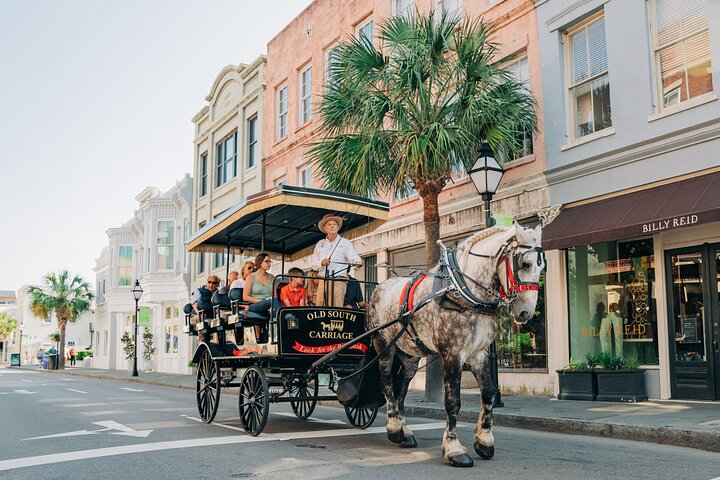
Use the tour as the spine of your trip. Take it on the first morning, note the houses you want to enter, and then spend the afternoon on the Battery, in a house museum or at the City Market. If you want more depth afterward, combine it with a carriage ride, a harbor cruise or a themed walk on another day, since each of those picks up threads that a general tour can only mention.
What to expect
The experience
A guided walk of about two hours through the historic district with a licensed local guide, on public streets and lanes.
Best time
Morning, for cooler air, softer light and fewer crowds; late afternoon is the second choice in summer.
How long
About two hours, with a short stop or two along the way.
Tips
Wear flat, comfortable shoes and carry water. Take it early in your stay and note the houses you want to revisit. Check the meeting point when you book.
Quick picks
- Best for
- First-time visitors who want orientation, context and a shortlist for the rest of the trip.
- Families
- Children who like stories do well; very young ones may tire on a two-hour walk, so bring water and snacks.
- Couples
- A relaxed morning walk followed by a long lunch is an easy and inexpensive date.
- Pair with
- A house museum, the City Market and a walk along the Battery.
- Time needed
- Two hours, plus a few minutes to find the meeting point.
Good questions
How long is the tour?+
About two hours at a walking pace, with short pauses to look at buildings and gardens.
Do the tours go inside the houses?+
Most walking tours stay on the public streets and lanes and describe the houses from outside. Entering a house museum is a separate visit.
Is the route the same every day?+
Not exactly. Guides adjust for crowds, weather and group interest, but the major landmarks of the historic district are covered.
Is it suitable for children?+
Yes for school-age children who enjoy stories. The brick sidewalks and distances can be tiring for toddlers, so a stroller or carrier helps.
What should I wear?+
Comfortable closed shoes, a hat and sunscreen in warm months, and a light layer in winter. Rain is common in summer afternoons, so a small umbrella is useful.