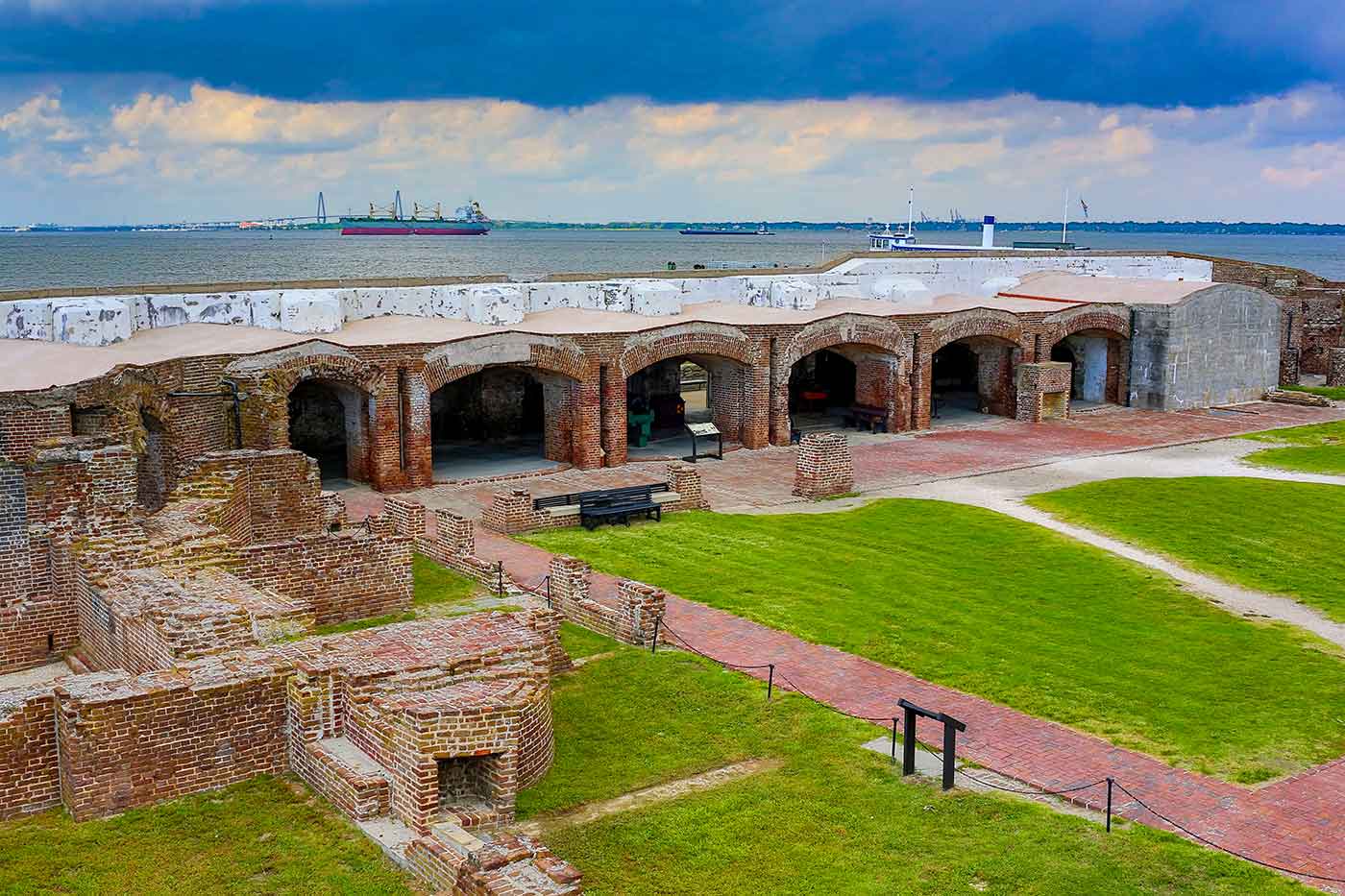
Fort Moultrie is the harbor's other fort and the better half-day for drivers: the Sullivan's Island site where the Revolution's south was saved — June 28, 1776, when Colonel Moultrie's unfinished palmetto-log fort absorbed a Royal Navy bombardment (the spongy palmetto swallowing cannonballs whole) and shot the fleet out of the harbor, a victory so formative it put the palmetto on South Carolina's flag and Carolina Day on its calendar — and where, uniquely, the National Park Service interprets the entire 171-year run of American coastal defense: the restored sections walk you backward through five eras, from World War II's Harbor Entrance Control Post (radar room and gray steel) through the concrete batteries of the 1890s, the Civil War ramparts that fired on Sumter across the channel, and back to the 1809 brick fort over the 1776 footprint. The cast obliges: Osceola, the Seminole leader imprisoned and buried at the gate; Edgar Allan Poe, stationed here in 1827 and setting The Gold-Bug on this island; Sumter's garrison, which began April 1861 by abandoning Moultrie for the island fort visible from the gun line. As part of Fort Sumter and Fort Moultrie National Historical Park it is the drive-up complement to the ferry fort — modest admission, visitor center and film, an hour or two of ramparts — and it pairs with Sullivan's Island's beach, lighthouse, and shrimp-roll strip for the harbor's easiest history half-day.
The 1776 story deserves its legend status: the fort was half-built — a palmetto-and-sand box its own inspectors called indefensible — when nine British warships opened fire; the green palmetto logs absorbed shot without splintering, Sergeant William Jasper famously remounted the shot-away flag under fire, and by nightfall the Royal Navy withdrew with crippled ships, leaving the south unconquered for three more years. The palmetto went onto the state flag, the fort took its commander's name, and June 28 remains Carolina Day. The site's later centuries compound the interest: the third fort (1809's brick) hosted Poe's artillery year and Osceola's imprisonment, watched the Civil War begin (Moultrie's guns helped bombard Sumter in April 1861, then endured the Union's years-long siege of the harbor), and was armored, re-gunned, and re-wired through the Endicott era and two world wars until 1947 closed the coastal-defense story it now tells end to end.
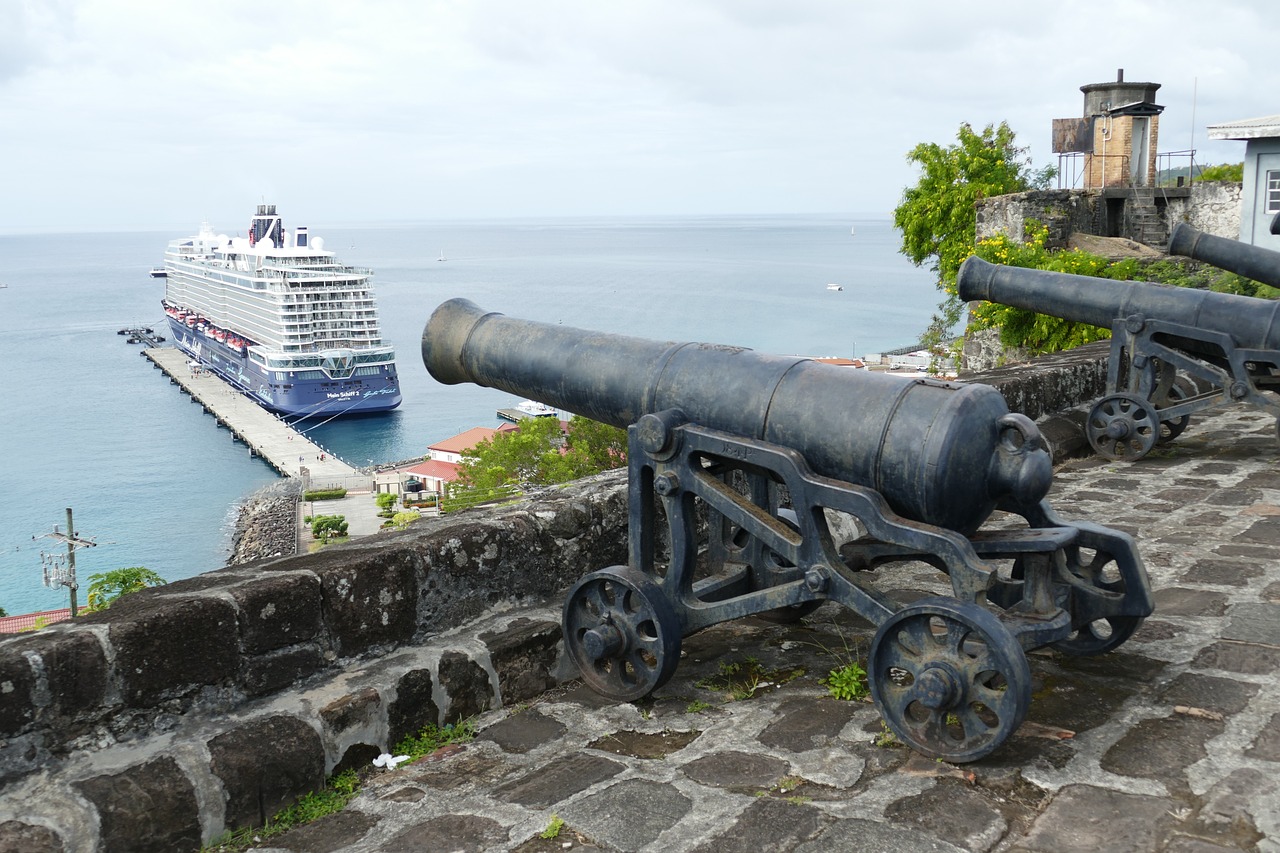
The interpretive design is the connoisseur's note: rather than restoring one period, the Park Service sectioned the fort by era — walking the ramparts moves you through 1776, 1809, 1863, 1898, and 1944 in sequence, battery by battery, with the WWII control post's instrument rooms and the Civil War cannon line's Sumter view as bookends. The visitor center across the street runs the film and the Osceola-and-garrison exhibits; the beach beyond the gun line is Sullivan's Island's — walkable after the ramparts.
Practicals and fit
Fifteen-to-twenty minutes from downtown via Mount Pleasant (pair with Patriots Point, five minutes back), modest per-person admission at the drive-up site — no ferry, no timed boats — one-to-two-hour visits, and Sullivan's Island's compact pleasures around it: the lighthouse's odd triangular silhouette, Station 18's beach, and the Middle Street shrimp-and-taco strip for lunch. Fit: Revolution-minded travelers (this is the south's Lexington), families who want fort ramparts without ferry logistics, and anyone completing the harbor set — Moultrie for 1776 and the long defense, Sumter for 1861, Patriots Point for the century after.
What to expect
The experience
A drive-up National Park fort sectioned by era — 1776 palmetto victory to WWII radar room — with visitor-center film, rampart walks, and Sumter framed across the channel.
Best time
Morning ramparts before heat; Carolina Day (June 28) for the commemoration; any day the ferry schedule will not fit Sumter.
How long
One to two hours, plus Sullivan's lunch.
Tips
Walk it chronologically — the era sections reward sequence. The Civil War gun line's Sumter view explains April 1861 better than any map. Middle Street's shrimp rolls are the closing argument.
Quick picks
- Best for
- Revolution-minded travelers and anyone wanting fort ramparts without ferry logistics.
- Families
- Drive up, climb around, cannon lines and radar rooms — the low-friction fort.
- Couples
- Ramparts, then Sullivan's lighthouse beach and the Middle Street strip — a tidy half-day.
- Pair with
- Patriots Point five minutes back toward town; Sumter by ferry completes the harbor set.
- Time needed
- A half-day with the island's lunch included.
Good questions
How is it different from Fort Sumter?+
Moultrie is the drive-up fort with the longer story — 1776's palmetto victory through WWII — while Sumter is the ferry island where the Civil War began. The complete harbor visit takes both.
What happened in 1776?+
Moultrie's unfinished palmetto fort absorbed a Royal Navy bombardment — the spongy logs swallowing shot — and drove off the fleet, saving the south and putting the palmetto on the state flag.
Who is buried at the gate?+
Osceola, the Seminole resistance leader imprisoned here, whose grave stands at the sally port — one of the site's most-visited markers.
What is the Poe connection?+
Private Edgar Allan Poe served his 1827-28 artillery enlistment here and set The Gold-Bug on Sullivan's Island — the island library and lore lean in.
Do we need ferry tickets?+
No — Moultrie is drive-up with modest admission, which is exactly its role: the fort for schedules the Sumter boats will not fit.