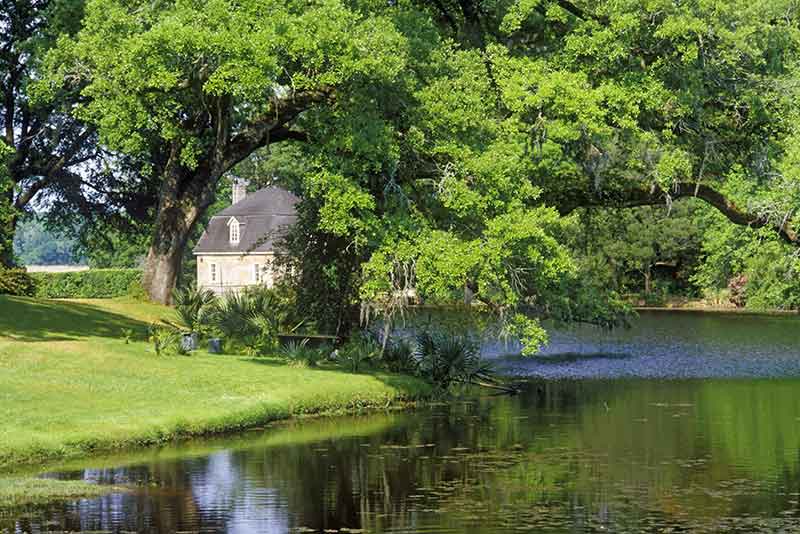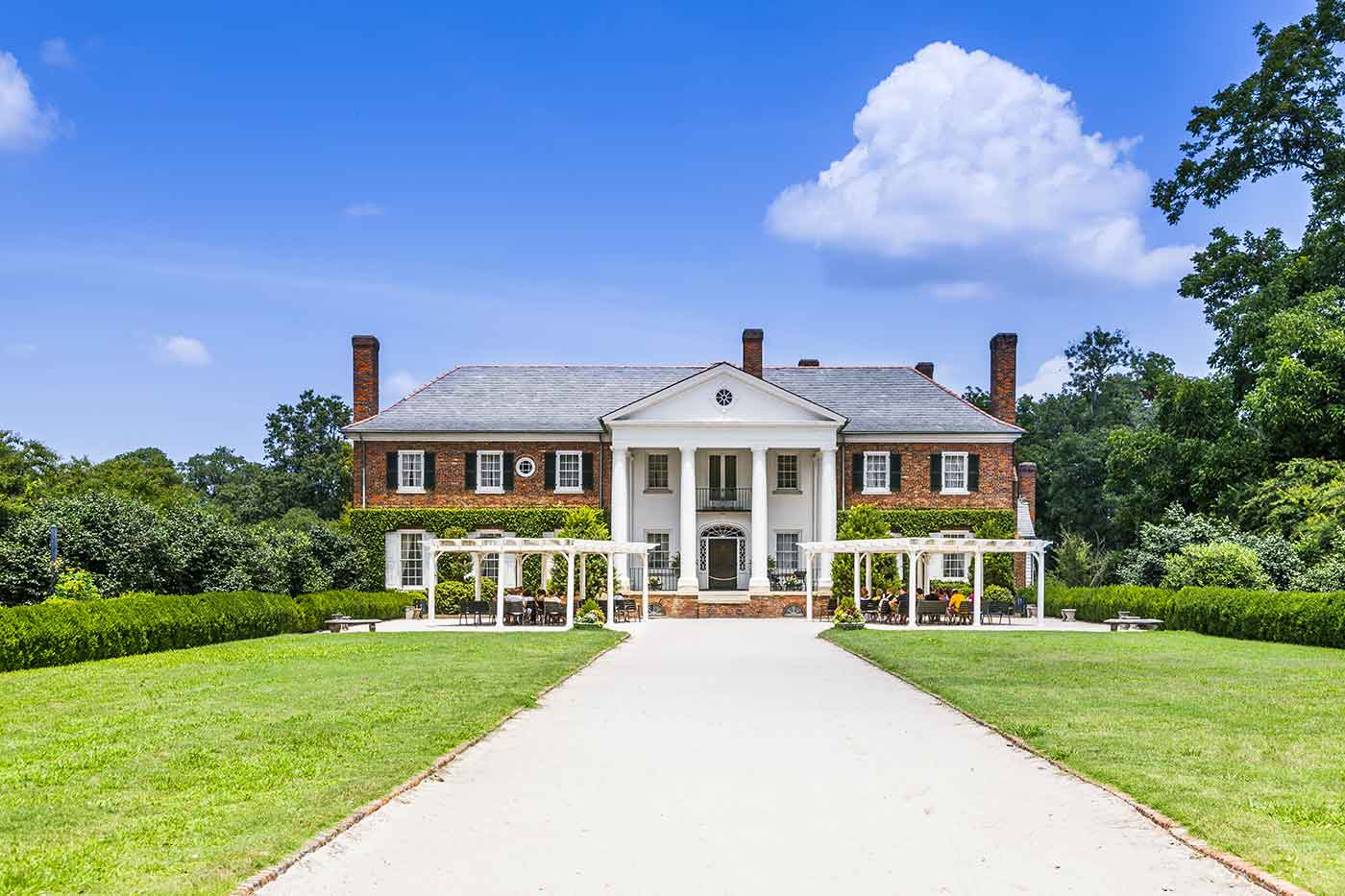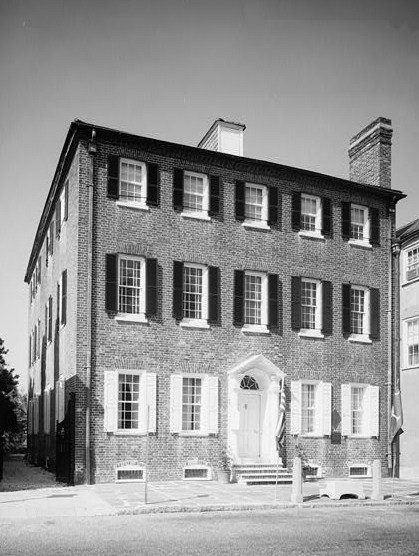
The Heyward-Washington House stands on Church Street, a few blocks from the Battery in the heart of the old walled city. It was built in 1772 for Daniel Heyward, a wealthy rice planter, and became the home of his son Thomas Heyward Jr., one of the South Carolina signers of the Declaration of Independence. When George Washington toured the southern states as president, the city rented the house to him for a week in May 1791, which is how it earned its second name. Today it is operated by the Charleston Museum as a house museum, and its rooms hold one of the best collections of locally made furniture in the country, including the celebrated Holmes Bookcase, a piece of Charleston cabinetmaking at its finest. Behind the house stands a rare surviving kitchen building from the period, which still conveys how an eighteenth-century household actually worked, and the courtyard garden is laid out in the manner of the era with trees and flowering shrubs.
What makes this house worth a visit is the combination of political history and domestic craft. Visitors who are interested in the Revolution and the early Republic will enjoy the Heyward family's role, and the house allows a visitor to stand in the rooms where a signer lived and where a president slept. Those drawn to decorative arts will find the furniture collection serious and well displayed, since Charleston cabinetmakers produced pieces that rivalled anything made in the northern colonies.
The kitchen building is the quiet star: with its large hearth and utensils, it makes the labour of enslaved cooks visible and gives the house an honest context that the upstairs rooms alone do not.
Tours are guided and run at regular intervals, so you are typically taken through in a small group and encouraged to ask questions. A single visit takes about an hour. Because it is run by the Charleston Museum, the house is often offered in combination with the museum itself and with the Joseph Manigault House, and ticket combinations can make sense if you plan to see more than one. Check the museum's current offers when you plan your days.
Practical notes
The house is in the central district and is easy to reach on foot from the Market, the Old Exchange and the Gibbes Museum. The tour includes stairs, and the old floors are uneven. It generally follows a weekly schedule with a closing day, and the hours shift by season, so confirm before you go. Pair it with a walk down Church Street to see St. Philip's and the lanes around it, then continue to the Dock Street Theatre area for a coffee.
What to expect
The experience
A guided tour of a 1772 townhouse with Charleston-made furniture, followed by the surviving kitchen building and the courtyard garden.
Best time
Late morning, between a Church Street walk and lunch; spring and autumn are most comfortable.
How long
About an hour.
Tips
Ask about combination tickets with the museum and the Joseph Manigault House. Look for the Holmes Bookcase. Mind the uneven floors.
Quick picks
- Best for
- Revolution and early-Republic fans and anyone who loves Southern decorative arts.
- Families
- Better for older children; the tour moves at a measured pace in small rooms.
- Couples
- A graceful interior followed by a stroll down Church Street.
- Pair with
- The Charleston Museum, the Old Exchange and a walk to St. Philip's churchyard.
- Time needed
- An hour for the tour.
Good questions
Why is it called Heyward-Washington?+
It was built for Daniel Heyward, and Washington stayed here during his 1791 southern tour. The two names mark the family and the visitor.
What is the main thing to see?+
The collection of Charleston-made furniture, notably the Holmes Bookcase, and the surviving eighteenth-century kitchen building.
Who runs it?+
The Charleston Museum operates the house, and combination admission with other museum properties is sometimes offered.
How long is the tour?+
About an hour, in a guided small group.
Is it close to other sights?+
Yes, it is on Church Street, near the Old Exchange, the City Market and the Gibbes Museum.