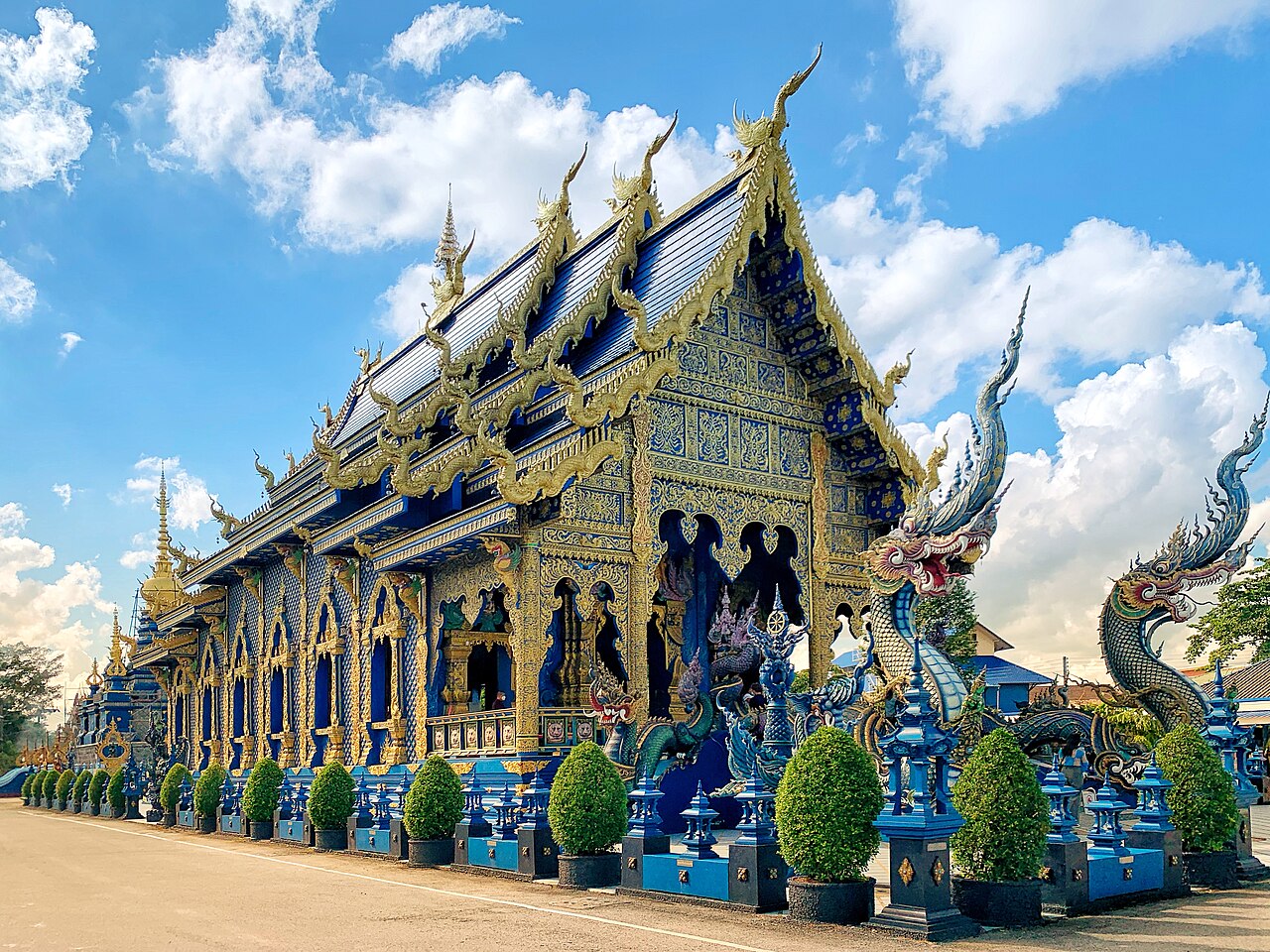
Wat Rong Suea Ten, widely called the Blue Temple, is the youngest of Chiang Rai's three artistic landmarks and the easiest to visit. It stands roughly 300 metres from the Kok River bridge on the edge of the town, and Thailand's tourism authority lists admission as free and the temple as open daily. The main hall glows in deep shades of blue set off by gold, and the colour is said to represent the Buddha's teachings. It was created by a local artist, Puttha Kabkaew, who studied under the creator of the White Temple. The name means house of the dancing tiger, a nod to the area's past. The temple is smaller and calmer than its white neighbour, so it works well as a first stop of the day, before the buses arrive. Step inside the hall to see the white Buddha image and the richly painted interior, and take your time over the exterior carving.
The best way to appreciate the Blue Temple is slowly. The facade is covered in flowing naga serpents, floral patterns and tiny guardian figures, and every surface carries colour. Inside, the walls are painted with Buddhist scenes against a deep blue background, with a large white Buddha image set against the dark tones. The effect is striking in daylight and even more so when the sun is low. A separate hall on the grounds holds tall relic-style spires, adding to the sense that the site is still growing.
Because the temple is free and open daily, it is easy to fit into almost any plan. It is only a short drive from most city hotels, and some of the Kok riverside resorts are minutes away. Respect the usual temple etiquette: cover your shoulders and knees, remove your shoes before entering the hall and keep your voice low. Visitors come for photographs, so be mindful of people in prayer.
Many visitors pair the Blue Temple with the White Temple and Baan Dam. If you only have a few hours in the city, start here in the morning, stroll to the clock tower for lunch and leave the longer drives for the afternoon. There are small shops and cafes close by for drinks and snacks.
What to expect
The experience
A short, self-guided visit to a colourful temple hall and its grounds, with time to look at the carvings and murals.
Best time
Morning, when the light is soft and the grounds are quiet, or late afternoon.
How long
About 45 minutes to an hour, which is enough to explore the hall and the exterior.
Tips
Dress modestly, remove your shoes before entering the hall and be quiet around anyone praying.
Quick picks
- Best for
- Anyone with a spare hour in town who wants a vivid, easy temple stop.
- Families
- Easy and free, with a lot of colour for children to look at, but keep voices low inside the hall.
- Couples
- Visit early or at the end of the day for soft light and fewer crowds.
- Pair with
- The White Temple, Baan Dam and the clock tower are all easy additions.
- Time needed
- Under an hour, so it fits between bigger sights.
Good questions
Is the Blue Temple free to visit?+
Yes, Thailand's tourism authority lists admission as free. Donations are welcome but not required.
Who built the Blue Temple?+
It was created by the local artist Puttha Kabkaew, a former student of the White Temple's designer. The temple is a modern work in the Thai Buddhist tradition.
How long does a visit take?+
Most visitors spend 45 minutes to an hour. That is enough time to see the hall, the exterior and the grounds.
Is it close to the city centre?+
Yes, it stands roughly 300 metres from the Kok River bridge on the edge of town. It is a short taxi ride or a long walk from central hotels.
What should I wear?+
Cover your shoulders and knees and remove your shoes before entering the hall. Light, loose clothing keeps you comfortable in the heat.