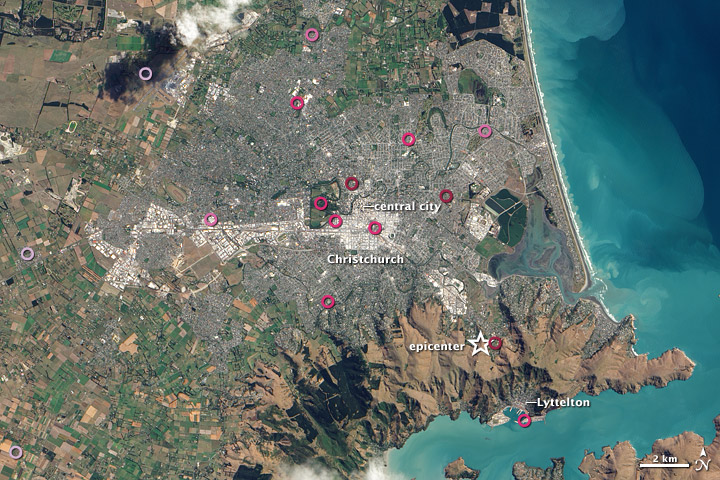
A guided walk through the central city that explains how Christchurch was built, damaged in the 2010 and 2011 earthquakes and rebuilt. It is a good first-day activity, because it turns the empty lots, new buildings and restored landmarks you pass later into a story you understand. Walking tours of the centre usually take in Cathedral Square, the river and the streets around it, and the heritage side of the tour covers the Victorian and Gothic Revival buildings that give the city its English character. The earthquake side covers what happened on 4 September 2010 and 22 February 2011, how the centre was cordoned off and cleared, and how new public spaces, art and architecture have filled the gaps. A local guide can answer questions that an exhibition cannot, and the walk is a gentle way to see a lot of the centre in one outing.
What to do
Meet your guide, listen as the walk moves between old and new, and use the stops to ask what stood on a site before the earthquakes and what replaced it. The centre rewards this kind of attention, because the rebuilt city is a patchwork: restored stone churches and civic buildings beside bold new architecture, sculpture and murals on walls that once faced a neighbouring building, and open green spaces where blocks were cleared.
The guide can point out the transitional architecture made from cardboard and shipping containers, the pathways along the Avon River and the ways the city has used temporary projects to bring people back downtown. Because the route is on foot, you also pick up useful local tips about cafes, markets and the best streets for an evening stroll.
Planning
Check the meeting point, the start time and the tour length when you book, and wear comfortable shoes, because the walk is on pavements and paths. Bring a light waterproof layer, since Canterbury weather can change quickly, and carry water in summer. The subject matter is emotional for many people who lived through the earthquakes, so the tone of the tour is respectful, and parents of young children may want to decide in advance how much to explain.
The route is flat, which suits most visitors, but contact the operator if you need step-free access or have mobility needs. Tours are easy to fit into a morning or afternoon, which leaves time for a museum or a gallery as well.
Fitting it in
Do the walk early in your stay, ideally on your first full day, so that everything else makes more sense. Afterwards you can go deeper at Quake City, which tells the story in objects and survivor accounts, then walk to the Canterbury Earthquake National Memorial by the river. Tūranga, the central library, and the Arts Centre make good follow-up stops, and the tram gives you a rest for tired feet.
If you prefer to explore alone, the same sights can be linked on foot, but a guide brings the stories and the detail that signs cannot. It is also a sound wet-weather decision on a mild, showery day, with a light jacket and a hat, because the pace is slow and the stops are short.
What to expect
The experience
A guided walk through the central city covering the heritage buildings, the 2010 and 2011 earthquakes and the rebuilding of the centre.
Best time
Do it on your first full day, in the morning or afternoon, before you visit the exhibitions and the memorial.
How long
Check the tour length when you book; plan a morning or afternoon around it.
Tips
Wear comfortable shoes, carry a light waterproof layer and expect an emotional subject.
Quick picks
- Best for
- First-time visitors who want a local guide's story of the earthquakes and the rebuilt city.
- Families
- Best for older children who enjoy history, since the subject is serious.
- Couples
- A relaxed way to see the centre together, followed by a coffee on New Regent Street.
- Pair with
- Pair it with Quake City and the Canterbury Earthquake National Memorial.
- Time needed
- A morning or afternoon.
Good questions
Where does the walking tour go?+
It covers the central city, including the area around Cathedral Square and the river. Check the exact route and meeting point when you book.
Do I need to be fit?+
The route is on flat pavements and paths, so most visitors can manage it. Wear comfortable shoes and contact the operator about step-free access.
Is it suitable for children?+
It can be for older children who are interested in history, but the earthquakes are a serious subject and younger children may find it long.
How is it different from Quake City?+
The walk is outdoors and led by a guide, while Quake City is an indoor exhibition with objects and survivor accounts. Many visitors do both.
What if it rains?+
Tours usually go ahead in light rain, so bring a waterproof layer. Check the operator's weather terms when you book.