Churchill is a place where the calendar decides what you see. The town has one set of wildlife and activities in July, a completely different set in November and another in February. There is no single best month, only a best month for what you want. This guide sets out the seasons in plain terms so that you can match your dates to your priorities.
July and August: belugas, birds and flowers
Summer is beluga season. Thousands of white whales move into the Churchill and Seal River estuaries, where they feed, give birth and molt, and visitors watch from boats, Zodiacs and sometimes from the water on kayak and paddleboard trips. Cape Merry is a free place to watch from shore. The tundra is green, wildflowers bloom and the summer tundra buggy day offers caribou, Arctic foxes and migrating birds, with polar bears only occasionally seen. Prince of Wales Fort is open in July and August and reached by boat. The air is mild, though cool by southern standards, and insects can be fierce, so pack repellent and a head net.
May and June: the birds
Spring belongs to birds. Waterfowl and shorebirds arrive in numbers, and the wetlands and the forest edge along the road to Twin Lakes are good places to look. It is a quieter time, with fewer visitors and fewer organised tours, so check what is running before you commit.
September: the shoulder
Late summer fades into autumn. Some tours are still running and the crowds are thin, but the main attractions are between seasons, so ask operators about dates before you plan around September.
October and November: polar bears
This is the headline season. Polar bears gather along the coast waiting for Hudson Bay to freeze so that they can go out onto the ice to hunt seals, and tundra buggy tours and the multi-day polar bear packages are built around them. It is also the busiest and most expensive time, and tundra buggy seats sell out many months ahead. The weather is cold and getting colder, the days shorten quickly and the Parks Canada Cape Merry tour runs in this autumn period while the fort is closed. Dress for deep cold, and plan early.
December: the dark
Early winter is short on light and still building cold. Bear season has usually ended, the nights are long and the aurora is possible, but the strongest displays are later. It is a quieter time and a good one for travellers who prefer low crowds and do not need a specific headline experience.
January to March: aurora and winter adventure
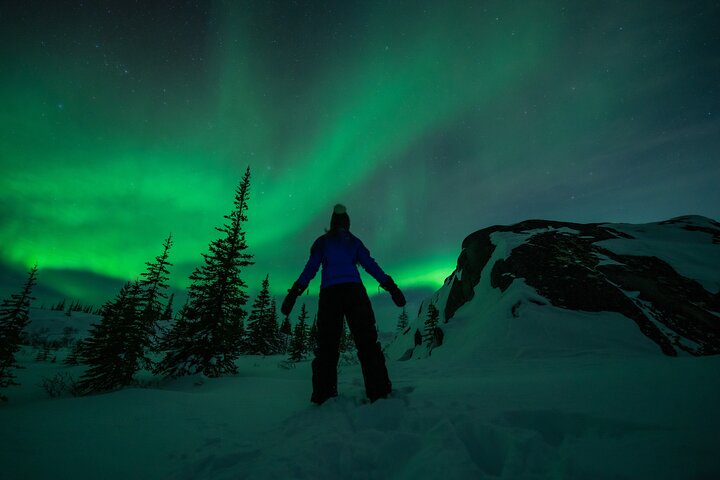
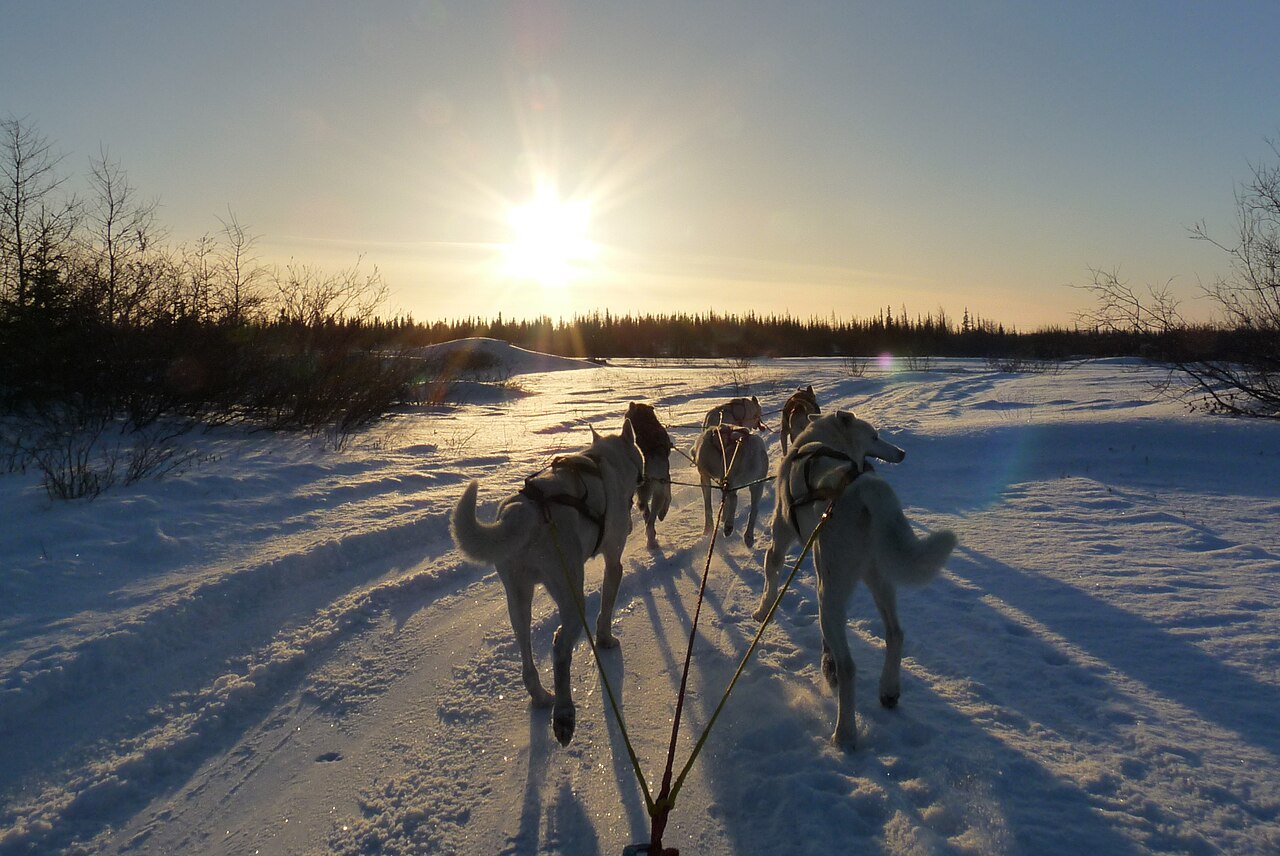
Travel Manitoba says the northern lights are most visible on clear nights from January to March, with viewings about 300 nights a year on average, and February and March are often the clearest and darkest. Winter is severely cold, with average temperatures of about minus 27 in January, minus 25 in February and minus 20 in March. This is also the dog sledding season, and Parks Canada says polar bear viewing at Wapusk National Park takes place in February and March through licensed operators. Plan at least three nights so that cloud does not spoil your chances.
April: the thaw
Spring is a transition month with changing conditions, so ask operators what is running before you commit.
Light and daylight
The length of day changes sharply through the year. In midsummer the sun barely sets, which gives long evenings for boat trips and tundra walks but makes the aurora impossible to see. In midwinter daylight is short, which suits the aurora but limits the hours for daytime outings such as dog sledding, so plan activities for the middle of the day. In autumn the days shorten quickly, and the tundra buggy day is built around the light. Whatever the month, you reach Churchill by rail or air, so build travel time into your plans and remember that trains and flights can be delayed by weather.
How to choose
If you want polar bears above everything, come in October or November and book as far ahead as you can. If you want belugas, boat trips and a gentler climate, come in July or August. If you want the aurora and the winter landscape, aim for February or March. If you want birds and quiet, try late May or June. Whichever you choose, allow a spare day for weather, because trains, planes and tours can all be delayed.
Cost and crowds
Peak seasons bring higher demand for rooms, packages and tours, while shoulder months can be quieter. Because everything arrives by rail or air, Churchill is never cheap, but the choice of month will change how crowded it feels and how early you need to book.