Churchill is known for its wildlife, but the town and its shoreline hold one of the richest stories in northern Canada. The mouth of the Churchill River has been a meeting point for Indigenous peoples, fur traders, explorers and scientists for centuries, and most of that history can still be read in stone, in museums and in the landscape. This guide gives a thoughtful visitor a way to see it.
The people of the coast
This land is on Treaty 5 territory and has long been used by the Cree, Dene, Inuit and Red River Métis peoples. Long before the fort was built, the river mouth and the coast provided food, travel routes and trade. Keeping that in mind changes how you see everything else in town. The best starting point is the Itsanitaq Museum, which holds Inuit carvings and artifacts and gives the human story of the north before you go looking at forts and wrecks. It is an easy, indoor first stop in any season.
The fur trade and the fort
In the 1700s the Hudson's Bay Company built Prince of Wales Fort over about forty years on the bare coast across the river from town, to protect its trade in furs. It was a huge stone fortress with forty cannons, yet it fell in 1782 without a shot being fired. Parts were reconstructed in the 1930s and 1960s, and the site is open from July to August, reached by boat because Parks Canada does not provide transport. Allow a half day, wear sturdy shoes and bring insect repellent, because the shore is exposed and the summer insects are fierce.
Cape Merry and Sloop Cove
Back on the town side of the river, Cape Merry is a headland at the river mouth with a stone battery built in 1746 to support the fort. Only one of its six cannon emplacements still holds a cannon, and the tour covers the fortifications, the cannon and the remnants of the powder magazine. The cape is also a fine place to watch whales, waterfowl and migrating birds, with views over the river, Hudson Bay and the fort. Nearby Sloop Cove has rocks carved with the signatures of early explorers and traders, a quiet reminder that people have been passing through this harbour for a very long time.
The Parks Canada Visitor Centre
The visitor centre in town is the best place to put the fort, the cape and the cove into context. Exhibits and staff explain the fur trade, the natural history of the coast and the role of the national historic sites. If you are visiting in the shoulder seasons, when the fort is closed, it is also a valuable stop, because it gives you the story even when you cannot reach the ruins.
St. Paul's Anglican Church
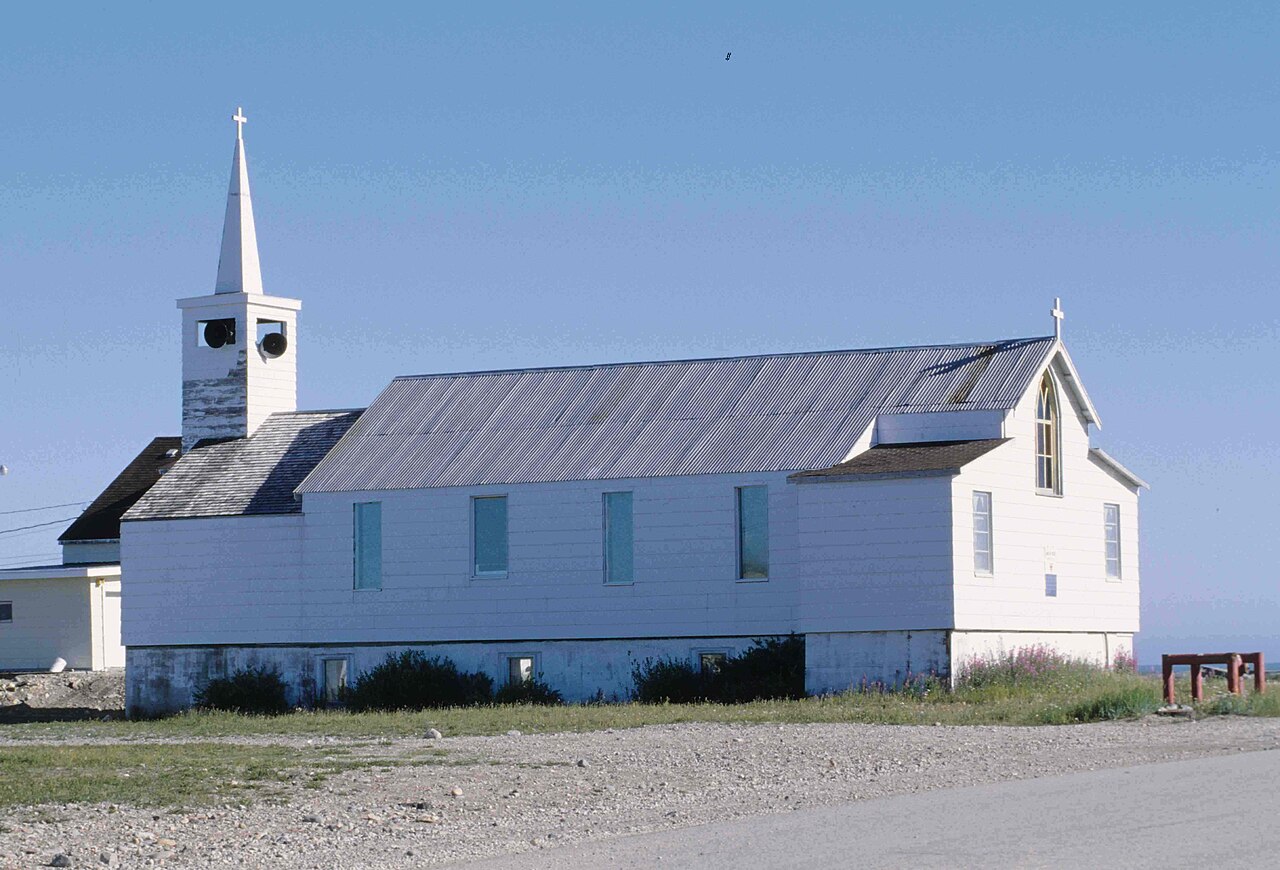
The church in town is a small but important piece of local heritage, and it adds a settled community to the story of traders and soldiers. Visits are best arranged by asking locally, and it fits easily into a walk around the centre. Pair it with the SeaWalls Churchill murals, which are painted on buildings and walls around town and give a modern, local voice to the same history. The town publishes a map of the murals, and they are free to see.
Wrecks and weather
Two shoreline sights tell the story of how hard this coast is on ships and aircraft. The Miss Piggy plane wreck lies on the tundra near town, and the MV Ithaca shipwreck sits on the shore. Both are free to see, but you need a tour or transport to reach them, and you should never go without local advice because polar bears can be in the area.
Science and the space age
The north also has a modern history. The Churchill Rocket Research Range was once a centre for launching research rockets to study the northern lights, and it forms part of a long tradition of science here. The Churchill Northern Studies Centre continues that work, hosting researchers and visitors who come for aurora, ecology and climate programmes. Visits and programmes are arranged through the centre, so check what is running before you plan around it. These stops link the old fur trade story to a living community of scientists.
Living with bears
The Polar Bear Holding Facility is another part of the story, showing how the town manages the reality of sharing the coast with large predators. Residents have long practices for keeping people and bears apart, and hearing about them from your host or guide is as instructive as any exhibit.
A two-day history plan
On the first day, start at the Itsanitaq Museum, visit the Parks Canada Visitor Centre, walk the town to see the church and the murals, and finish at Cape Merry for the view toward the fort. On the second day in July or August, take the boat to Prince of Wales Fort, or in other seasons drive the shoreline to the wrecks with a guide and finish at the Northern Studies Centre or the rocket range. Combine this with a wildlife day, because the two halves of Churchill, people and animals, belong together.
Visit with respect
Treat the historic sites as places that matter to the Indigenous peoples of the coast as well as to the story of the trade. Stay on the paths, do not remove rocks or artifacts, and ask before photographing people. A little preparation turns a wildlife trip into something richer, and Churchill rewards visitors who look beyond the animals.