Cologne eats and drinks with more local pride than almost any other German city. The cooking is hearty and unfussy, the beer is its own protected style, and the best meals tend to happen in noisy, wood-panelled brewhouses where the waiters know exactly when you need another glass. You do not need a restaurant shortlist to eat well here, only a sense of what to order and how the rituals work.
Kölsch, and how it is served
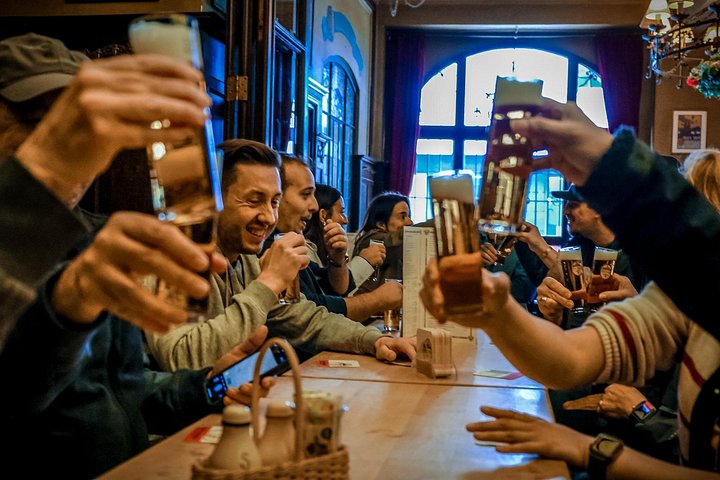
Kölsch is a pale, clean, lightly hoppy beer that is brewed in and around Cologne, and the name belongs to the region. It arrives in a tall, narrow glass called a Stange, which holds only 0.2 litres, so that every glass stays cold and fresh. In a traditional brewhouse a waiter, known as a Köbes, circulates with a round tray of full glasses and replaces your empty one without being asked. The signal to stop is simple: lay a beer mat flat across the top of your glass. Before you do, more will keep coming, and the Köbes is famous for a gruff sense of humour that visitors usually enjoy.
What to order in a brewhouse
Look for the dishes that carry Rhineland names. Himmel un Ääd, which means heaven and earth, is black pudding with mashed potato and stewed apple, a plate that sounds odd and tastes wonderful. Rheinischer Sauerbraten is a marinated pot roast, often served with a sweet-sour sauce, red cabbage and dumplings. Schweinshaxe, roast pork knuckle, and Kölsche Kaviar, which is black pudding with raw onion rings on a bread roll, round out the heavier side. If you only want a snack with your beer, order a Halve Hahn. Despite the name, which means half a chicken, it is a rye roll with a slice of mature cheese, mustard and onion, and a very Cologne joke on the visitor who expects poultry.
Street food and market snacks
Reibekuchen, crisp fried potato pancakes served with apple sauce or dark bread, are the signature snack, and you will smell them at every Christmas market. Printen, the spiced gingerbread of the Rhineland, is sold in bakeries throughout the year. Around the cathedral and in the old town you will also find bratwurst stands, bakeries with fresh pretzels and cafés serving cake in the afternoon. See the Christmas market guide for the seasonal drinks and the mug deposit system.
Chocolate and perfume, the sweet side of the city
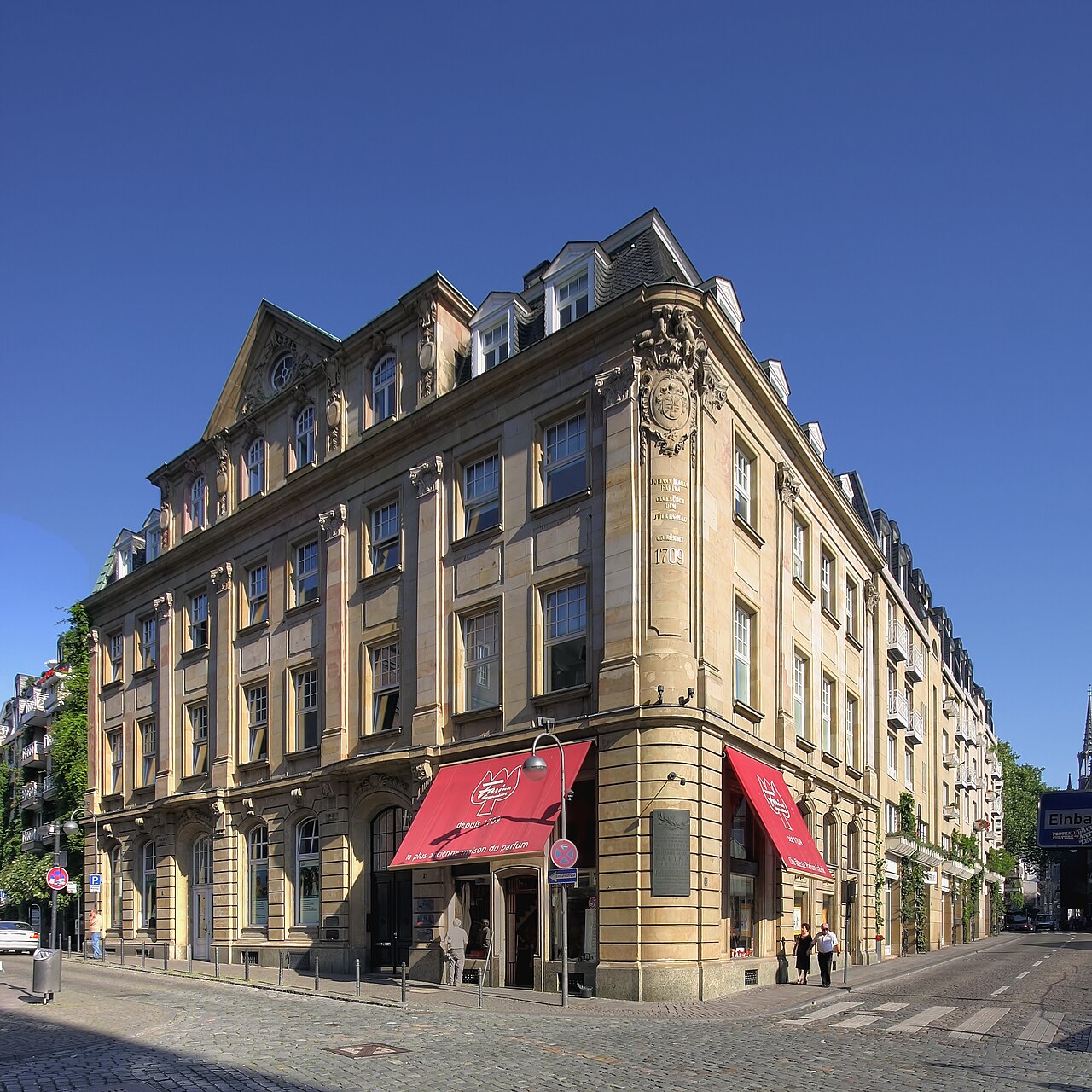
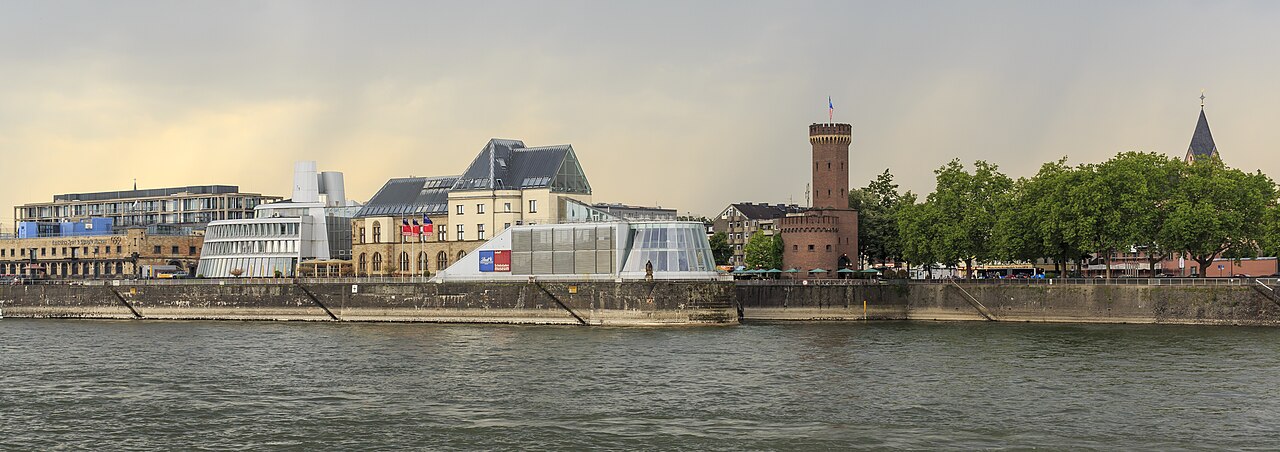
Cologne has a serious sweet tooth. The Chocolate Museum on the harbour tells the story of cocoa from plantation to bar, and its famous chocolate fountain lets you taste a fresh wafer dipped in warm chocolate as part of the visit. Combine it with a walk along the Rheinauhafen promenade, where cafés and restaurants occupy the converted harbour buildings. On the other side of the old town, the Farina Fragrance Museum shows where Eau de Cologne began in 1709, a reminder that the city exports taste and scent in equal measure.
Where to eat around the sights
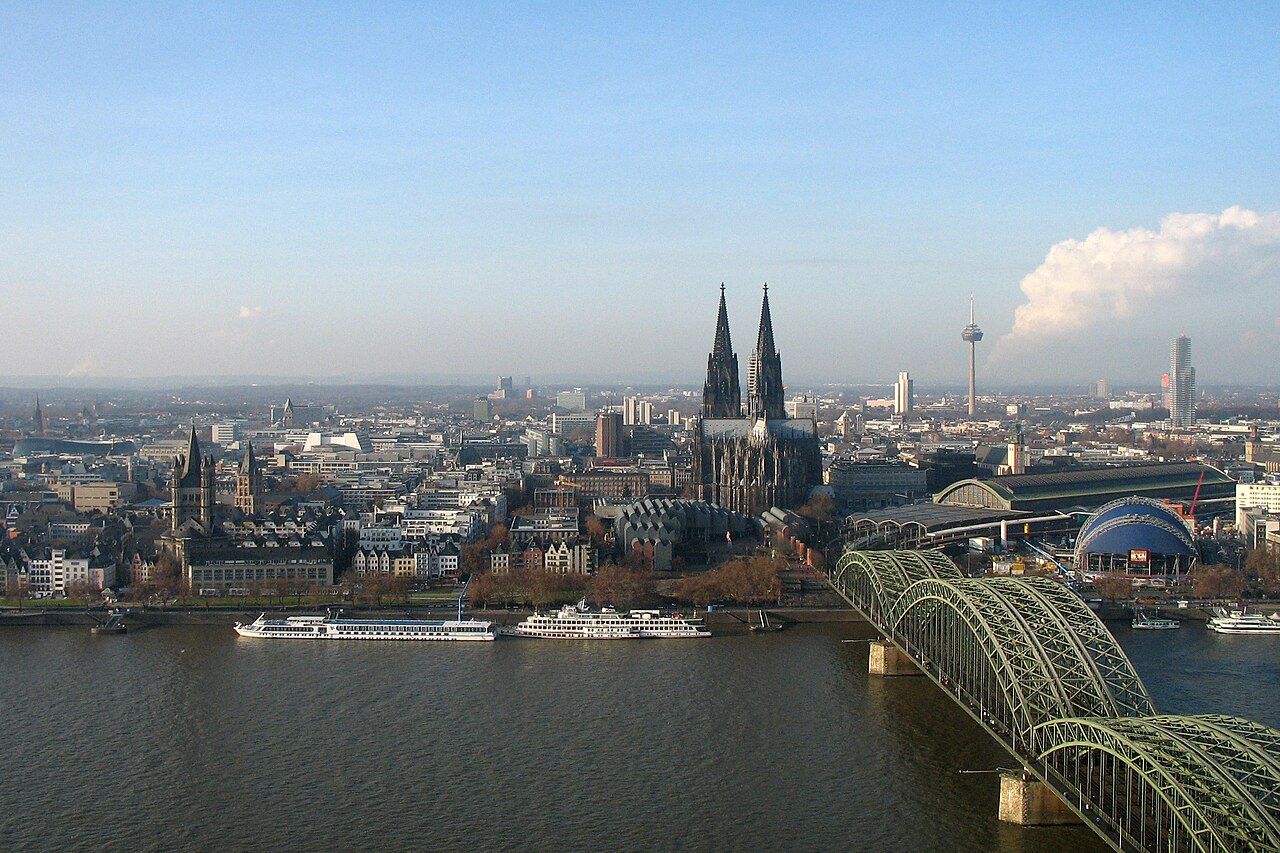
Match your meal to your route. After the cathedral and Museum Ludwig, the old town between the cathedral and the river is the easiest place to find a traditional brewhouse, though the streets closest to the cathedral lean touristy and the quality improves the further you walk. Around Neumarkt and the Belgian Quarter you will find independent cafés, bakeries and international restaurants, and the Friesenviertel to the west is where locals go out for dinner and drinks. Across the river, the KölnTriangle viewing platform is a good excuse for a sundowner before dinner in Deutz.
Practical tips
Brewhouses fill up early on Friday and Saturday evenings and at carnival, so go before the dinner rush or reserve if you are in a group. It is normal to share a long table with strangers. Cards are accepted in most restaurants, but a few traditional brewhouses prefer cash, so carry some. Service is included in the price, but rounding up or adding around ten percent when you pay is customary. Order a Kölsch, never an Alt or a Pils, and you will be treated as a regular. If you want to taste several local brews, many of the big brewhouses brew only their own Kölsch, so a long evening is the best way to compare them.
A simple food plan
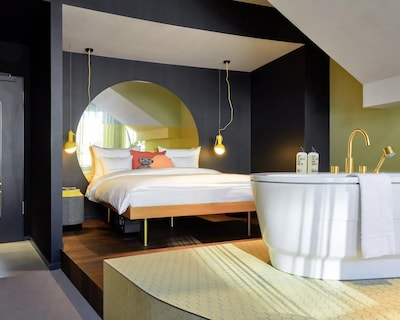
For a two-day visit, start with a Reibekuchen or a pastry on the way to the cathedral, take lunch in a brewhouse with a Halve Hahn and a glass of Kölsch, spend the afternoon at the Chocolate Museum, and keep the Himmel un Ääd or Sauerbraten for a long evening in the old town. If you are staying in the Friesenviertel, finish with a cocktail at the 25hours Hotel’s Monkey Bar, where the view reaches back to the cathedral.