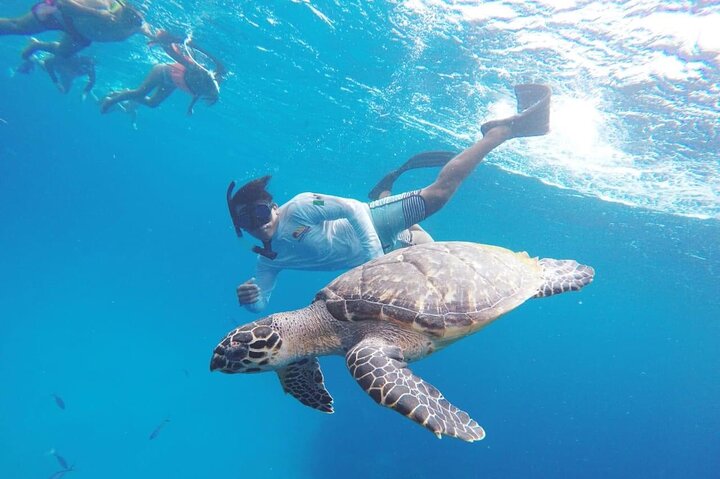
The reef at night is a different world. Daytime fish retreat into crevices to sleep, while octopus, crabs, lobsters, shrimp and other nocturnal creatures come out to feed, and a torch beam turns the water into a small, bright stage. This guided night snorkel takes small groups into shallow water close to the shore at dusk, with a briefing on the conditions, a torch for each swimmer and a guide who knows where to look for octopus and other shy species. The sea is usually calm in the evening, visibility can still be good with a light, and the sense of floating in the dark above a lit reef is unlike any daytime swim. The activity is gentle in pace, with plenty of time to stop and watch, and it is open to people who are comfortable in the water even if they are not experienced snorkelers. Dive shops are the usual operators, so safety standards are generally high, and the guides are good at spotting camouflaged animals.
Why go
Cozumel is famous for its daytime reefs, but the night adds a sense of discovery. Seeing an octopus change color under a torch, or a sleeping parrotfish wrapped in its mucus cocoon, is the kind of moment that stays with you. It is also cooler and quieter than the daytime boat trips.
How to do it well
Be sure you are comfortable swimming in open water in low light, and tell the guide about any worries before you enter. Wear a rash guard or wetsuit top if the water feels cool after dark, bring a towel and a warm layer for afterward and use the torch provided or one you know how to use.
Keep your lamp pointed down and away from other swimmers' eyes, stay close to the guide and the group, and avoid touching or chasing animals. Take photos only if you can manage a camera safely.
What to know
Night snorkeling depends on calm weather, and trips can be cancelled when the sea is rough, so read the cancellation terms and keep a spare evening. Operators set age minimums, and non-swimmers or nervous swimmers should choose a daytime option instead. Check what equipment is included and what you need to bring, and confirm the meeting point and time, since the activity starts around dusk.
Cruise visitors must check the schedule against all-aboard, as most ships depart before the evening starts. If you would rather stay dry, a waterfront dinner is a good alternative.
Planning around your stay
Because night snorkeling depends on the sea and the light, book it early in your trip and keep a spare evening for weather. Eat a light meal two hours or more before you go, avoid alcohol and drink water. If you have been on a boat trip or a dive that day, rest between activities, and remember that divers should check their own surface and flying intervals. Bring a dry change of clothes, a towel and insect repellent for the walk to the entry point.
Photographers should note that flash can disturb animals and that a small action camera on a strap is easier to manage than a phone. Finish the evening with a late dinner nearby, where the staff are used to guests arriving damp and hungry. Wear a hat or a hood for the walk if mosquitoes are active, and keep the group close on the way back.
What to expect
The experience
A guided shore-based snorkel after dusk, with torches and a guide who spots octopus and other nocturnal species.
Best time
Evening, in calm weather.
How long
About one and a half to two hours including briefing.
Tips
Keep your torch pointed down, stay with the group and bring a towel and a warm layer.
Quick picks
- Best for
- Confident swimmers who want a different kind of reef experience.
- Families
- Better for older children and teens who swim well; check age rules.
- Couples
- A memorable, quiet evening activity.
- Pair with
- A late dinner in town after the swim.
- Time needed
- An evening.
Good questions
Do I need experience?+
No, but you should be comfortable swimming in open water in low light.
What will I see?+
Octopus, crabs, shrimp, sleeping fish and other nocturnal animals, depending on the night.
Is equipment provided?+
Torches and gear are normally provided, but check what is included.
Is it safe?+
Guides lead small groups in shallow water and brief you first, but follow instructions at all times.
What if the weather is poor?+
Trips can be cancelled when the sea is rough. Read the cancellation terms.