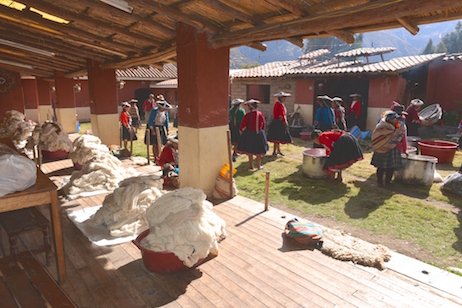
The Center for Traditional Textiles of Cusco, known by its Spanish initials CTTC, is the best place in the city to understand Andean weaving and to buy textiles with confidence. It was founded in 1996 by a group of weavers led by Nilda Callanaupa, who grew up in Chinchero, with roots in a group of Chinchero women who had gathered since the 1970s to keep their spinning and weaving traditions alive. Today the nonprofit works with ten weaving communities around the Cusco region, among them Chinchero, Accha Alta, Acopia, Chahuaytire, Mahuaypampa, Huacatinco, Patabamba, Pitumarca, Santa Cruz de Sallac and Santo Tomas, supporting weavers, training young people and reviving techniques and designs that were at risk of disappearing. Its headquarters on Avenida El Sol, a few minutes from Qorikancha, combine a shop with a small museum called Weaving Lives. The museum's four rooms walk through the whole process, from spinning fiber on a drop spindle to warping naturally dyed yarn for the backstrap loom; then weaving techniques and designs, with examples of patterns and how they appear in everyday ponchos and blankets; then traditional wedding attire; and finally festival and ceremonial costumes. Weavers from the partner communities are often at work in the shop, and watching them is the best possible introduction to the craft. The shop sells textiles made by the communities, with labels identifying where each piece comes from, at prices that reflect the work involved. Fit: anyone interested in Andean culture, textile and design lovers, families, and travelers who want to buy one good piece rather than many cheap souvenirs.
How to visit: start in the museum, which takes 30 to 45 minutes, then spend time watching the weavers and browsing the shop. The labels and staff can explain differences between community styles, the meaning of motifs and how natural dyes are made from plants, minerals and cochineal insects. If you plan to visit Chinchero or another weaving community later in your trip, coming here first makes those visits richer; if you have already been, it helps put what you saw in context. Look in particular at how each community has its own palette and repertoire of motifs, so that an experienced eye can often tell where a piece was woven, and at the contrast between soft, slightly uneven natural-dye colors and the bright, flat tones of synthetic yarn. The center's work has also helped young weavers learn techniques that had nearly been lost, and you may see older and younger generations working side by side.
Buying well: handwoven textiles take many days or weeks to produce, so prices are much higher than for machine-made goods in the markets. Pieces in the shop are made by the partner weavers, and buying here is one of the most direct ways to support them. Smaller items such as belts, bags and bracelets are more affordable than large mantas or ponchos. The center also sells online and periodically hosts events and gatherings of weavers.
Practical notes: the center is at Avenida El Sol 603-A, on the main avenue between the historic center and the bus and train terminals, an easy walk from the Plaza de Armas or Qorikancha. Hours can change, so check the official site before going. It is a good rest-day or rainy-afternoon visit that involves almost no walking at altitude.
What to expect
The experience
A small museum on Andean weaving and a weaver-run shop on Avenida El Sol, often with weavers working the backstrap loom.
Best time
Early in your trip, before visiting Chinchero or the Sacred Valley markets, or on a rest day.
How long
About an hour including the shop.
Tips
Start in the museum, ask the staff about community styles and natural dyes, and buy one good handwoven piece rather than many cheap ones.
Quick picks
- Best for
- Understanding and buying genuine Andean textiles.
- Families
- Short, hands-on and colorful, with weavers at work.
- Couples
- A meaningful souvenir with a story behind it.
- Pair with
- Qorikancha down the avenue and Chinchero in the Sacred Valley.
- Time needed
- About an hour.
Good questions
Who runs the Center for Traditional Textiles?+
A nonprofit founded in 1996 by Cusco weavers led by Nilda Callanaupa. It works with ten weaving communities in the region.
What is in the museum?+
The Weaving Lives museum has four rooms on the weaving process, techniques and designs, wedding attire, and festival and ceremonial costumes.
Can I see weavers at work?+
Weavers from the partner communities are often working in the shop on backstrap looms. Ask the staff about current demonstrations.
Are the textiles genuine?+
Yes. The shop sells handwoven pieces made by the partner communities, which is why prices are higher than in general souvenir markets.
Where is it?+
At Avenida El Sol 603-A, a short walk from Qorikancha and the Plaza de Armas.