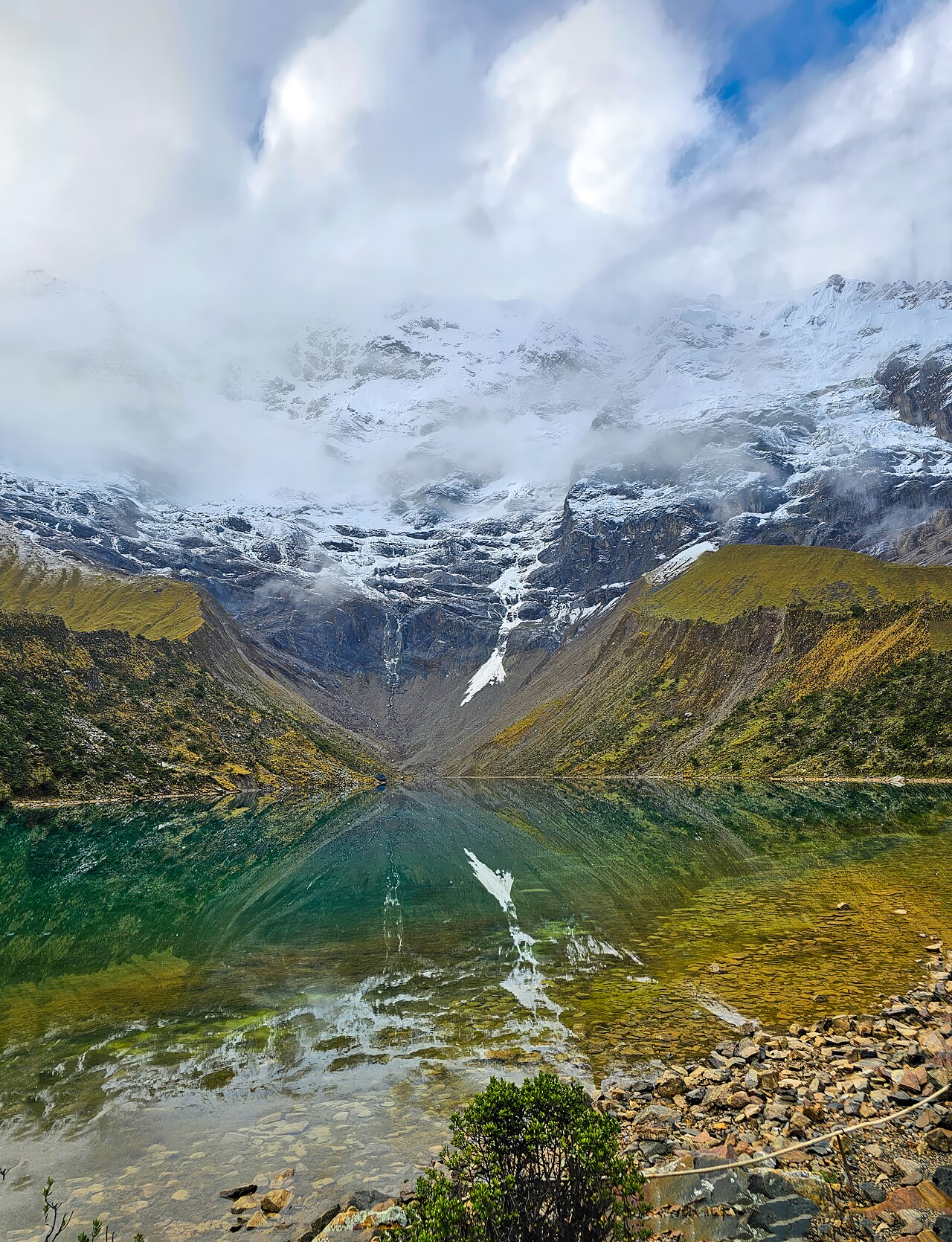
Humantay Lake is the most rewarding one-day mountain outing from Cusco and the obvious counterpart to Rainbow Mountain: instead of striped hills, you get a small, intensely turquoise lake sitting in a bowl of moraine directly beneath the hanging glaciers of Nevado Humantay, with the far bigger Salkantay massif rising just to the east. The lake lies in the Vilcabamba range in the district of Mollepata, province of Anta, at roughly 4,200 meters, and it is fed by meltwater from the ice above, which gives the water its milky blue-green color. Local communities regard the mountain as an apu, a protective mountain spirit, and visitors build small stone cairns along the shore as offerings, which is why the lakeside is dotted with little stacks of rock. The walk itself is short: from the trailhead at Soraypampa, at about 3,900 meters, a well-trodden path climbs roughly two kilometers to the lake. Most people take between one and a half and two hours to go up and about an hour to come down. The difficulty is the altitude and the gradient rather than the distance, as the path is steep, dusty and loose in places, and the last section zigzags hard up the moraine. Horses can be hired near the trailhead for part of the ascent, but they do not reach the top, so everyone walks the final stretch. Almost everyone visits on a long day tour from Cusco, leaving before dawn, stopping for breakfast in Mollepata, and returning in the evening; the same Soraypampa trailhead is also the first night of the Salkantay trek. A small entrance fee is collected in cash by the local authorities at the trailhead, so bring soles. Fit: fit and acclimatized travelers, photographers, and anyone who wants a real Andean high-mountain moment without committing to a multi-day trek.
Why it is worth it: from Cusco, Humantay delivers more mountain scenery per hour of walking than almost anything else. The approach drive climbs from the Limatambo valley, with its Inca terraces, up a dirt road toward Soraypampa, where the glaciers of Humantay and Salkantay first appear above the camps and lodges of the valley floor. At the lake, the view is the reward for the climb: the water at your feet, the moraine walls on either side and the ice cliffs above, with the occasional rumble of falling ice. Walk a few minutes up the ridge on the left side of the lake for the classic elevated view that shows the full color of the water against the mountain. Late in the dry season and in clear weather, the color is at its most vivid; on cloudy days the lake turns a dull green-grey and the glaciers can vanish into cloud.
How to do it well: spend at least two or three days in Cusco or the Sacred Valley before attempting it, since the lake sits well above Cusco and the climb is steep. Choose a tour with a reasonable group size and a guide who sets a slow pace, eat a light breakfast, carry water, snacks, sun protection and warm layers, and expect cold mornings and strong sun once the clouds clear. Walking poles help a lot on the descent, which is where most slips happen on the loose gravel. Do not swim or wade: the water is near freezing and authorities discourage it. The rainy season, roughly November to March, brings afternoon cloud and occasional suspensions of access; in past years local authorities have temporarily closed the route after heavy rains and landslides near Soraypampa, and in mid-2026 a geological advisory recommended assessing avalanche risk from the glacier above the lake. Check with your operator in the days before going.
Practical notes: the drive from Cusco takes around three hours each way, so a day tour typically runs from about 4 or 5 in the morning to the early evening. The fee is paid in cash and there are no cash machines nearby. The camps at Soraypampa have basic toilets and snacks. Altitude sickness is the main risk: if you develop a severe headache, confusion or breathlessness at rest, descend. Combined with Salkantay, the lake becomes the first-day highlight of a four- or five-day route to Machu Picchu.
What to expect
The experience
A long day trip from Cusco with a steep two-kilometer hike from Soraypampa up to a turquoise glacier lake beneath Nevado Humantay, usually with breakfast and lunch in Mollepata.
Best time
The dry season, roughly April to October, for clear skies and the brightest water; mornings are best before clouds build. In the rainy season expect cloud and possible access suspensions.
How long
About 1.5 to 2 hours up and 1 hour down, inside a 12- to 14-hour day from Cusco.
Tips
Acclimatize for a few days first, walk slowly, use poles on the descent and bring cash for the entrance fee. Climb the ridge to the left of the lake for the best view.
Quick picks
- Best for
- Acclimatized hikers who want the most dramatic glacier scenery reachable in a day.
- Families
- Only for fit, acclimatized teenagers; the altitude and steepness make it a poor fit for young children.
- Couples
- A memorable shared challenge with a spectacular payoff at the shore.
- Pair with
- Rainbow Mountain on another day, or the Salkantay trek, which starts at the same trailhead.
- Time needed
- One very long day, after two or three days of acclimatization.
Good questions
How hard is the Humantay Lake hike?+
The distance is short, about two kilometers each way, but the path is steep and loose and climbs from around 3,900 to 4,200 meters. Most fit, acclimatized walkers manage it in 1.5 to 2 hours up at a slow pace.
Is there an entrance fee?+
Yes, a small fee is collected in cash at the Soraypampa checkpoint. There are no cash machines nearby, so carry soles.
Can I ride a horse to the lake?+
Horses can be hired near the trailhead for part of the way up, but they do not reach the top. Everyone walks the last steep section.
Is Humantay open all year?+
Generally yes, but local authorities have suspended access in some rainy seasons after landslides on the approach, and a 2026 advisory flagged avalanche risk from the glacier. Check current conditions with your operator before going.
Humantay or Rainbow Mountain?+
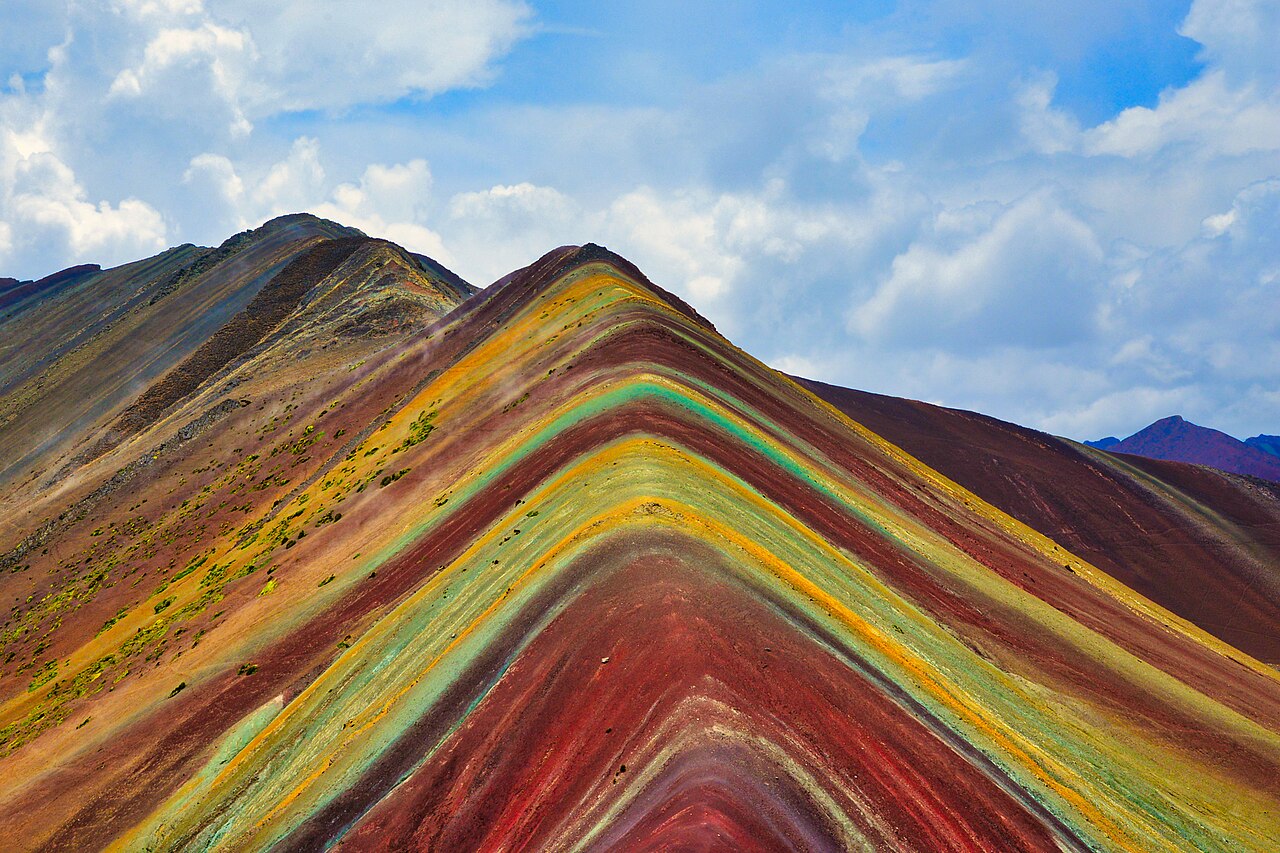
Humantay is a shorter walk with glacier and lake scenery; Rainbow Mountain is higher, longer and about mineral colors. If you can only do one, pick by the scenery you want, and do the other only if your acclimatization allows.