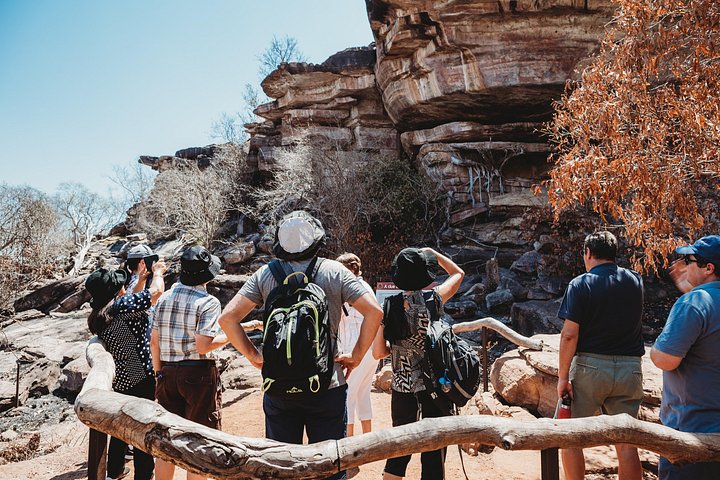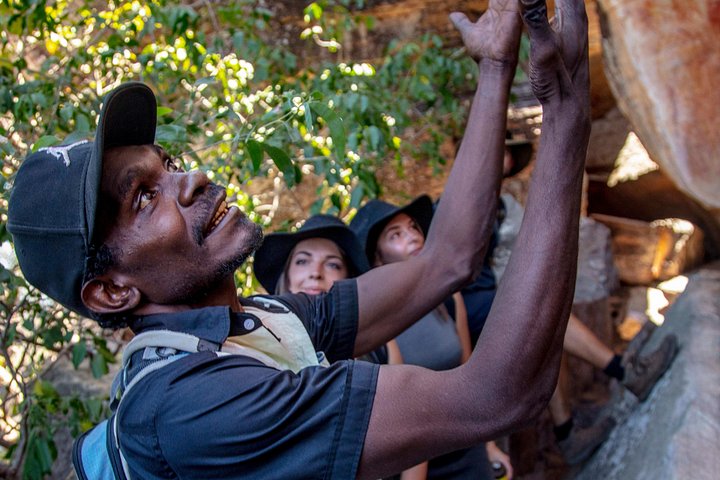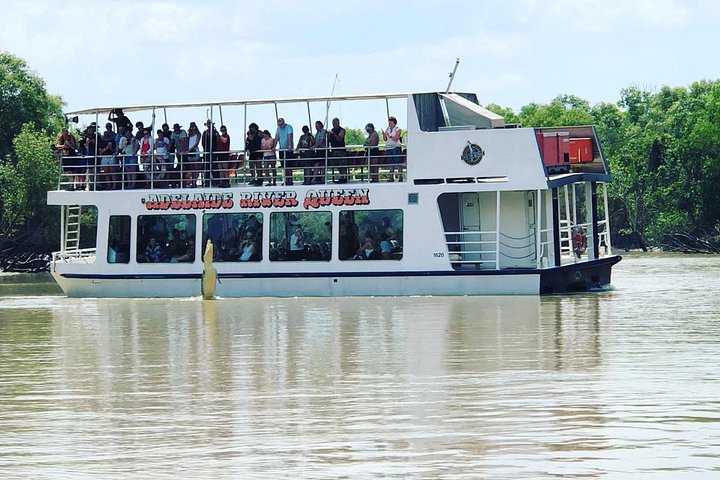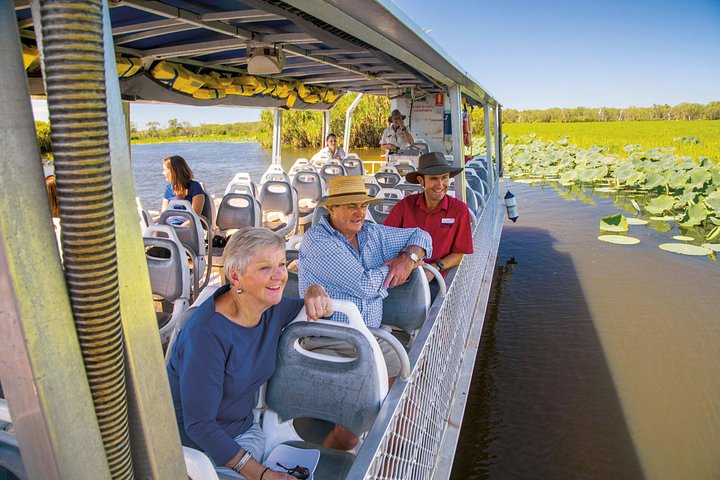
Kakadu holds some of the finest and best-preserved rock art in the world, and the two galleries visitors know best are Nourlangie, also called Burrungkuy, and Ubirr. Both sit in sandstone outliers of the Arnhem Land escarpment, and both are open to the public with walking tracks, shaded viewing areas and clear interpretation. The art ranges from X-ray style fish and wallabies painted in red ochre to figures of ancestral beings and, in some places, depictions of early visitors from Asia and Europe. For Traditional Owners the images are part of a living cultural landscape that is read, retouched and respected, not merely admired. A guided day from Darwin that includes Nourlangie and a billabong cruise is a good introduction, as a guide can unlock meaning that signage alone cannot.
Nourlangie is a rocky outlier with several galleries along a 1. 5 kilometre loop walk. The Anbangbang Gallery is the best known, with large painted panels of Namarrgon the Lightning Man, a powerful creation being associated with the storms of the wet season, and a series of figures in the distinctive X-ray style.
Another gallery shows images of contact-era figures, including a painted ship and a European man with hands in pockets. The loop finishes at the Nanguluwur Gallery, where fine, delicate drawings seem to float on the rock. A short climb leads to the Gunwarddehwarde lookout, which gives wide views across the floodplain and the escarpment.
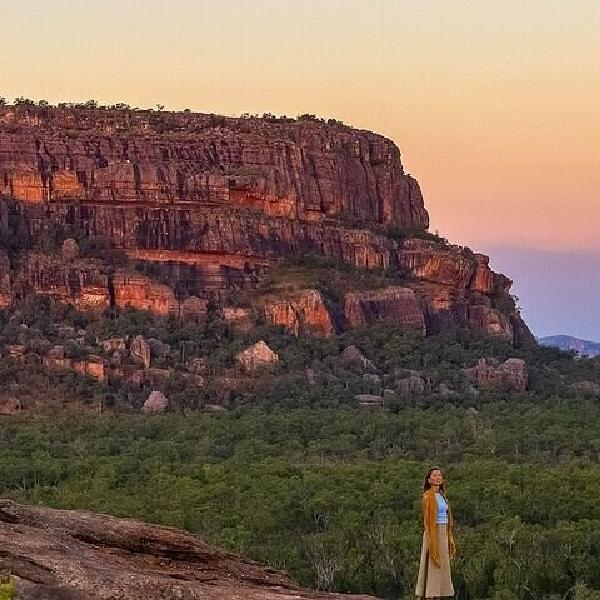
Ubirr lies in the north-east of the park, close to the East Alligator River and the border of Arnhem Land. The main gallery walk is short but rewarding, passing painted rock shelters with images of barramundi, long-necked turtles, goanna and thylacine, the last extinct on mainland Australia for thousands of years. A rocky scramble at the end leads to the lookout, where the Nadab floodplain stretches to the horizon.
Sunset here is spectacular, especially in the dry season when grass fires glow in the distance, and many visitors time their day to arrive with an hour to spare. Rangers sometimes give talks at the site, which are worth catching.
Respect the art and the country. Stay on the paths, do not touch the paintings, and follow the signs, because some areas are closed for cultural reasons. Bring water, a hat and sturdy shoes, and avoid the middle of the day in the hot months. Photography is generally allowed, though some images are restricted.
In the wet season, access can be limited by flooding, particularly at Ubirr, so check conditions before committing. Many tours combine the sites with a wetland cruise and a visit to the Bowali or Warradjan cultural centres, which add layers of context and make the day feel like more than a photo stop.
What to expect
The experience
Short guided walks past painted rock shelters and galleries, then a lookout over the floodplain, usually combined with a billabong cruise and lunch.
Best time
Dry season, May to October; late afternoon at Ubirr for the sunset lookout.
How long
Two to three hours at the sites, within a full-day tour.
Tips
Keep to the paths, do not touch the paintings, bring water and a hat, and ask the guide about the stories behind each image.
Quick picks
- Best for
- Travellers curious about Aboriginal art and the cultural story of the park.
- Families
- Fine for school-age children; short walks and plenty of animals in the paintings keep them engaged.
- Couples
- The Ubirr sunset lookout is one of the best views in the Top End.
- Pair with
- A Yellow Water cruise, the Warradjan cultural centre and a night in Jabiru or Cooinda.
- Time needed
- Half a day at minimum; a full day with travel from Darwin.
Good questions
Is the rock art really that old?+
Some paintings are thousands of years old, and the sites have been in use for far longer. Many images have been retouched over generations, so the tradition is ongoing.
Can I visit Ubirr and Nourlangie on the same day?+
They are about an hour apart, so it is possible but long. Many tours choose one or combine Nourlangie with Yellow Water instead.
Is it free to see?+
Entry to the park requires a pass, and tours usually include it. The galleries themselves are open to walk without extra fees.
What is the X-ray style?+
It is a painting style that shows the internal organs and bones of animals and people, typical of the Arnhem Land escarpment and especially clear at Nourlangie and Ubirr.
Is it accessible?+
Parts of both sites have paths and boardwalks, but the lookouts involve climbs and scrambles. Ask the operator about mobility needs before booking.