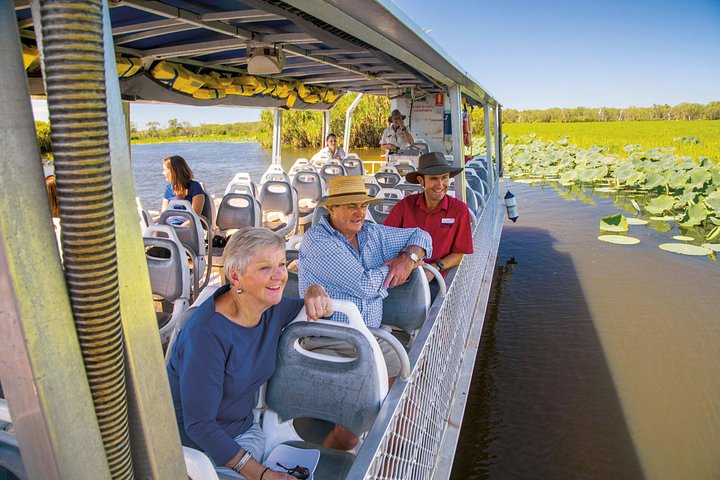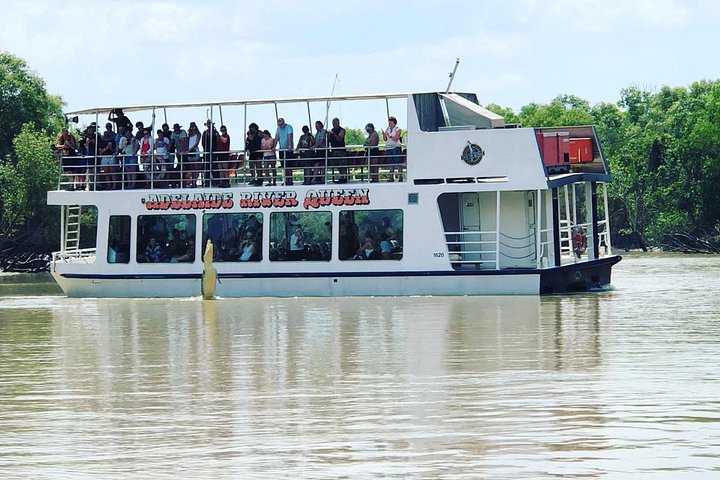
Yellow Water, known to its Traditional Owners as Ngurrungurrudjba, is the best-loved wetland in Kakadu and one of the finest wildlife experiences in Australia. The billabong sits on the South Alligator River floodplain near Cooinda, and a flat-bottomed boat takes small groups out across lily-covered water and into channels lined with paperbark and pandanus. The cruise lasts about an hour and a half to two hours and is run with Aboriginal cultural interpretation as well as natural history. Saltwater crocodiles bask on the banks, sea eagles patrol overhead, and jabirus, egrets, magpie geese and whistling ducks gather in numbers that shift with the seasons. Early morning and late afternoon are the prime times, when light is soft and the animals are most active.
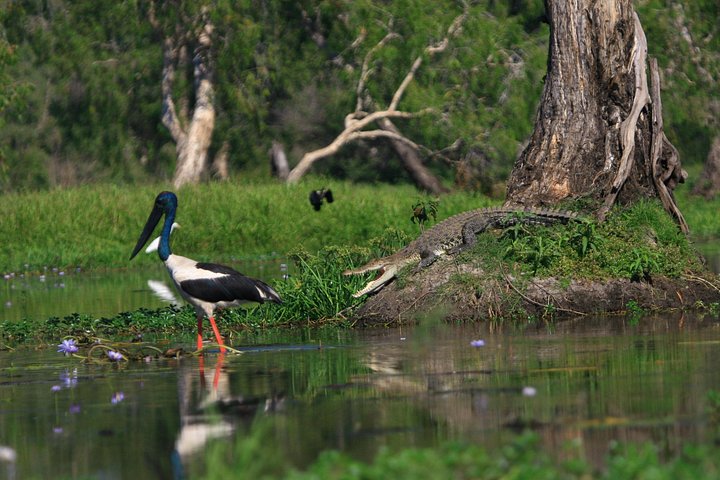
What sets Yellow Water apart is density. The floodplain concentrates wildlife in a way few places can: more than 280 bird species have been recorded in Kakadu, and a good portion of them seem to turn up here. On a typical cruise the guide will point out the metre-tall jabiru stalking the shallows, the bright blue and chestnut Azure kingfisher, the jacana walking on lily pads, and the whistling kites that hang above the paperbark.
Saltwater crocodiles are the headline act and several are usually visible, sometimes within a few metres of the boat, completely unconcerned. The guides spot them with astonishing ease and explain their behaviour, including how a croc can lie motionless for an hour and then move at speed.
The sunrise cruise is the favourite of photographers because mist often lifts off the water as the sun climbs, and the birdlife is vocal and busy. The sunset cruise is quieter and warmer, with the sky turning every shade of pink and orange across the wetland. Either way, book early in the dry season, because both fill quickly.
Many visitors do the cruise as part of a full-day tour from Darwin, which gives a long day but no overnight cost; others stay at Cooinda Lodge, step straight to the boat and avoid the long drive on the same day.
Seasonal change is part of the appeal. In the late wet season the floodplain is a vast sheet of water with new green growth and nesting birds; by the late dry the billabong is shrinking and crocodiles and fish crowd in, while birds congregate in thousands. Binoculars help, and a camera with a zoom lens is useful, but keep hands and limbs inside the boat at all times.
Remember repellent and a hat, and wear neutral colours, which seem to calm the birds. The Warradjan Aboriginal Cultural Centre nearby is well worth a visit before or after the cruise, and shows how the people of this country use the wetland for food, medicine and ceremony.
What to expect
The experience
A small-boat cruise across the Yellow Water floodplain with a guide, focused on crocodiles, birds and Aboriginal cultural interpretation.
Best time
Sunrise for mist and activity, sunset for colour; both are best in the dry season, May to October.
How long
About ninety minutes to two hours on the water.
Tips
Bring binoculars and a zoom lens, wear a hat and repellent, keep limbs inside the boat, and book the earliest or latest departure.
Quick picks
- Best for
- Anyone who wants to see crocodiles and birdlife close up and safely.
- Families
- Very child-friendly: it is a slow boat ride with plenty to spot, though early starts can be tough.
- Couples
- Sunset on the water is one of the most romantic outings in the Top End.
- Pair with
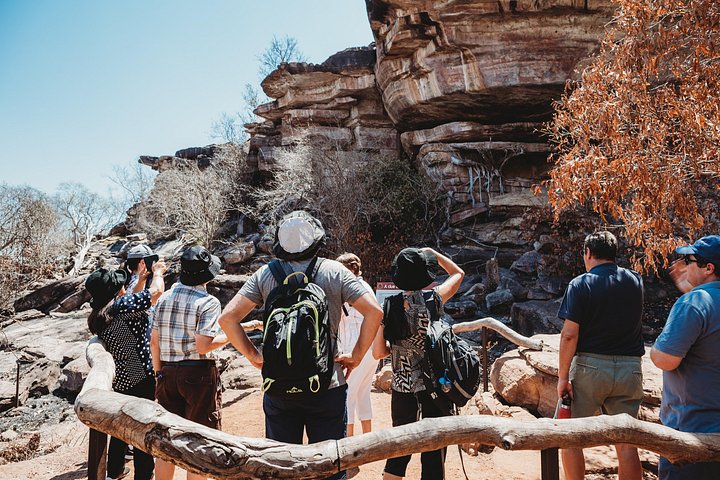
- The Warradjan Aboriginal Cultural Centre, Nourlangie rock art, and a night at Cooinda.
- Time needed
- Two hours for the cruise, plus travel; an overnight at Cooinda is the best way to fit it in.
Good questions
Will I see crocodiles?+
Almost certainly. Saltwater crocodiles are common along the banks and the guides know where to look, but wildlife is never guaranteed.
Is sunrise or sunset better?+
Sunrise is the photographers favourite for mist and active birds; sunset is calmer and more colourful. Both are excellent and both sell out in the dry season.
Can I do it as a day trip from Darwin?+
Yes. Full-day tours include the cruise, though the drive is long, so staying at Cooinda is more relaxed and lets you reach the earliest boat.
Is it suitable for children?+
Yes, the boat is stable and the guides are engaging, but young children need to stay seated and keep hands inside throughout.
What is the best time of year?+
The dry season, May to October, has the easiest access and the largest bird gatherings. The wet season is lush but some roads and cruises can be affected.