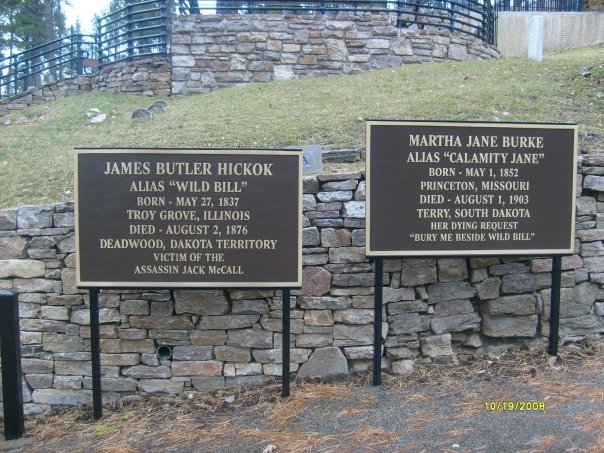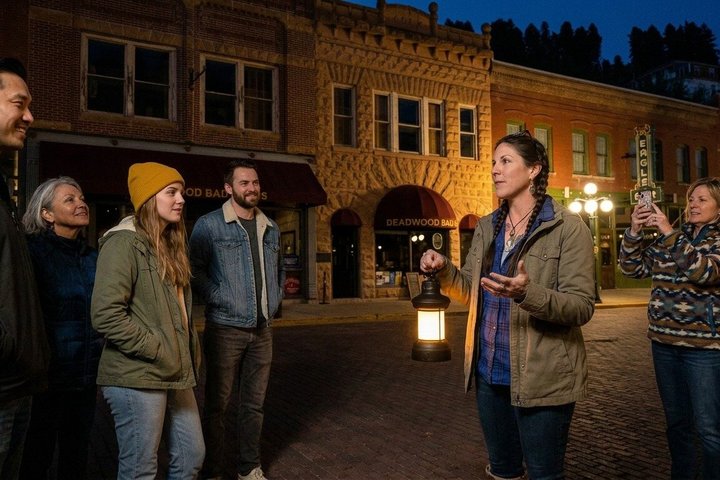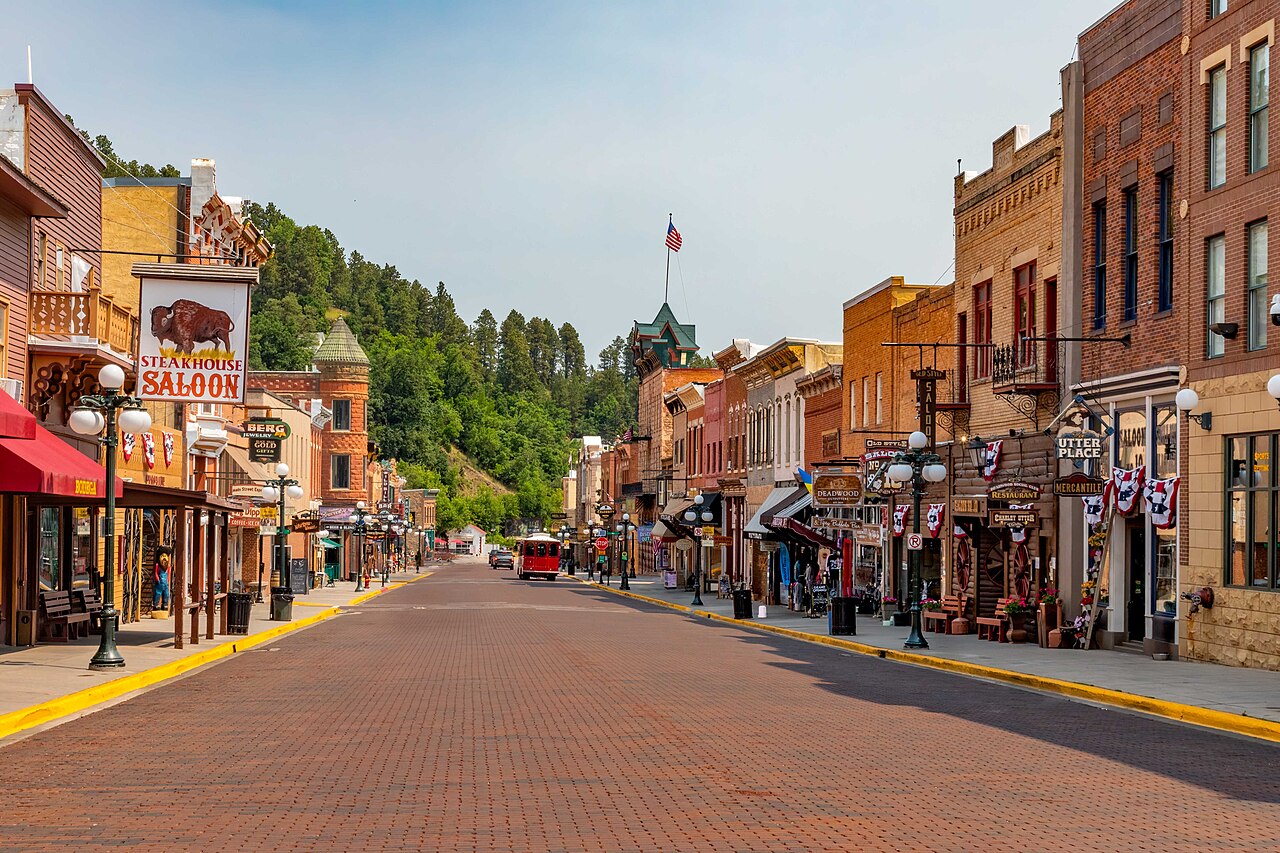
Deadwood is one of the few places in the American West where the gold-rush era is not behind glass. The town sits in a narrow gulch in the northern Black Hills, and Historic Main Street still runs through it lined with the brick buildings that went up in the late 1800s and early 1900s, after fire and flood wiped out the first wooden camp. Walk it slowly and you will pass saloons where Wild Bill Hickok's death is remembered nightly, shops in buildings that have changed hands for well over a century, and a surprising number of casinos, because Deadwood legalized limited-stakes gaming in 1989 and used the revenue to restore the town. The result is a place that feels more like a working frontier street than a museum, with period storefronts, boutiques, restaurants and gaming halls sharing the same few blocks. The best way in is the free self-guided Historic Deadwood Walking Tour, with pamphlets available at the Deadwood Welcome Center and the History and Information Center on Siever Street. It strings together the major sites, from the Adams Museum and the Days of '76 Museum to Saloon No. 10, Outlaw Square and the stairways up to Mount Moriah Cemetery. Add the free Main Street shows by the Deadwood Alive troupe on summer days, and you can fill half a day without spending anything beyond a coffee and a meal. The town also has a darker backstory that guides do not hide: illegal prostitution operated here from 1876 until May 1980, a piece of local history that tour operators tell frankly.
Plan Deadwood around Main Street's rhythm. Mornings are quiet, shops open at their own pace, and the light on the brick facades is best before the afternoon crowds. Late morning through early evening is when the street shows, museum doors and tour departures all overlap, so that is the window for anyone who wants to see the town at full volume.
After dark the casinos carry the street, and the mood shifts from historic to lively. Parking can be tight in peak months, so most visitors park once in a public lot and walk everything, because the core district is compact enough to cover on foot in an easy half day.
Think of the district in three layers. The first is the street itself: the facades, the plaques, the saloons, the free shows and the walking tour. The second is the museum layer, which includes the Adams Museum, the Historic Adams House and the Days of '76 Museum, all within a short walk and all worth an hour.
The third is the surrounding hillside, where Mount Moriah Cemetery overlooks the gulch and where the nearby Broken Boot Gold Mine offers an underground look at the mining side of the story. Few visitors do all three layers in one day, and the town rewards a second day, which is why the two-day itinerary on this site splits them.
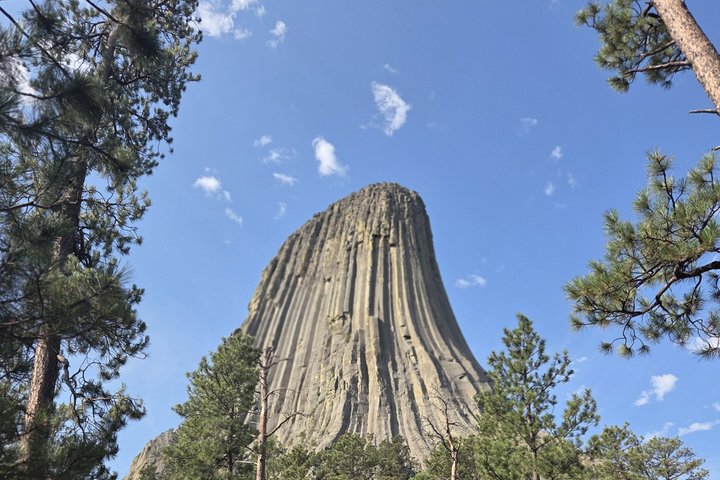
Deadwood also works as a base. Its hotels range from historic Main Street properties to modern casino resorts on the hillside, and it sits a short drive from Lead, Spearfish Canyon, Sturgis and, farther afield, Devils Tower in Wyoming. Events run through the year, with Outlaw Square hosting live music, markets and a seasonal ice rink, and the rally season in early August bringing a sea of motorcycles to Main Street.
Whenever you come, expect crowds in summer and rally week, a quieter, cozier town in winter, and a street that never entirely stops being theatrical.
What to expect
The experience
A self-guided walk along Historic Main Street, with a free printed walking tour, free street shows in season, museums, saloons and casinos all within a few compact blocks.
Best time
Mornings for quiet streets and good light; afternoons for the shows and museums; evenings for the casinos. Summer is busiest, and winter is quieter and cozier.
How long
Three to four hours for a walk and a museum; a full day if you add shows and a meal.
Tips
Pick up the free walking-tour pamphlet at the Welcome Center on Siever Street, park once and walk, and check the day's show schedule before you plan your afternoon. Wear shoes for hills and stairs.
Quick picks
- Best for
- First-time visitors and history lovers who want the gold-rush story told on the actual street where it happened.
- Families
- Yes in the daytime. The street shows, museums and gold-mine tour suit most ages, and the casinos are for adults only.
- Couples
- A slow evening walk, dinner in a historic building and a stay at a Main Street hotel make an easy romantic weekend.
- Pair with
- Mount Moriah Cemetery, the Adams Museum, and the evening ghost tour.
- Time needed
- A half day minimum; two days if you want the museums, the mine and a show.
Good questions
Is Deadwood free to visit?+
Walking Historic Main Street is free, and so are the street shows by the local troupe and the self-guided walking-tour pamphlet. Museums, the mine tour, evening shows and casino play cost extra, so budget only for what you choose to do.
How long do I need in Deadwood?+
A half day covers the main street and one museum. A full day adds Mount Moriah Cemetery, a show and a meal. Many visitors return for a second day to see the mine, Lead and Spearfish Canyon, which is why a two-day plan works well.
Is Deadwood good for kids?+
In the daytime, yes. Kids tend to enjoy the shootouts, the museums and the gold-mine tour. The casinos are adults only, and evenings on Main Street can be lively, so families usually do the town by day.
When is the best time to visit?+
Late spring through early fall has the full slate of shows and attractions open. Early August is rally season and extremely crowded. Winter is quiet, with many seasonal attractions closed but a cozy atmosphere and skiing nearby.
Where should I park?+
Use a public lot or garage near Main Street and walk. The district is compact, parking right on the street is limited in busy periods, and most sites are within a few blocks of each other.