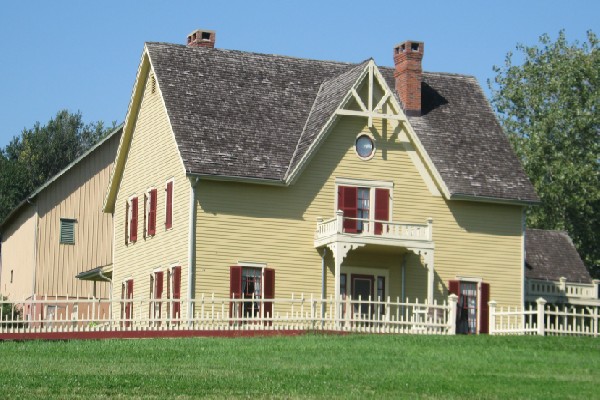
Living History Farms is the best way to understand why Iowa looks the way it does. The open-air museum covers hundreds of acres on the edge of Urbandale, a short drive from downtown Des Moines, and presents the story of Midwestern agriculture as a walk through time. You move from a 1700 Ioway farm to a pioneer farm of the mid 1800s, then to a small prairie town, and finally to a working farm of the early 1900s. At each stop costumed interpreters work the fields, cook, tend animals and answer questions.\n\nWhat makes the place special is that the work is real. Crops are planted and harvested using the methods of the era, animals are raised on site, and the buildings are historic structures or faithful reproductions. Children can feed chickens, watch a blacksmith, see fields plowed with horses or oxen and sometimes lend a hand. The site also holds a place in modern history: in 1979 it hosted an outdoor Mass led by Pope John Paul II that drew a huge crowd, and a memorial cross recalls the day.
The museum operates seasonally, usually from spring through autumn, with special events at certain times of year, so check the calendar before you plan. Allow at least three hours, and a half day if you love history or travel with curious children. The grounds are large and mostly outdoors, so expect walking on grass and gravel, and consider a tram or wagon ride if one is running. Weather matters: a sunny day is delightful, and hot July afternoons call for hats, water and sunscreen.
\n\nStart with the Ioway farm if you can, because it sets up the story that follows. The earliest farm shows how Native people grew corn, beans and squash and used the landscape. The pioneer farm shows the hard work of settlers breaking the prairie, with log buildings and simple tools. The town gives a sense of community life with a general store, a church and craftspeople. The later farm shows the shift toward machines and the early days of modern agriculture. Together they trace how Iowa became a farming powerhouse.
\n\nFamilies get a lot from the visit because it is hands-on without being a theme park. Younger children enjoy animals and open space, and older children tend to ask better questions when they can talk to a person in costume. Bring a stroller that can handle uneven ground or a carrier for toddlers. Food is typically available on site in season, but you can also bring a picnic, and the nearby suburbs have plenty of restaurants for afterward.\n\nPhotography is welcome and the light on the old buildings is good in late afternoon.
Dress for the weather and wear closed shoes, since dust and mud are part of the experience. Seasonal events such as harvest celebrations and holiday programs add atmosphere, but they can also bring larger crowds, so book ahead where required.\n\nCombine the visit with other west-side stops: the Greater Des Moines Botanical Garden is a short drive, and Jester Park and Saylorville Lake offer trails for the late afternoon. If you want a full Iowa day, finish with dinner in Valley Junction or the East Village.
What to expect
The experience
A walk-through, open-air museum of Iowa farming, with costumed interpreters, working animals and historic buildings.
Best time
Spring to autumn on a dry day; check for seasonal events.
How long
Three to five hours.
Tips
Wear closed shoes and a hat, bring water, and check the season calendar before you drive out.
Quick picks
- Best for
- Families, history lovers and anyone curious about the Midwest.
- Families
- Excellent for children, with animals, open space and hands-on activities.
- Couples
- A relaxed, outdoorsy day out with plenty to talk about.
- Pair with
- Jester Park or the Greater Des Moines Botanical Garden.
- Time needed
- A half day.
Good questions
When is Living History Farms open?+
It operates seasonally, typically from spring through autumn. Check the calendar before you go.
How long should I plan?+
At least three hours, and a half day if you like to read and talk to the interpreters.
Is it good for kids?+
Yes. Animals, open space and hands-on activities make it a favourite for families.
What time periods does it cover?+
From an Ioway farm of around 1700 through pioneer, town and early twentieth-century farm life.
Is it mostly outdoors?+
Yes. Expect walking on grass and gravel and dress for the weather.