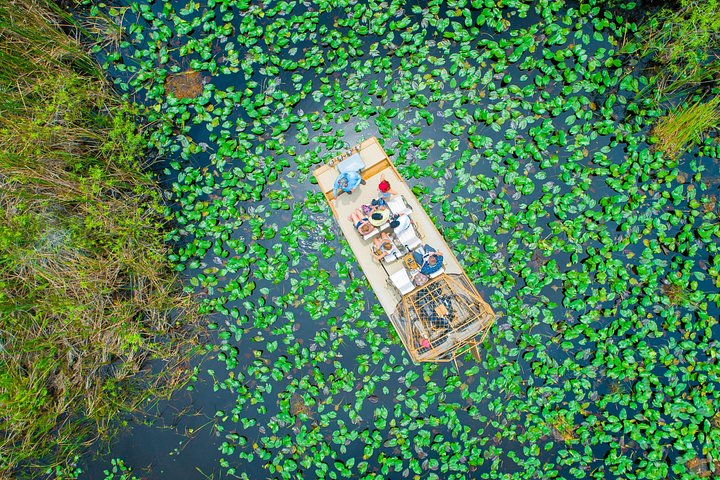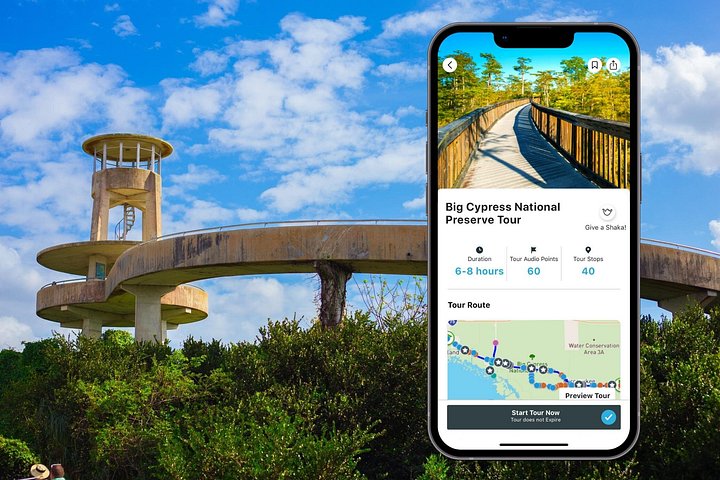
Big Cypress National Preserve covers roughly 720,000 acres north of Everglades National Park and was the first national preserve in the United States. Its landscape is a patchwork of cypress swamp, pine flatwoods, wet prairie and hardwood hammocks, home to the endangered Florida panther, black bears, wading birds and countless alligators. The Oasis Visitor Center on the Tamiami Trail is the usual starting point: it has exhibits, rangers and a boardwalk over a canal where alligators and birds gather, often close enough for photographs. Beyond it, the Loop Road and other scenic drives and short trails let you wander into the swamp. Because the preserve is huge and quiet, a self-guided audio tour is a useful companion: it narrates the route as you drive, pointing out places and explaining how water and fire shape the land. Camping, hiking and backcountry access exist for the adventurous, and the preserve's low light pollution makes it a favorite for stargazing. Entry to the preserve itself is free, though some activities and nearby attractions charge fees.
The word preserve matters. Unlike a national park, Big Cypress permits some activities, such as hunting, off-road vehicle use under permits and oil and gas development, which created a patchwork of uses. That mixed status helped protect the land from development that would have disrupted the Everglades' water flow, and it shows in the landscape: fewer manicured facilities, more raw swamp, and a sense of wildness that the big parks sometimes lack. Cypress trees here are not the towering giants of old-growth forests but dwarf and pond cypress, adapted to shallow, nutrient-poor water.
Start at Oasis. The boardwalk beside the visitor center is among the easiest places in South Florida to see alligators without a boat or long walk. From there, the Tamiami Trail has pull-offs with boardwalks and short trails, and the Loop Road gives a slower, rural drive. Be aware of road conditions after rain and of limited cell coverage. Carry water and a full tank of gas, and bring repellent in the wet season. In winter, the dry weather and cooler temperatures make hiking more pleasant.
Big Cypress is a natural companion to Shark Valley, the Fakahatchee boardwalk and Clyde Butcher's gallery, all along the same road. A day tour along the Trail can combine two or three of them. If you only want a wildlife photograph, the boardwalk at Oasis is enough. If you want to explore deeper, plan a longer visit or a guided swamp walk. Confirm hours, alerts and fees at the preserve's website before you go.
What to expect
The experience
A self-guided drive along the Tamiami Trail and preserve roads with an audio guide, plus the Oasis Visitor Center boardwalk and exhibits.
Best time
Dry season for comfortable weather; early morning or late afternoon for wildlife.
How long
Two to four hours for the drive and stops.
Tips
Carry water, fill your fuel tank, expect limited phone coverage, and check road and trail conditions at the visitor center.
Quick picks
- Best for
- Self-drivers who want swamp scenery and wildlife
- Families
- Fine for families; the Oasis boardwalk is easy
- Couples
- Quiet and scenic
- Pair with
- Shark Valley, Fakahatchee boardwalk
- Time needed
- Half a day
Good questions
What is the Oasis Visitor Center?+
The preserve's main roadside stop on the Tamiami Trail, with exhibits, rangers and a boardwalk where alligators gather.
Is it free to enter?+
Entry to the preserve is free, though specific activities and permits may cost money. Check current rules.
Can I see a Florida panther?+
Panthers live here but are rare and secretive. Treat a sighting as a bonus, not a plan.
Is the audio tour needed?+
No, but it helps you understand the swamp as you drive and is useful where signs are sparse.
When should I go?+
Winter and early spring are drier and cooler. Summer brings insects, storms and flooding on some roads.