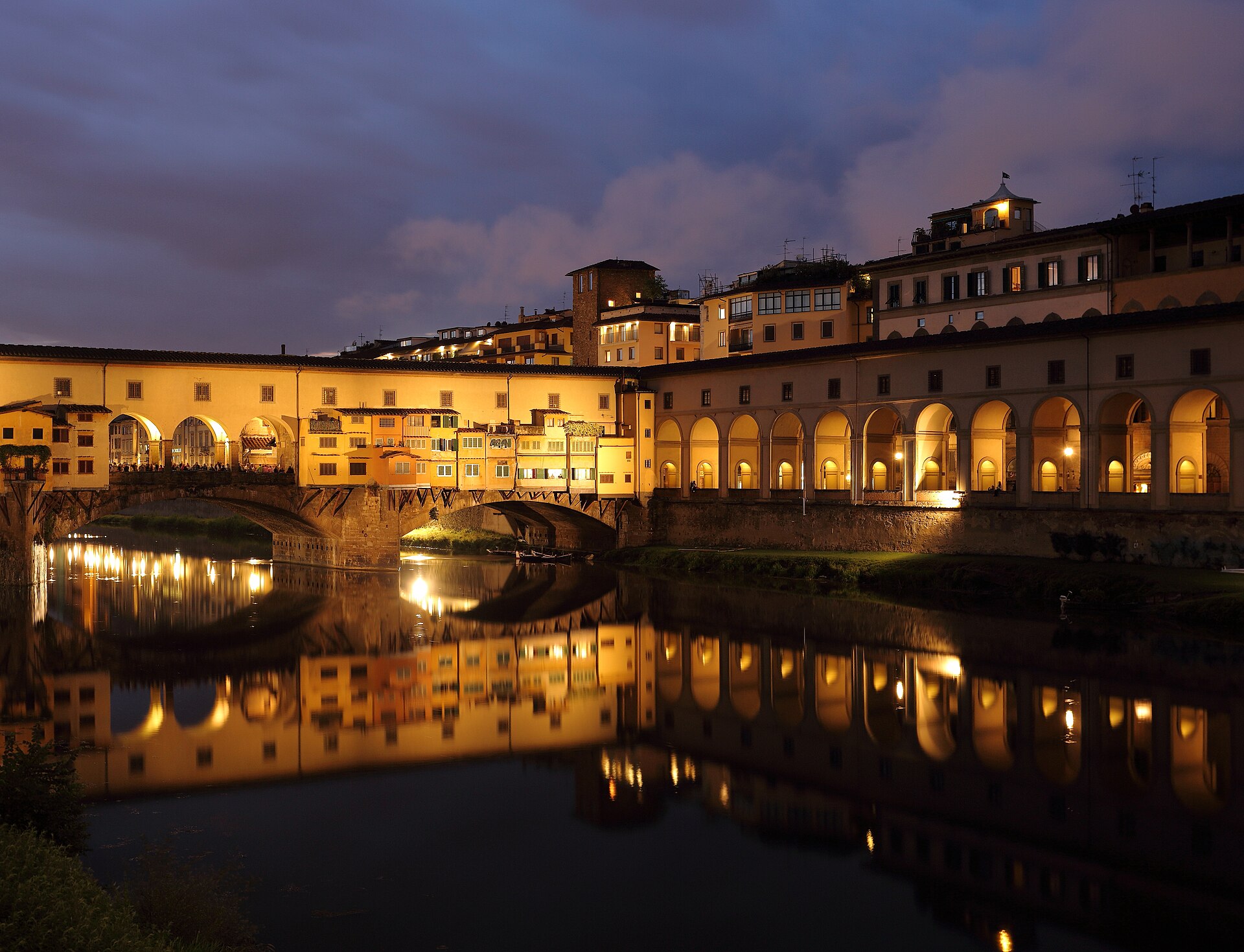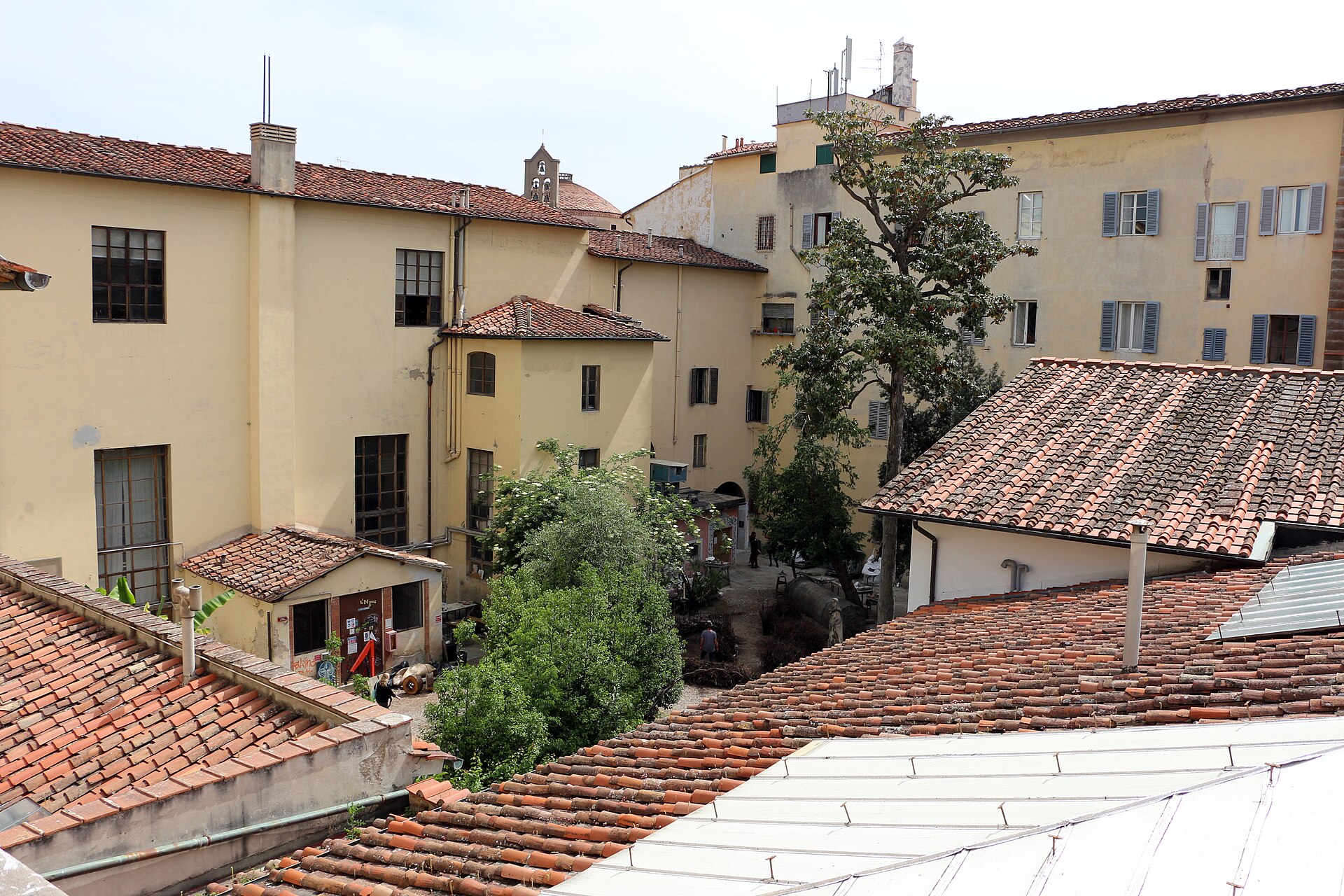
The Oltrarno is the Florence that stayed Florentine: the left-bank quarter across the Ponte Vecchio — Santo Spirito, San Frediano and the artisan streets between — where the city's 500-year workshop culture still operates at street level (the botteghe's open doors are the attraction: goldbeaters hammering leaf, bookbinders sewing marbled-paper spines, bronze-casters, mosaicists, shoemakers and the furniture restorers' sawdust perfume on via Maggio and the side lanes — window-watching is welcomed, buying is better, and the Semel-to-silversmith density has no equal in Europe), anchored by Piazza Santo Spirito — the city's last living square: morning market stalls under the plane trees, the osteria-and-aperitivo ring filling from six (the spritz hour here is the city's social institution — unfussy, local, every age at the tables), and Brunelleschi's Santo Spirito presiding: his final church and his purest (the 1444 design's mathematics — 38 side chapels in rhythmic colonnaded perfection — finished after his death; the unfinished facade's blank face became the piazza's icon, Michelangelo's wooden crucifix hides inside, carved at 17 in gratitude for anatomy access to the convent's corpses, and the interior's grey-and-white serenity out-Brunelleschis the Duomo for the connoisseur vote). The quarter's circuit compounds: the Brancacci Chapel at Santa Maria del Carmine ten minutes west (Masaccio's fresco revolution — the Tribute Money and the Expulsion are where Renaissance painting learned weight; small-capacity visits book ahead), San Frediano's cooler-still lanes (the gate tower, the Porta San Frediano's medieval swagger, the new-generation trattorie), via Santo Spirito and Maggio's antiques-and-palazzo row, and the food tier that locals defend (the quarter holds the city's best unfussy eating — the sandwich cults, the osterias without English menus, the gelato at the piazza's edge). The craft: mornings for the market and open workshops, the aperitivo-to-dinner arc from six (book the osterias or eat at the counters), the Brancacci slot reserved ahead, and the walking logic — cross the Ponte Vecchio, get lost south, exit via Santa Trinita's bridge at golden hour (the Ponte Vecchio's best photo is FROM Santa Trinita). Fit: the foodie chip's local wing, couples (the piazza's evening is the city's gentlest romance), art travelers (Brancacci plus Brunelleschi), and every second-day itinerary — day one owns the monuments; day two belongs here.
The quarter's character has a history
The Oltrarno was the workers' bank — the wool-dyers, tanners and smiths priced out of the center clustered across the river (San Frediano's name still carries the working-class accent in Florentine idiom), the Pitti and the grand-ducal court's arrival brought the palazzo row without displacing the workshops (the nobility wanted their artisans close), and the 1966 flood's devastation — the Oltrarno drowned deepest — triggered the restoration culture that keeps the botteghe alive: the mud angels' legacy institutionalized into the quarter's craft schools and the Fondazione-backed workshop preservation. The visitor's part of the bargain is simple: enter the open doors, watch quietly, buy the marbled notebook or the hammered ring — the workshops survive on exactly that trade.
The Santo Spirito deep-read
Brunelleschi designed it at life's end as his corrected Duomo-quarter thinking — the modular bay mathematics, the chapels' continuous curve (flattened by later builders; the drawings survive), the light's grey-stone calm — and the church's layers reward: Michelangelo's teenage crucifix in the sacristy octagon (the anatomy-gratitude story documented), the Lippi Madonna in the transept, and the refectory's Orcagna fragments next door. The Brancacci's pilgrimage logic: Masaccio's 1420s frescoes (with Masolino, finished by Filippino) taught Michelangelo and everyone after — the Expulsion's wailing Adam and Eve and the Tribute Money's weighted figures are painting's puberty; the chapel's small-group slots and the Carmine's quiet make it the art visit without the Uffizi's crush.
Practicals and fit
Cross Ponte Vecchio or Ponte Santa Trinita (the quarter starts at the bank), free as a walk (Santo Spirito church free; Brancacci ticketed and slot-booked; workshops are shops), mornings for market-and-botteghe, evenings for the piazza's arc. Fit: foodies and couples first, art travelers on the Brancacci-Brunelleschi axis, families (the piazza's traffic-free run and gelato), and every trip's second day — the Oltrarno is where Florence stops performing.
What to expect
The experience
The left-bank artisan quarter on foot — open workshops hammering and binding, Brunelleschi's purest church on its living market piazza, and the aperitivo-to-osteria evening Florentines keep for themselves.
Best time
Mornings for the market and open botteghe; the piazza's spritz hour fills from six; book the Brancacci Chapel slot and the osterias ahead.
How long
Three to four hours, easily a full second day.
Tips
Find Michelangelo's teenage crucifix in Santo Spirito's sacristy. Enter the open workshop doors and watch quietly — buying a marbled notebook is the quarter's entry fee. Exit via Ponte Santa Trinita at golden hour for the Ponte Vecchio photo.
Quick picks
- Best for
- The second day — where Florence stops performing and starts living.
- Families
- The traffic-free piazza run, workshop-watching and the gelato edge — child-paced by nature.
- Couples
- Spritz under the plane trees as the facade goes gold — the city's gentlest evening.
- Pair with
- Pitti Palace and Boboli at the quarter's edge; the Brancacci Chapel ten minutes west, slot booked.
- Time needed
- One unhurried afternoon into evening.
Good questions
What makes Santo Spirito church special?+
It is Brunelleschi's last and purest design — the rhythmic colonnade mathematics he never saw finished — with Michelangelo's crucifix, carved at 17 in gratitude for the convent's anatomy access, hiding in the sacristy.
Can we visit the workshops?+
The open doors are the invitation — goldbeaters, bookbinders, mosaicists and restorers work at street level and welcome quiet watching; buying the small handmade thing is how the tradition survives.
What is the Brancacci Chapel?+
Masaccio's 1420s fresco revolution at the Carmine ten minutes west — the Expulsion and Tribute Money that taught Michelangelo weight — visited in small booked slots without the Uffizi's crush.
Where should we eat?+
The quarter holds the city's best unfussy tier — the piazza's osteria ring, San Frediano's new-generation trattorie, the sandwich cults — book dinner or eat at the counters, and trust menus without English.
How do we structure it?+
Cross Ponte Vecchio, morning market and workshops, Brancacci slot, then the aperitivo arc from six — exiting over Ponte Santa Trinita at golden hour for the classic bridge photograph.